Tattoo Needles Explained 2026: Sizes, Types and Safety
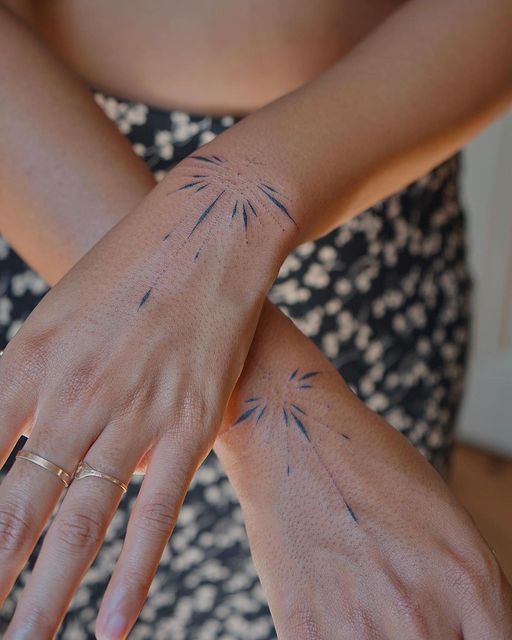
Watch a great artist set up before your session and you will see them open a small foil pouch, slot a needle cartridge into the machine, and dial the depth knob with the precision of a watchmaker. The needle they choose, the grouping, the gauge, and the way it is configured controls almost every visual decision in your tattoo. Outline crispness, shading softness, colour saturation, fine-line believability, healing speed, and even the pain you feel all flow from those tiny stainless points.
This guide explains the needle types every Australian artist uses in 2026, what each is best for, what gauge sizes mean, and the safety standards you should expect to see at any reputable studio.
Key Takeaways
- Liner needles (RL): tight cluster for outlines and bold linework. Common: 3RL, 5RL, 7RL
- Round shaders (RS): looser cluster, soft fill and small shading
- Magnums (M1, M2, RM): flat or curved configurations for big-area shading and colour packing
- Single needle: 1RL for ultra-fine line, micro-realism, and tiny script
- Standard gauge: 12 (0.35 mm). Bugpins use 8 to 10 for finer pigment
- Safety: single-use only, opened in front of the client, sharps disposal in registered yellow bins
- Red flag: needles autoclaved between clients, no sealed pouches, no licence number on the studio wall
Why Needle Choice Decides How Your Tattoo Looks
A tattoo machine drives one or more needles up and down through the top two layers of skin (the epidermis and the upper dermis), depositing pigment as it goes. The cluster pattern at the tip controls three crucial things.
- Coverage area per pass: a 1-needle liner deposits a 0.35 mm dot, a 13-magnum deposits a band roughly 6 mm wide
- Ink saturation: tighter clusters punch the same spot multiple times for solid black, looser clusters spread softly for grey wash
- Skin trauma: larger configurations trade speed for healing time, which is why colour packing scabs more than fine line
An experienced artist swaps cartridges several times during a single piece, picking the right grouping for outlining, shading, then highlighting. The visual style of the finished tattoo is largely the sum of those choices.
In a nutshell: your artist is part needle technician, part composer. The machine plays the needle, the needle paints the skin.
The Four Core Needle Families
Modern Australian studios use cartridge systems from manufacturers such as Cheyenne, Vertix, Kwadron, and Bishop. The grouping codes are standard across brands.
| Family | Code example | Configuration | Best for |
|---|---|---|---|
| Liners (RL) | 3RL, 5RL, 7RL, 9RL | Tight round cluster | Outlines, bold linework, lettering |
| Round shaders (RS) | 5RS, 7RS, 9RS | Loose round cluster | Small shading, soft fill, dot work |
| Magnums (M1) | 7M1, 9M1, 13M1 | Two staggered flat rows | Black-and-grey shading, colour packing |
| Curved magnums (RM) | 7RM, 11RM, 15RM | Two rows curved into an arc | Smoother shading, less skin trauma |
Liners up close
Liner cartridges have needles soldered tightly together so the points strike as one. The number tells you how many needles are in the bunch. A 3RL is three needles, a 9RL is nine. More needles equals a thicker line. Traditional Sailor Jerry-style outlines often use 7RL or 9RL. Fine-line minimalist work usually sits at 1RL or 3RL.
Round shaders
Same circular grouping as a liner, but the needles sit further apart. The looser arrangement softens the deposit and is ideal for small shading patches, dot-work mandalas, and stippling effects. A 7RS is the workhorse round shader in most Australian studios.
Magnums
Magnums lay needles in two staggered rows so that the points fan across a wider area. They are the bread and butter of black-and-grey shading and any colour-packed area. A 9M1 covers roughly 4 mm of skin per pass, a 13M1 closer to 6 mm, which is why magnum work feels less stingy than tight outlining: the trauma is spread.
Curved magnums
Curved magnums bend the two rows into an arc shape. The curve means more needles strike the skin at the same depth simultaneously, producing a smoother, less harsh deposit. Realism artists love them for portraits because they leave fewer visible "step" marks between shading passes.
Decoding Needle Codes
A code like 1207RL looks intimidating but breaks into three meaningful parts.
| Segment | Meaning | Example |
|---|---|---|
| First two digits | Needle gauge (diameter) | 12 = 0.35 mm (standard), 10 = 0.30 mm (bugpin), 08 = 0.25 mm (ultra-fine) |
| Middle digits | Number of needles in the cluster | 03, 05, 07, 09, 11, 13, 15 |
| Letters | Configuration type | RL = round liner, RS = round shader, M1 = magnum, RM = curved magnum |
So 1207RL reads as "12-gauge, 7 needles, round liner". A 1015RM is "10-gauge bugpin, 15 needles, curved magnum", typical for soft realism shading.
Style-by-Style: Which Needle Does What
Most styles you see on Instagram are produced by a recognisable set of needle choices. Understanding the link helps you read a portfolio.
| Style | Liner | Shader | Notes |
|---|---|---|---|
| Fine-line minimalist | 1RL or 3RL | Rare | Single-needle precision, almost no shading |
| Traditional (Sailor Jerry) | 7RL or 9RL | 9M1 for solid colour | Bold outline, flat solid fill |
| Black-and-grey realism | 3RL, 5RL | 11RM, 13RM | Soft transitions, no harsh outline |
| Japanese (Irezumi) | 9RL, 11RL | 13M1, 15M1 | Bold lines, dense colour packing |
| Geometric / dotwork | 1RL, 3RL | 5RS, 7RS | Stipple builds tonal range |
| Watercolour | 3RL, 5RL | 9M1, 11M1 | Loose strokes, washy pigment |
| Colour realism | 3RL, 5RL | 11RM, 15RM | Curved magnums for blending |
Gauge: The Hidden Variable
Two needles can both be 5RL and still feel completely different on the skin. The reason is gauge, the diameter of each individual point.
| Gauge | Diameter | Common name | Best for |
|---|---|---|---|
| 06 | 0.20 mm | Bugpin XF | Ultra-fine micro-realism |
| 08 | 0.25 mm | Bugpin | Soft shading, micro detail |
| 10 | 0.30 mm | Bugpin standard | Realism, fine line |
| 12 | 0.35 mm | Standard | Most outlines and shading |
| 14 | 0.40 mm | Heavy | Bold traditional, colour packing |
Smaller gauge equals finer detail and slower ink deposit. Larger gauge equals faster work and more saturation. Bugpin needles (10 gauge or smaller) produce the smoothest realism but need more passes to lock pigment in fully, which is why a portrait session can run longer than its size suggests.
Single-Needle Tattoos: A Quick Note
"Single needle" usually means a 1RL cartridge tattooed at very shallow depth to leave a thread-thin line. The look is intimate, delicate, and very on-trend, but it carries trade-offs the artist should explain at consultation.
- Pros: ultra-fine detail, minimal scabbing, fast healing
- Cons: fades faster than thicker lines, harder to touch up, generally not suitable for fingers, palms, or feet
- Best for: small script, delicate florals, micro symbols on flat skin
Heads up: not every artist who says "I do fine line" actually understands single-needle technique. Ask to see healed photos at 12 months. If the lines look the same as the day-of-session shots, you have found a real specialist.
Safety: The Australian Standards Every Studio Must Meet
Tattoo needles are classified as single-use medical sharps under Australian state public-health regulations. The expectations are uniform across NSW, VIC, QLD, WA, SA, and TAS, even when the licensing body is different.
What you should see at every reputable studio
- Sealed cartridge or bar pouches opened in front of you, never reused
- Powder-free nitrile gloves changed at every glove break (after touching anything outside the sterile field)
- Yellow rigid sharps bin mounted within arm's reach of the work bench
- Used cartridge dropped into the bin immediately after use, never left on the bench
- Disposable barrier film on the machine, clip cord, and bottle caps, replaced for every client
- Visible council inspection sticker or licence number at the front desk
What is illegal in Australia
- Reusing needles between clients, even after autoclave sterilisation
- Storing opened cartridges for "next time" use
- Disposing of sharps in regular rubbish bins
- Operating without a state public-health permit
- BYO needle setups by the client
If a studio cannot show you the sealed pouch on request, walk out. Hepatitis B, hepatitis C, and HIV transmission via reused tattoo needles is rare in Australia precisely because every licensed studio follows single-use protocols. Cutting corners here is unforgivable.
What Smart Clients Ask Before the First Pass
You do not need to be a needle expert. A few well-placed questions tell you whether the artist is paying attention.
- "What needle setup are you using for the outline today?" A real answer (3RL, 5RL, 1RL) means they have planned the session
- "Are these single-use cartridges?" The honest answer is always yes at a licensed studio
- "What gauge do you usually run for shading on this style?" Bugpin or standard tells you a lot about how soft the result will be
- "Where do you dispose of used cartridges?" They should point at the yellow sharps bin without hesitation
- "Do you change needle setups during the session?" Yes for any multi-element design, no is fine for single-needle script
Frequently Asked Questions
Why does the same needle hurt more on different parts of my body?
The needle does not change. Your nerve density does. Areas with thin skin and lots of nerve endings (ribs, sternum, inner arm, ankle) feel sharper than thicker, more padded zones (outer thigh, upper arm, calf). The needle gauge and configuration also matter: liners feel like a hot scratch, magnums feel like a sustained burn.
Can I bring my own needles to a studio?
No. Australian public-health rules require studios to use needles they have sourced themselves so chain of custody is verifiable. A studio that accepts BYO needles is operating outside the rules.
How can I tell if a needle is really new?
Ask the artist to open the pouch in front of you. The sealed foil makes a distinct crinkle when peeled. The cartridge inside should sit snugly with no fingerprint smudges and no scratches on the colour-coded backing.
Are bugpin needles always better than standard?
No. Bugpins shine for soft shading and micro-realism but slow the session because you need more passes to saturate. For bold traditional or large colour blocks, standard 12-gauge is faster and saturates better.
What happens to used needles after my session?
The cartridge goes straight into a yellow rigid sharps bin. Once full, the bin is collected by a licensed clinical waste contractor (Stericycle, Daniels Health, ALS) and incinerated under EPA-controlled conditions. Tattoo studios pay for this service as part of their operating costs.
Bottom Line
Tattoo needles are the unsung half of every great piece. The right liner gives you crisp script, the right magnum gives you smooth shading, and the right gauge separates a portrait that looks photographic from one that looks pixelated. Every needle in a licensed Australian studio is single-use, sealed until your session, and disposed of immediately afterwards. If anything you see on the bench contradicts that, walk out and report the studio. Good ink starts with a fresh point.
Looking for an artist whose technique matches your style? Browse vetted studios in Sydney, Melbourne, Brisbane, Perth, and Adelaide, or read our tattoo shop hygiene standards guide for what to inspect before you book.
Explore More
Find Tattoo Shops
Browse by Style
Stay Updated with the Latest Insights!
Get the latest news and updates delivered to your inbox.
Related Articles
Tattoo Consent Forms Australia 2026: What You Are Signing
Tattoo consent forms in Australia explained: clause-by-clause breakdown of waivers, medical disclosure, photo rights, red flags, and your consumer law rights.
Read More
Tattoo Sterilisation Standards Australia 2026: What to Expect
Tattoo sterilisation Australia 2026: autoclave, spore tests, single-use needles, barrier wrap, hand hygiene, and red flags that should send you elsewhere.
Read More
MRI and Tattoos: Are Tattoos Safe for MRI Scans? 2026 Australian Guide
MRI and tattoos: safe in 99% of cases. Modern inks rarely contain magnetic metals. Disclosure, risk factors, image distortion and what to expect.
Read More