
Dragon Tattoo Meanings 2026: Eastern vs Western Symbolism Guide
Picture this. You have been considering a dragon tattoo for months. You know it means power, but you cannot decide whether you want the majestic protective creature from Asian mythology or the fire-breathing beast from European folklore. Same word, opposite meanings, wildly different visuals. Choose wrong and you spend the next decade explaining it.
The truth is that "dragon" splits into two philosophical traditions that could not be more different. Eastern dragons in Chinese, Japanese, Korean, and Vietnamese culture are benevolent water spirits, guardians of imperial power, symbols of wisdom and good fortune. Western dragons in European mythology are chaos monsters, gold-hoarding tyrants, the thing the hero rides out to slay. This guide walks through the cultural meanings, the visual differences, the modern hybrids, and how to pick a design that says exactly what you mean.
Key Takeaways
- Eastern dragon: Serpentine, wingless, benevolent. Symbol of wisdom, imperial power, water, and good fortune
- Western dragon: Winged, lizard-like, adversarial. Symbol of destruction, hoarded wealth, and chaos to be conquered
- Chinese five-clawed dragon: Historically reserved for the emperor. Get one and you are wearing imperial authority
- Japanese dragon (ryu): Protective, associated with the sea and Buddhist teaching, often paired with cherry blossoms or koi
- Welsh red dragon: Fierce national symbol on the Welsh flag. Sovereignty, defiance
- Cost in Australia: $500 for small blackwork; $2,500 to $6,000+ for full-back or full-sleeve Japanese work
- Style pairing matters: Eastern dragons live in Japanese traditional and irezumi; Western dragons work best in neo-traditional and dark realism
Eastern vs Western Dragon: The Full Split
Before you commit to a specific design, understand what you are actually saying with each tradition. The visual differences are dramatic, the philosophical differences are more so.
| Trait | Eastern Dragon | Western Dragon |
|---|---|---|
| Nature | Benevolent, wise, protective | Adversarial, dangerous, greedy |
| Core symbolism | Good fortune, wisdom, protection | Destruction, chaos, hoarded wealth |
| Element | Water, sky, clouds, rain | Fire, earth, darkness |
| Wings | None (flies through magic) | Large bat-like wings |
| Body | Serpentine, long, flowing | Lizard-like, bulky, muscular |
| Cultural role | Divine creature, imperial symbol | Monster to be slain by heroes |
| Relationship with humans | Guide, protector, teacher | Enemy, adversary |
| Common accompaniments | Cherry blossoms, koi, clouds, pearl of wisdom | Sword, castle, treasure hoard, knight |
In a nutshell: choose an Eastern dragon if you want a guardian on your skin. Choose a Western dragon if you want a symbol of the wild force you carry inside. Both are valid. They just mean different things.
Chinese Dragon (Long / Lung)
The Chinese dragon is arguably the most powerful cultural symbol in East Asia. Emperors of China ruled from the "Dragon Throne" for two millennia, and only the emperor was permitted to wear the five-clawed dragon on his robes. Ordinary nobility wore four-clawed dragons, and commoners wore three-clawed. Getting a five-clawed dragon tattoo today is not culturally offensive, but the significance is worth understanding.
Core meanings
- Imperial authority: Divine right to rule, ultimate power
- Good fortune and prosperity: Wealth, abundance, business success
- Water control: Rain, rivers, oceans, floods. Dragons decided who got water
- Yang energy: Masculine, active, creative
- Wisdom: Ancient knowledge, intellect
- Protection: Guardian against evil spirits, especially in the home
Physical features (the "nine likenesses")
Classical Chinese scholars describe the dragon as having the head of a camel, horns of a deer, eyes of a rabbit, ears of a cow, neck of a snake, belly of a frog, scales of a carp, claws of an eagle, and paws of a tiger. Every reputable Japanese and Chinese-style tattoo specialist knows this list and will subtly incorporate elements.
Colour symbolism
- Yellow (Huang Long): Most revered, associated with the emperor and the centre
- Azure blue (Qing Long): East, spring, wood element
- Red (Chi Long): South, summer, fire, celebration
- White (Bai Long): West, autumn, metal, mourning in some contexts
- Black (Xuan Long): North, winter, water
Australian pricing (Chinese-style dragon)
- Small blackwork dragon (10-15 cm): $400 to $800
- Medium detailed dragon with clouds (20-30 cm): $1,200 to $2,000
- Full back or full sleeve Chinese dragon: $3,500 to $6,000
Japanese Dragon (Ryu)
Japanese dragons share ancestry with Chinese dragons but evolved distinct characteristics. In Japanese culture the dragon (ryu) is closely associated with Buddhism and Shinto, water deities, and the protection of the people. Japanese traditional tattooing (irezumi) has a rich, centuries-long tradition of dragon work.
Core meanings
- Wisdom and experience: Generous, patient, deeply knowing
- Protection of humanity: Guardians of Buddhist teaching and community
- Water deities: Living in oceans, rivers, and lakes
- Longevity and vitality: Life force, endurance
- Shape-shifting: Can take human form when needed
Named Japanese dragons
- Sui-Ryu: Rain dragon, controls weather
- Han-Ryu: Striped dragon, largest form
- Ka-Ryu: Fiery red dragon, smallest but fierce
- Fuku-Ryu: Dragon of luck and fortune
- Ri-Ryu: Dragon with exceptional sight
Common Japanese dragon pairings
- Dragon + cherry blossoms: Life and death balance, beauty in impermanence
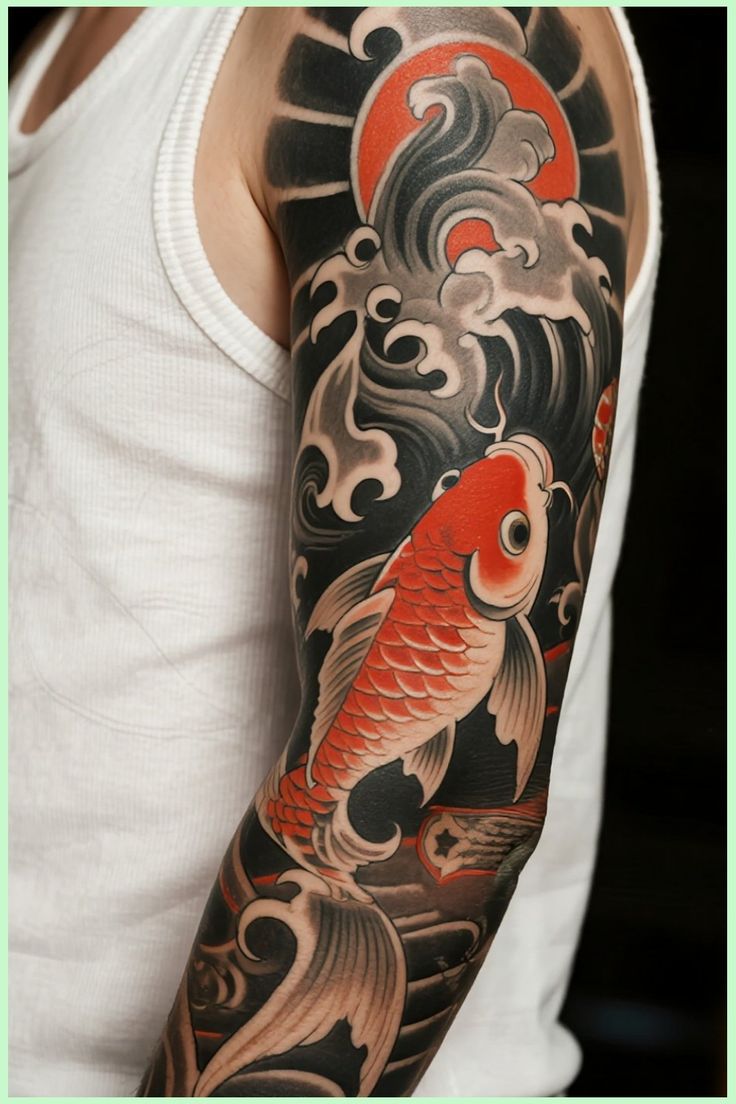
- Dragon + koi: Transformation. Legend says a koi that swims up the Yellow River waterfall becomes a dragon
- Dragon + tiger: Balance of forces, heaven (dragon) and earth (tiger)
- Dragon + phoenix: Yin and yang, emperor and empress, union
- Dragon + pearl: Chasing the pearl of wisdom or enlightenment
Australian pricing (Japanese irezumi dragon)
- Half sleeve Japanese dragon: $2,000 to $3,500
- Full sleeve: $3,500 to $6,500
- Full back piece: $5,000 to $10,000+
For style inspiration, browse our Japanese tattoo gallery or check specialists in Sydney and Melbourne.
Korean and Vietnamese Dragons
Often overlooked but worth knowing about. The Korean dragon (yong) sits closer to the Chinese tradition, benevolent and associated with water and clouds, though Korean depictions are often described as more slender and elegant. The Vietnamese dragon (rong) is deeply national, appearing on royal seals and imperial architecture, and is depicted with strong slender curves and a signature crest. Both make excellent tattoo choices if you have specific heritage or connection.
Western Dragons: The European Traditions
The Western dragon is a completely different mythological creature. Medieval European dragons are winged, fire-breathing, and almost always adversarial. They hoard gold, terrorise villages, and exist to be defeated. But different regions developed different specific traditions.
Anglo-Saxon and Germanic dragons
- Beowulf's dragon: Gold-hoarder, killed by the hero at great cost. Symbol of the destructive greed inside power
- Norse Nidhoggr: The corpse-eater at the base of the world tree Yggdrasil. Cosmic destruction, but also renewal
- Fafnir: The prince who turned into a dragon through greed. Cautionary tale about wealth corrupting
Welsh red dragon
Y Ddraig Goch, the red dragon of Wales, is the most positive Western dragon on the list. It appears on the Welsh flag and represents national sovereignty, defiance, and Welsh identity. A red dragon tattoo is a straightforward statement of Welsh heritage.
English and Christian dragons
Saint George slaying the dragon is one of the most enduring Christian images, embedded in English national identity. The dragon here represents sin, chaos, and evil defeated by faith. Some clients get the dragon (not George) as a symbol of the wild, untamed self.
Slavic dragons
The Zmey and Zmaj traditions are more ambiguous than Western European ones. Some Slavic dragons are protectors, especially in Bulgarian and Serbian folklore, closer in feel to the Eastern tradition despite the wings and fire.
Modern and Hybrid Dragon Traditions
Not every dragon has to come from ancient mythology. Modern fiction has produced dragons with their own established meanings, and many Australian clients want tattoos referencing them.
- Smaug (The Hobbit): Greed personified, but also cunning and majesty. Popular in dark realism
- Toothless (How to Train Your Dragon): Loyalty, friendship, the dragon as ally. Common as memorial pieces for beloved pets or as parent-child matching tattoos
- Game of Thrones dragons (Drogon, Rhaegal, Viserion): Power, mother-child bond, or the specific characters. Now dated but still requested
- Skyrim / Elder Scrolls dragons: Popular with gamers, usually stylised with runes
- Studio Ghibli dragons (Haku from Spirited Away): Serpentine, benevolent, closer to the Japanese tradition
- Dungeons and Dragons chromatic and metallic: Specific colours have specific meanings (red = tyrant, gold = wise, black = trickster)
Placement Guide: Where Your Dragon Should Live
Dragons are storytelling tattoos. They benefit from placements that let the design flow rather than fighting the shape of your body.
| Placement | Best For | Size Range | Australian Cost |
|---|---|---|---|
| Full back | Traditional Japanese or Chinese full-body dragon | 40-60 cm | $5,000-$10,000 |
| Full sleeve | Serpentine dragon wrapping arm, clouds and koi | Shoulder to wrist | $3,500-$6,500 |
| Chest and shoulder | Dragon head with body flowing to arm | 25-40 cm | $2,000-$4,500 |
| Forearm | Compact serpentine wraparound | 15-25 cm | $800-$1,800 |
| Thigh | Sitting or coiled dragon, often paired with florals | 20-35 cm | $1,200-$2,800 |
| Ribs and side | Sinuous body following the ribcage curve | 25-40 cm | $1,500-$3,000 |
| Calf | Wrapping dragon, good for Western winged designs | 15-30 cm | $800-$2,200 |
| Small solo dragon | Compact blackwork on forearm or bicep | 8-12 cm | $350-$700 |
Choosing a Dragon Artist in Australia
Dragon work is one of the most competitive fields in Australian tattoo. Every major city has specialists, and the difference between a great dragon and a mediocre one is significant. The key is matching artist style to your dragon type.
- Japanese and Chinese dragons: Look for irezumi specialists. Instagram search "japanese tattoo Sydney" or "irezumi Melbourne" and you will find the ones who spend their entire career on this work
- Western dragons in dark realism: Look for black and grey realism artists. Portrait skill translates directly to lizard-body detail
- Blackwork dragons: Look for artists with dedicated blackwork portfolios. Precision line control is critical
- Neo-traditional Western dragons: Look for artists working in the neo-traditional style with strong linework and bold saturation
- Modern fiction dragons (Smaug, Toothless): Look for illustrative or new-school artists who cite the specific franchise in their portfolio
The single biggest mistake with dragon tattoos is matching the wrong style to the wrong tradition. A Chinese dragon done in neo-traditional Western style ends up looking like a bad clip-art hybrid. Match the artist's specialty to the cultural tradition you are honouring.
Real Dragon Case Studies (2026)
Photographs are example portfolio pieces from real Australian artists on the platform. The case studies are illustrative composites based on typical dragon-tattoo projects and do not represent that the specific images shown were sold at the prices listed.
Case 1. Japanese Half Sleeve, Sydney
Design: Traditional irezumi dragon wrapping the upper arm, koi and cherry blossoms filling the composition. Artist: Master irezumi specialist. Sessions: 5 across 6 months.
- Session 1 (6 hrs, outline): $960
- Sessions 2-3 (5 hrs each, shading and koi): $1,600
- Sessions 4-5 (4 hrs each, colour and detail): $1,280
- Aftercare and tips: $500
- Total: $4,340
Case 2. Small Chinese Blackwork, Brisbane
Design: Compact five-clawed Chinese dragon on inner forearm, blackwork with dotwork shading, 12 cm long. Artist: Blackwork specialist. Sessions: 1.
- Session (3 hrs): $450
- Aftercare: $30
- Tip: $70
- Total: $550
Case 3. Welsh Red Dragon, Perth
Design: Y Ddraig Goch on outer forearm, traditional heraldic style, single-colour red on black outline, 15 cm tall. Client: Second-generation Welsh Australian celebrating heritage. Sessions: 1.
- Session (3 hrs): $540
- Aftercare and tip: $130
- Total: $670
Cultural Respect: What to Know Before You Book
Dragons sit at the heart of several living cultural traditions. In Australia in 2026, most people from Chinese, Japanese, Korean, Vietnamese, and Welsh backgrounds do not consider a respectful dragon tattoo appropriative. But there are some things worth understanding.
- Buddhist temple dragons and religious icons. Reproducing a specific temple dragon or a Buddhist scriptural depiction can be considered disrespectful in some contexts. Ask an informed artist
- Yakuza connotations. Full traditional irezumi dragons are historically associated with Japanese organised crime, and travellers with dragon body art may face restrictions at some Japanese onsens (hot springs) and public baths. Not a legal issue, just a cultural one to be aware of
- Chinese imperial symbols. The five-clawed dragon was reserved for the emperor. No modern Chinese authority polices this. Some traditionalists find it uncomfortable
- Avoid mixing traditions carelessly. A Welsh red dragon with Japanese cloud filler is not "creative fusion". It is a signal you did not read the mythology
Frequently Asked Questions
Is it disrespectful for a non-Asian person to get a Japanese dragon?
Generally no. Japanese traditional tattooing has a global following and Japanese artists welcome respectful clients. What matters is quality, correct symbolism, and choosing an artist trained in the tradition (Japanese or Japanese-trained). Avoid mixing motifs from other cultures into the same piece.
How long does a full Japanese dragon back piece take?
Typically 40 to 80 hours across 8 to 15 sessions over 12 to 24 months. Traditional irezumi masters often stretch this to two years to allow full healing between sessions and to develop the client relationship. Expect $5,000 to $10,000+ in total.
What colour should my Chinese dragon be?
Historically each colour aligns with a compass direction and element. If you have no specific tradition to honour, azure blue or red are the most popular choices in Australia. Black-only dragons work beautifully too and are usually cheaper.
Can I combine an Eastern and Western dragon in one piece?
You can, but it rarely reads as coherent. If you love both, consider one on each arm or a "yin and yang" chest piece where they clearly represent opposing forces. Muddling them into one creature usually looks like a design compromise.
Are dragons a good first tattoo?
Small dragons yes, large ones no. A first tattoo should be under 15 cm and completable in one session. Save the sleeves and back pieces for once you know how your skin heals and how your art tastes evolve.
Do dragon tattoos age well?
Excellently, when done correctly. Traditional Japanese irezumi is designed for the long haul: heavy black outlines, dense saturation, generous size. A well-done dragon looks better at 20 years than a fine-line minimalist piece does. Full-colour Western dragons fade faster and often need refreshing at the 15-year mark.
Bottom Line
A dragon tattoo in Australia in 2026 costs anywhere from $400 for a small blackwork piece to $10,000+ for a full irezumi back piece. The right dragon depends on what you actually want to say. Eastern dragons say wisdom, protection, and good fortune. Western dragons say power, wildness, and heritage. Match the tradition to the meaning, match the artist to the tradition, and give the piece the size and time it needs to breathe.
Ready to look at design inspiration? Browse our Japanese tattoo gallery, blackwork ideas, or traditional style gallery. Or jump straight to specialist studios in Sydney, Melbourne, Brisbane, or Perth.
Explore More
Find Tattoo Shops
Browse by Style
Stay Updated with the Latest Insights!
Get the latest news and updates delivered to your inbox.
Related Articles
Koi Fish Tattoo Meaning Australia 2026: Japanese Symbolism Guide
Koi fish tattoos symbolise perseverance and transformation. Explore colour, direction and number meanings, with Australian pricing and placement in 2026.
Read More
Finger Tattoos Australia 2026: Complete Guide to Designs, Fading and Cost
Finger tattoo guide for Australia in 2026. Designs, pain, fading truths, healing tips, ring tattoos and price bands. What to book and what to skip.
Read More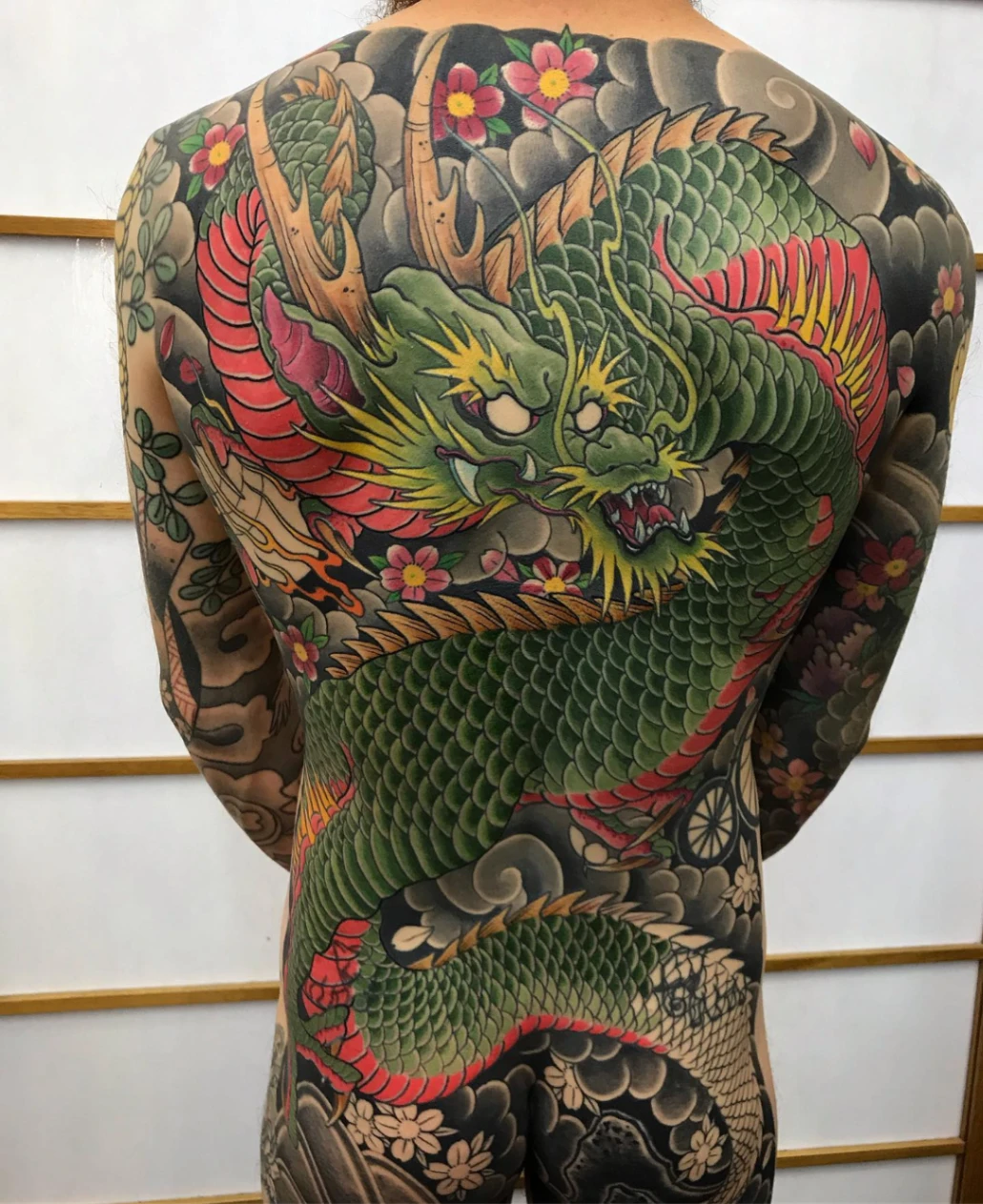
Tattoo Insurance Australia 2026: Coverage, Costs and What Clients Should Ask
Public liability, product liability and blood-borne cover for Australian tattoo studios in 2026. Costs, exclusions and what clients should ask before booking.
Read More