Tattoo Licensing Australia: How to Verify Your Artist's Credentials 2026
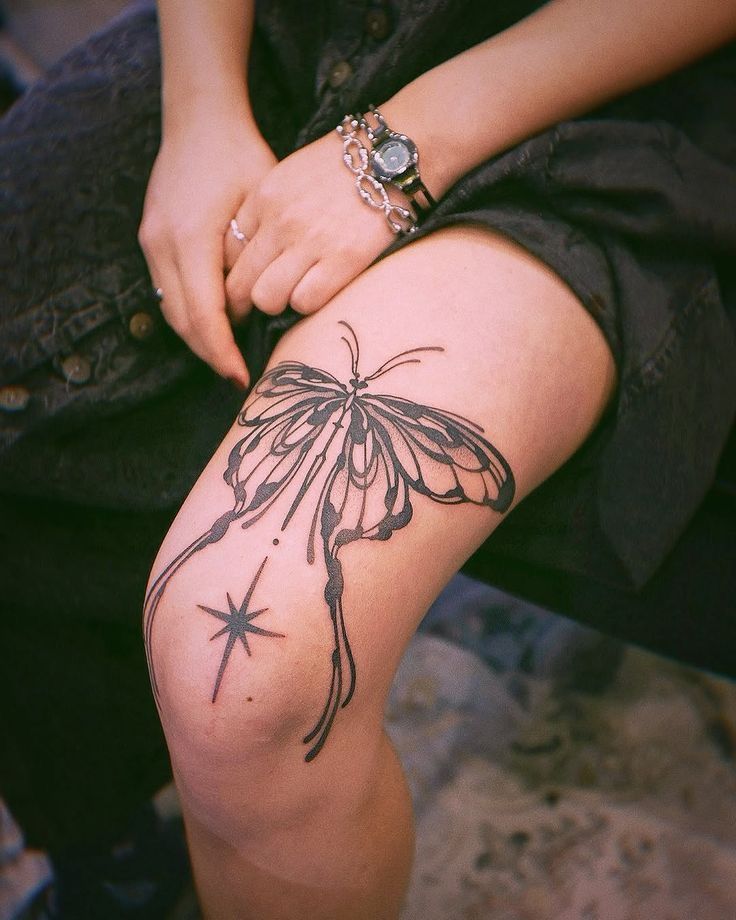
It started with a bargain. A first tattoo booked through a Facebook group, a home studio in someone's spare bedroom, for less than half what any licensed shop quoted. Six weeks later the client was in a GP's office with a spreading skin infection, a course of antibiotics, and the realisation that there was no complaint to file, no insurance to claim against, and no legal body that would touch the case. The artist had no registration, no premises licence, and had since deleted their social media accounts. The savings evaporated into medical bills, and the ink had blown out enough to need professional correction.
That story plays out across Australia each year but stays largely invisible because most victims are too embarrassed to report what happened. Verifying a tattoo artist's credentials before you book takes roughly ten minutes and costs nothing. This guide covers what licensing looks like in every state and territory, what documents to ask for, how to check registration online, and which warning signs mean you should walk away.
Key Takeaways
- All eight states and territories require registration. There is no jurisdiction where tattooing a paying client without a health department premises licence is legal.
- Licensed artists must hold: an active ABN, current premises registration, infection control training, and in several states an individual operator licence.
- ABN verification is free at abr.business.gov.au. If the artist cannot provide a valid ABN, that is a disqualifying red flag.
- Ask before you book: Can I see your premises registration? What is your ABN? Do you hold a current infection control certificate?
- Unlicensed artists carry roughly 100 times the infection risk of a licensed studio due to absent sterilisation protocols and zero health department oversight.
- Mobile artists need a specific mobile operator licence. A studio licence does not automatically cover mobile work.
- Reporting unlicensed operators is handled by your state health department. Reports can be lodged online and anonymously.
- An Instagram portfolio proves artistic skill, not legal compliance. A convincing feed does not mean the artist holds a current licence.
Tattoo Licensing Requirements by State and Territory
Regulation sits with individual states under their respective public health and skin penetration legislation. Standards are broadly similar but documents, registration bodies, and renewal cycles differ.
| State / Territory | Registration Required? | Key Requirements |
|---|---|---|
| NSW | Yes | Premises registration with local council under the Public Health Act 2010. Mobile operators need separate council approval. |
| VIC | Yes | Registered premises under the Public Health and Wellbeing Act 2008. Annual renewal. Infection control certification required. |
| QLD | Yes | Skin penetration business licence from local council. Separate mobile operator permit required. Queensland Health infection control training. Annual inspection. |
| WA | Yes | Premises approved under the Health (Skin Penetration Premises) Regulations 1998. Code of Practice compliance. Annual local government renewal. |
| SA | Yes | Registered premises under the South Australian Public Health Act 2011. Bloodborne virus training and local council inspections required. |
| TAS | Yes | Premises registered under the Public Health Act 1997. Public Health Services Tasmania inspects. Infection control competency required. |
| NT | Yes | Business registration with local council or NT Government. NT Health sterilisation guidelines apply. Infection control training required. |
| ACT | Yes | Business licence through Access Canberra. Infection control certification and ACT Government health compliance checks required. |
"All Australian states and territories require tattoo artists and studios to hold current registration or licences. Operating without registration is illegal and can result in fines of $5,000 to $50,000 and forced closure."
The studio should be able to produce a current premises registration certificate. An artist working from home without it is operating illegally in every jurisdiction. For context on what a compliant premises looks like, see our guide to tattoo shop hygiene standards in Australia.
What Credentials Should Your Artist Have?
A fully compliant tattoo artist should be able to demonstrate credentials across several distinct categories. The absence of any one is a genuine risk signal.
Australian Business Number (ABN)
Any tattooing business in Australia must hold an active ABN. Verify one at abr.business.gov.au. Confirm the status is "Active," the registered name matches the studio, and the state matches its location. An artist without an ABN is not operating a legal business.
Health Department Premises Registration
This certificate confirms the physical space has been inspected by the relevant health authority, is typically renewed annually, and should be displayed in the studio. It confirms that sterilisation equipment, ventilation, waste disposal, and surfaces have been assessed against the public health code. A studio that cannot produce it has never been registered or has let registration lapse. For a breakdown of compliant sterilisation protocols, see our article on tattoo sterilisation standards in Australia.
Operator Licence (States That Require Individual Licences)
Some jurisdictions mandate that individual operators hold their own licence beyond premises registration. Queensland's skin penetration business licensing is the clearest example. In Queensland, ask to see both the premises registration and the individual skin penetration licence. They are separate documents and both must be current.
Infection Control Training and Bloodborne Pathogen Certification
Every state and territory code of practice requires infection control training, typically a unit from the Certificate IV in Beauty Therapy or equivalent. This covers personal protective equipment, sterilisation cycles, safe sharps disposal, and exposure incident management. Certificates should be current within the last two to three years.
First Aid and Professional Liability Insurance
A studio without public liability cover has no financial backstop if a client suffers an adverse outcome. Your only recourse is a civil claim against an individual who may have limited assets. Ask whether the studio is insured before booking.
How to Verify Credentials Step by Step
The following process takes about ten minutes online and a few pointed questions in the studio.
Step 1: ABN Lookup Online
Search the business name at abr.business.gov.au. Confirm the ABN status is "Active," the registered name matches the studio, and the state of registration matches the studio's location. If the search returns no results, ask for the ABN directly.
Step 2: State Health Register Check
Registration records are held by local councils. In NSW, VIC, WA, SA, and NT, contact the relevant local council environmental health team. In QLD, Brisbane City Council's Public Health team handles Brisbane studios; other areas use the relevant local council. In TAS, contact Public Health Services Tasmania. In ACT, search Access Canberra business licence records or contact ACT Health.
The simpler proxy: ask the studio to photograph their registration certificate and send it to you. A real certificate shows the issuing council's name, the registered business name, the premises address, and an expiry date.
Step 3: In-Person Studio Inspection Checklist
When you walk into a studio for the first time, take a few minutes to observe the space before committing to a booking.
In-Person Studio Checklist
- Registration certificate displayed on the wall.
- Autoclave visible or the artist can point to one on the premises.
- Workstation surfaces are non-porous, not fabric or bare wood.
- Sharps disposal containers (yellow bins) present and not overfull.
- Artist opens single-use needle cartridges from sealed packaging in front of you.
- Artist wears fresh gloves and changes them if touching anything non-sterile.
- Ink caps are single-use disposables, not poured back into bottles.
- Studio smells clean. No evidence of pets, cooking, or residential use.
- Consent forms and written aftercare instructions are provided.
Step 4: Questions to Ask Your Artist
Every licensed artist has been asked these questions and will answer without hesitation. Defensiveness or evasion is itself a red flag.
- "Can I see your premises registration certificate?"
- "What is the studio's ABN?"
- "Do you hold a current infection control certificate, and when was it last renewed?"
- "Do you carry public liability insurance?"
- "Are the needles single-use and opened in front of me?"
- "Do you have an autoclave on the premises?"
Red Flags: When to Walk Away
The following warning signs should end a booking conversation immediately, regardless of the artist's portfolio, price, or personality.
Red Flags: Do Not Book If You Observe Any of These
- Cannot or will not provide an ABN. No legitimate tattooing business lacks an ABN. This indicates illegal operation.
- Works from a domestic space without council-registered premises. Bedrooms, garages, and kitchens cannot meet the standards required for health registration.
- No autoclave on the premises. Reusable equipment that has not been autoclaved is not sterile. Chemical soaking is not a substitute.
- Needles not opened from sealed packaging in front of you. Any suggestion that needles are reused between clients is an immediate disqualifier.
- Dramatically below-market pricing. Under $50 per hour from a non-apprentice in an unregistered space signals that the cost of compliance is not being paid.
- Artist becomes hostile when asked about registration. A licensed artist has nothing to hide. Hostility reliably indicates something is being concealed.
Health and Financial Risks of Unlicensed Artists
The risks of an unlicensed tattoo are well-documented in Australian public health literature. The downside is not a slightly worse tattoo. It can be months of treatment and thousands of dollars in costs.
| Risk | Likelihood | Consequence |
|---|---|---|
| Hepatitis C | Significantly elevated. Non-sterile needles or contaminated ink are a documented transmission vector. | Chronic liver disease, cirrhosis. Antiviral treatment costs $10,000 to $20,000. Lifelong monitoring required. |
| Staph or MRSA | High. Unsterile environments and non-autoclaved equipment create ideal conditions. MRSA is strongly associated with unregistered premises. | Abscess, cellulitis, systemic sepsis in severe cases. Antibiotic costs from $200 to several thousand dollars. Long-term scarring common. |
| Toxic ink reaction | Moderate to high. Unregulated inks from overseas suppliers may contain heavy metals or formaldehyde not permitted in TGA-approved products. | Persistent granulomas, photoallergic reactions. Laser removal ($300 to $2,000 per session) may be required for years. |
| Poor healing and scarring | High. Incorrect needle depth and absent aftercare guidance with no professional accountability. | Blowout, colour migration, distorted linework. Laser correction costs $500 to $5,000. Cover-up typically costs more than the original. |
Financial Risks Beyond Medical Costs
A licensed studio carries public liability insurance. An unlicensed home tattooist carries no such cover, meaning your only recourse is a civil claim against an individual who may have limited assets. Laser removal costs $200 to $500 per session, with most pieces requiring eight to fifteen sessions. A botched tattoo can generate $3,000 to $7,500 in laser costs before any cover-up work begins. A $200 saving at booking is not a saving if it leads to $500 in antibiotics, $200 in GP fees, and $5,000 in laser removal.
Home Tattooists vs Licensed Mobile Artists
An unlicensed home tattooist and a licensed mobile artist are not the same. Legitimate mobile practitioners have gone through the same registration process as a fixed studio.
Unlicensed Home Tattooist (Illegal)
- No premises registration
- No health department inspection
- No verified infection control training
- No ABN in most cases
- No autoclave or sterilisation documentation
- No public liability insurance
- Illegal in all eight states and territories
- No complaint mechanism other than civil claim
Licensed Mobile Artist (Legal in Some States)
- Council-issued mobile operator licence or permit
- Mobile unit inspected by health authority
- Current infection control certification
- Registered ABN matching the mobile business
- Portable autoclave or documented single-use protocols
- Public liability insurance covering mobile work
- Legal where state framework permits mobile work
- Subject to same complaint process as a fixed studio
What to Verify for Mobile Artists
- Mobile operator licence: Ask for this specifically. In Queensland and NSW, it is a separate document from a studio registration.
- Mobile unit inspection: Ask when the vehicle or portable kit was last inspected by the relevant health authority.
- Sterilisation protocol: Confirm a portable autoclave or strictly single-use documented approach. A mobile artist who cannot explain this has not thought through compliance.
- Insurance for mobile work: Not all public liability policies cover mobile tattooing. Ask specifically whether off-premises work is covered.
- Working environment: A compliant mobile setup uses a clean, non-porous surface. A bed or kitchen table does not meet health code standards.
Browse verified studios in Sydney, Melbourne, and Brisbane for examples of properly registered businesses.
Frequently Asked Questions
Are apprentices required to be licensed?
Apprentices working in a registered studio are covered by the studio's premises registration and do not typically need their own operator licence during training. An apprentice working from home is not covered by any registration and is operating illegally. Confirm that any apprentice you book is based in a properly registered studio with a licensed mentor.
How can I report an unlicensed tattoo artist?
In NSW and VIC, reports go to the local council environmental health team. In QLD, contact the relevant local government authority. In SA, TAS, NT, and ACT, contact your state health department or local council. Most jurisdictions allow anonymous reporting. Search "[your state] skin penetration premises complaint" to find the correct contact.
Do artists need both business registration AND health permits?
Yes. ABN registration is a tax requirement administered by the Australian Taxation Office. Premises registration is a separate public health requirement administered by local councils. An artist can have a valid ABN and still be operating an unregistered premises. A studio that produces one document but not the other warrants a direct question about why.
Can I check for complaints or violations against a studio?
Australia has no centralised public register of tattoo studio complaints. The most accessible indicators are Google and TripAdvisor reviews mentioning hygiene issues, local community Facebook groups, and whether registration has lapsed. A direct FOI request to the local council environmental health team is the most reliable approach, though it may take several weeks.
Is an Instagram portfolio enough proof of legitimacy?
No. An impressive healed-work feed tells you nothing about whether the artist holds a current premises registration, infection control certification, or public liability insurance. The only proof of legitimacy is documentation: an active ABN, a current premises registration, and an infection control qualification. Portfolio quality matters when choosing between licensed artists. It is not a substitute for compliance verification.
"Bottom Line: Licensing protects you, not just the industry. Ten minutes of verification today can prevent months of medical treatment and thousands in costs tomorrow."
Finding a licensed, inspected studio takes far less effort than dealing with a preventable infection or expensive laser correction. Browse properly registered studios and let the licensing conversation be about confirming details, not discovering them for the first time.
Explore More
Find Tattoo Shops
Browse by Style
Stay Updated with the Latest Insights!
Get the latest news and updates delivered to your inbox.
Related Articles
Tattoo After Vaccination: Timing Guide for Australia 2026
Learn safe timing for tattoos after COVID, flu and other vaccines in Australia. Expert guide covering the 2 to 4 week waiting period.
Read More
Finger Tattoos Australia 2026: Complete Guide to Designs, Fading and Cost
Finger tattoo guide for Australia in 2026. Designs, pain, fading truths, healing tips, ring tattoos and price bands. What to book and what to skip.
Read More
Tattoo Insurance Australia 2026: Coverage, Costs and What Clients Should Ask
Public liability, product liability and blood-borne cover for Australian tattoo studios in 2026. Costs, exclusions and what clients should ask before booking.
Read More