Blackout Tattoo Guide Australia 2026: Solid Black Coverage and Cost
Imagine looking down at a forearm that used to carry your ex-partner's name in old tribal and seeing nothing but a clean, deep black canvas. That is what a blackout tattoo does. It is the bluntest, boldest style in the modern tattoo world, and in Australia in 2026 it is quietly booming for two very different reasons. Some clients want the dramatic aesthetic. Others want a fast, guaranteed cover-up for ink they have outgrown.
This guide covers what a blackout piece really involves. How the sessions stack up, why the pain sits above almost every other style, what negative space designs can do inside the black, and what you should expect to pay in Sydney, Melbourne, Brisbane, Perth or Adelaide.
Key Takeaways
- What it is: Complete, opaque black coverage of a body area, often a forearm, sleeve, calf or panel
- Two main uses: Bold aesthetic statement, or heavy cover-up for tattoos too dark for traditional cover work
- Sessions: 2 to 5 sittings, typically 4 to 8 hours each, spaced 3 to 4 weeks apart
- Pain: 7 to 9 out of 10. The most intense end of the pain spectrum you can book
- Cost: $1,200 for a forearm, $2,500 to $6,000 for a half sleeve, $12,000+ for a full leg
- Permanence: Blackout is functionally irreversible. Laser removal costs $10,000+ and rarely finishes the job
- Design upgrade: Negative space patterns (mandalas, ornamental, script) turn a blackout into a proper design piece
What a Blackout Tattoo Actually Is
A blackout is not shading. Shading has depth, tonal ranges and negative shapes. A blackout is a saturated, uniform black surface, packed until light stops bouncing back and the skin looks like a matte black canvas. Getting there takes multiple passes because human skin cannot absorb that much ink in one session without scarring or blowing out.
There are five common variations you will see in Australian portfolios.
| Type | Description | Best for |
|---|---|---|
| Full blackout | Complete solid coverage of a limb or panel | Bold aesthetic statement or total cover-up |
| Partial blackout | Solid black on a section only, forearm or calf | Targeted cover-up or design accent |
| Negative space | Skin-tone shapes carved out of a black field | Modern artistic look, ornamental designs |
| Ornamental blackout | Blackout paired with mandala or geometric negative space | Clients who want art, not just black |
| Cover-up blackout | Solid black over a regretted piece | Old tribal, deep blackwork, botched work |
Blackout as a Cover-Up Route
Roughly half of the blackout enquiries in Australian shops are cover-up jobs. Traditional cover-up work only stretches so far. Dark tribal, solid black lettering, previous cover attempts and older Chinese script are all notorious for defeating a design-based cover-up. Blackout ends the discussion.
Blackout versus laser removal for cover-ups
| Factor | Blackout tattoo | Laser removal |
|---|---|---|
| Timeline | 2 to 5 sessions over 3 to 6 months | 8 to 15 sessions over 12 to 24 months |
| Cost (sleeve) | $1,500 to $4,000 AUD | $4,000 to $8,000+ AUD |
| Pain | 7 to 9 out of 10, grinding | 8 to 10 out of 10, sharp and burning |
| End result | A new bold black tattoo | Bare skin with some ghosting |
| Effectiveness | 100% coverage guaranteed | 70 to 95% removal |
If the goal is bare skin, laser wins. If the goal is a decisive line under the past, blackout wins. Read our laser removal versus coverup comparison for the full breakdown.
Pain: Be Honest With Yourself
Blackout pain is not comparable to a normal tattoo session. It sits at the top of the pain scale because every square centimetre gets packed with ink two or three times, over hours, without the visual breaks that make normal work bearable.
Grinding sandpaper on sunburnt skin for six hours. Hour one you are fine. Hour two you are questioning your decision. Hour three you are in survival mode. That is a fair description most artists agree with.
Pain map
- Outer arm blackout: 6 to 7 out of 10
- Forearm blackout: 7 to 8 out of 10
- Calf blackout: 7 to 8 out of 10
- Thigh blackout: 6 to 7 out of 10 outer, 8 to 9 inner
- Rib and spine blackout: 9 to 10 out of 10, at the ceiling
How to survive a blackout session
- Eat a real meal two hours before. Bring snacks and electrolyte drinks
- Ibuprofen 400mg half an hour before. Do not touch aspirin (it thins the blood)
- Ask about numbing cream. Roughly 40% of artists allow BLT cream on blackouts. It cuts the pain sharply for the first two hours
- Take a break every 90 minutes. Ten minutes off is worth more than pushing straight through
- Book multiple sessions on purpose. Three moderate sessions produce a cleaner blackout than one heroic one
Our pain management guide covers breathing techniques and distraction tools that help across long sittings.
Sessions, Healing and Timeline
A full blackout sleeve is a project, not an appointment. Skin can only absorb so much trauma at once, so every artist builds the piece in layers.
| Session | Goal | Duration | Heal window |
|---|---|---|---|
| Session 1 | First pass, 40 to 60% coverage | 5 to 8 hours | 3 to 4 weeks |
| Session 2 | Second pass, 70 to 85% coverage | 4 to 6 hours | 3 to 4 weeks |
| Session 3 | Third pass, near saturation | 3 to 5 hours | 3 to 4 weeks |
| Sessions 4 to 5 | Fill gaps, touch-ups | 2 to 4 hours | 2 to 3 weeks |
Project timeline: Three to six months for a forearm or calf. Six to nine months for a full sleeve.
Healing quirks specific to blackout
- Days 1 to 3: Heavy swelling, plasma weeping, tight skin. Bigger than a normal tattoo
- Days 4 to 10: Thick black flakes peel off in dinner-plate-sized sheets. This looks alarming and is completely normal
- Weeks 2 to 4: Itching that will test your willpower. Slap, do not scratch
- Months 2 to 6: Colour settles. Uneven patches only become visible now, which is why touch-up sessions are built in
Design Options: Beyond Solid Black
Most modern blackouts are not fully solid. Australian artists specialising in this style often build in negative space or ornamental elements that turn the piece from a canvas into a design.
Popular negative space treatments
- Ornamental mandalas: Skin-tone geometry carved from the black
- Floral silhouettes: Botanical shapes in negative space, popular on forearms and calves
- Script and lettering: Words rendered as skin-tone gaps
- Ornamental bands: Decorative borders that break up a full blackout limb
- Sacred geometry: Triangles, hexagons and dot mandalas as accent detail
Design tips clients often miss
- Delicate fine lines get eaten by the black over five to ten years. Go bold or skip them
- Negative space must be planned before the first pass. You cannot subtract black without laser
- Symmetry matters. Any wobble in the outline is highly visible against solid black
- Skin tone changes the effect. Lighter skin gives higher contrast, darker skin gives a subtler, moodier finish
Blackout Pricing Australia 2026
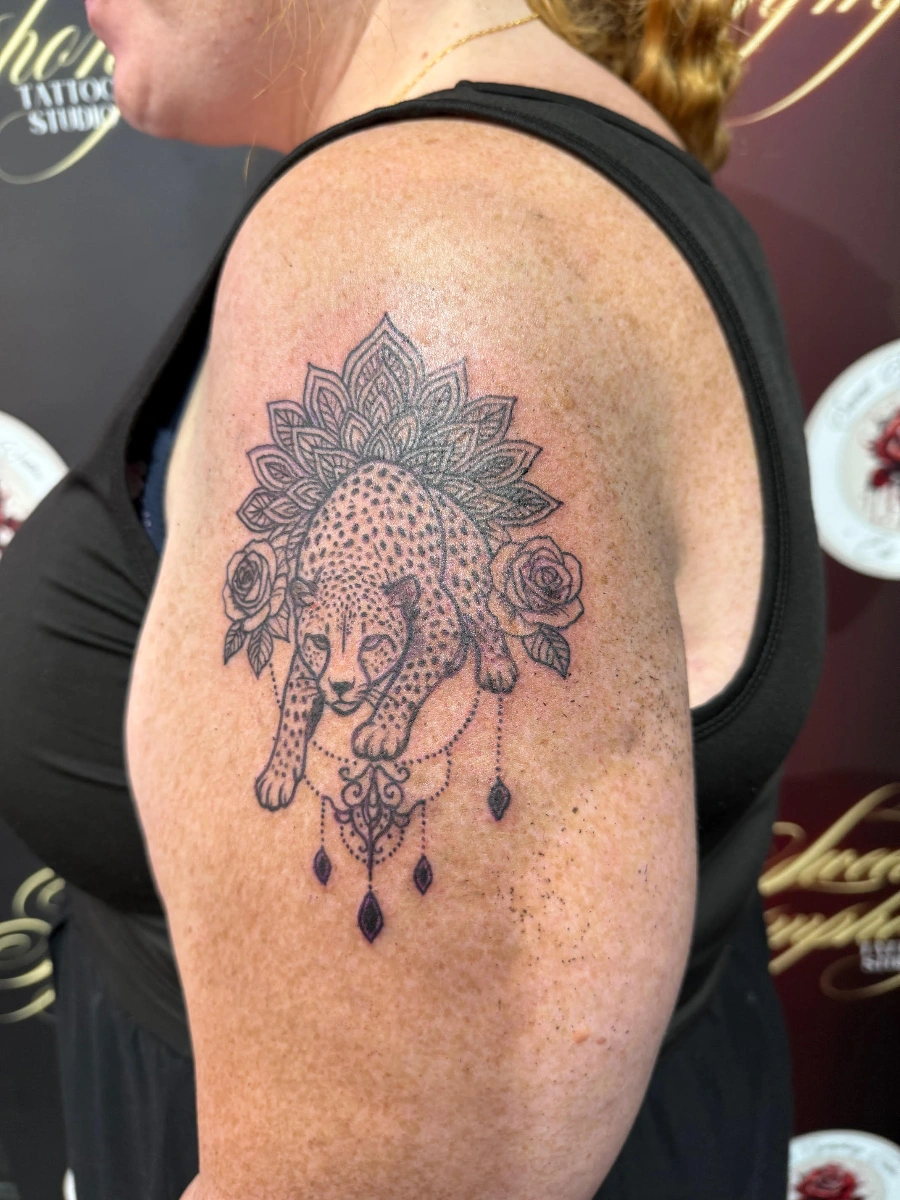
Photographs below are example portfolio pieces from real Australian artists on the platform. The cost breakdowns are illustrative averages based on typical Australian market rates and do not represent the actual fee charged for the specific tattoo shown.
Hourly rates
- General tattoo artist: $150 to $220 per hour
- Blackout or blackwork specialist: $200 to $300 per hour
- Master ornamental blackwork artist: $280 to $450 per hour
By coverage area
| Area | Sessions | Hours | Price range (AUD) |
|---|---|---|---|
| Forearm blackout | 2 to 3 | 8 to 14 | $1,200 to $3,200 |
| Half sleeve blackout | 3 to 4 | 15 to 25 | $2,500 to $6,000 |
| Full sleeve blackout | 4 to 5 | 25 to 40 | $4,000 to $12,000 |
| Leg blackout (thigh to ankle) | 4 to 6 | 30 to 50 | $5,000 to $15,000 |
| Torso panel (chest or back) | 3 to 5 | 20 to 35 | $3,500 to $10,000 |
Extra costs to plan for
- Custom negative space design: $200 to $800
- Cover-up premium: Add 10 to 20% if you are going over existing dark ink
- Aftercare: Larger cream tubes, more of them. Around $80 for a full sleeve project
- Time off work: One or two recovery days per session, especially early on
Want to see how the numbers stack against other big pieces? Cross-check with our full sleeve cost guide and half sleeve cost guide.
Aging: How Blackout Holds Up
Black ink ages better than any other pigment, but Australian UV is the constant threat. Without daily SPF you will see saturated black drift towards blue-grey within five years.
- Years 1 to 5: Deep black with high contrast
- Years 5 to 10: Slight lightening to charcoal, still bold
- Years 10 to 20: Charcoal grey, uneven saturation may show
- Touch-up window: Every 8 to 12 years to restore the depth
Read our tattoo aging guide and lean into SPF 50+ every single day. Ozone is thin down here.
Finding the Right Artist
Blackout is a specialty skill. Any qualified artist can lay black ink, but only a specialist gets the saturation even. Uneven blackouts look muddy for the rest of your life.
What to look for
- A portfolio of at least ten healed blackouts, not just fresh photos
- Even saturation across curves (elbow, kneecap, shoulder). Fresh photos often hide the wobble
- Cover-up examples if you are booking one. Ask to see before and after
- Clear conversation about sessions, timeline and touch-ups included in the quote
Red flags
- Only single-session blackout examples. That means one-pass work, which fades unevenly
- No discussion of aftercare. Blackout aftercare is more demanding, not less
- Prices way below the range. Cheap ink is a false economy on a lifetime tattoo
Our artist selection guide walks through consultation questions and portfolio evaluation.
Frequently Asked Questions
Will I regret a blackout tattoo?
Regret rates are actually low because most blackout clients arrive already certain. The people who regret it either rushed the decision or booked with an artist who could not deliver even saturation. Sit with the idea for six months before you commit.
Can a blackout be removed?
Technically yes, in practice barely. Full laser removal on a blackout takes 20 to 40 sessions, costs $10,000 to $30,000, and usually leaves visible ghosting. Assume a blackout is permanent.
Can I add designs later on top of a blackout?
Only very limited options. White ink shows briefly then fades. Bright red, orange or yellow can sit on black but looks unconventional. Most people plan negative space designs before the blackout starts, not after.
How dark does the tattoo look immediately after?
Very dark, glossy and slightly swollen. It looks more intense the first week than at final heal. By month two the black settles into a matte finish. Do not judge the final look from day-two photos.
Is blackout safe for darker skin tones?
Yes, but the visual contrast is subtler. Some artists recommend adding negative space or ornamental elements so the design still reads clearly. Ask for portfolio examples on similar skin tones during consultation.
Bottom Line
A blackout is one of the biggest commitments in the tattoo world. Done well by a specialist it is the cleanest cover-up on the market and one of the boldest modern looks. Done poorly it is a lifetime of muddy grey patches. Pick the artist, plan the sessions, and treat the pain and aftercare seriously.
Ready to explore the style? Start with our blackwork gallery, or browse Sydney, Melbourne and Brisbane studios with blackout specialists on their roster.
Explore More
Find Tattoo Shops
Browse by Style
Stay Updated with the Latest Insights!
Get the latest news and updates delivered to your inbox.
Related Articles
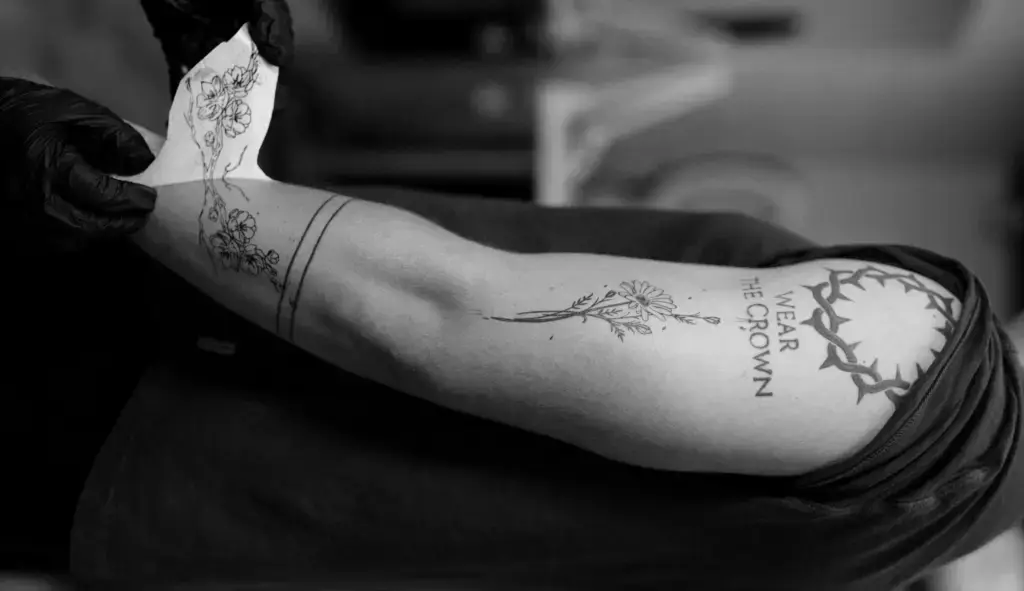
Tattoo Price Guide
Tattoo price guide for Australia 2026. Hourly rates, by-style and by-size pricing, city comparison, hidden costs, and how to budget.
Read More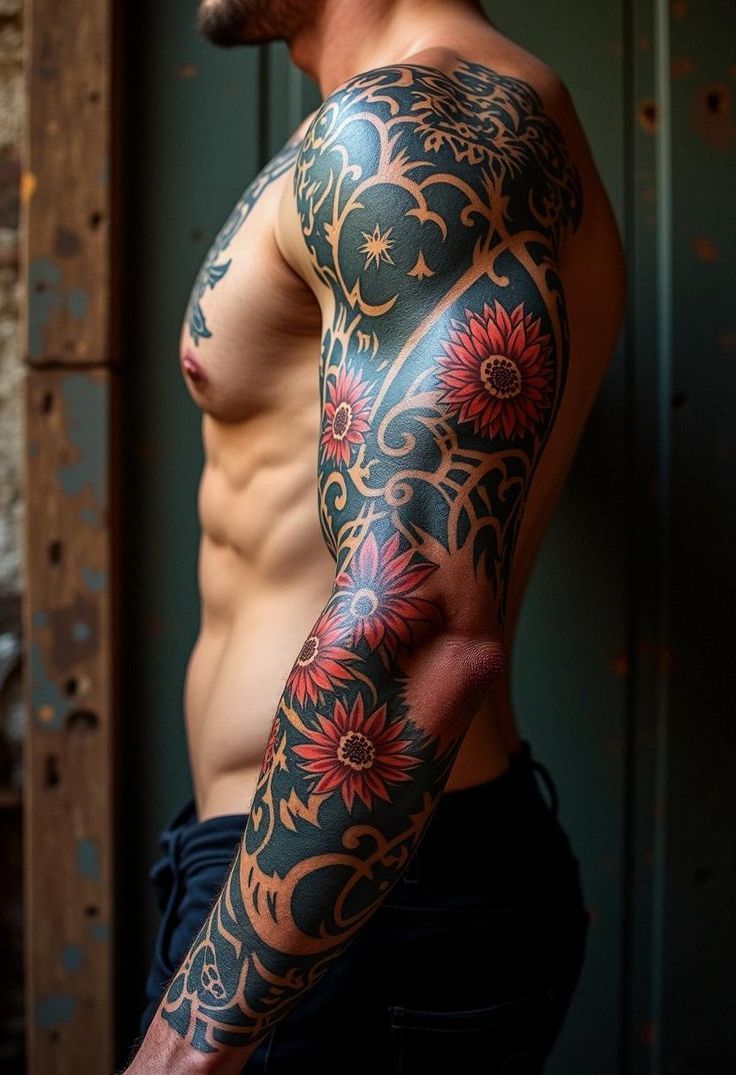
Half Sleeve Tattoo Cost Australia 2026: Complete Pricing Guide
Half sleeve tattoo cost in Australia 2026: $800-$2,500 across 2-5 sessions. Style, city, and artist tier breakdowns plus payment plans.
Read More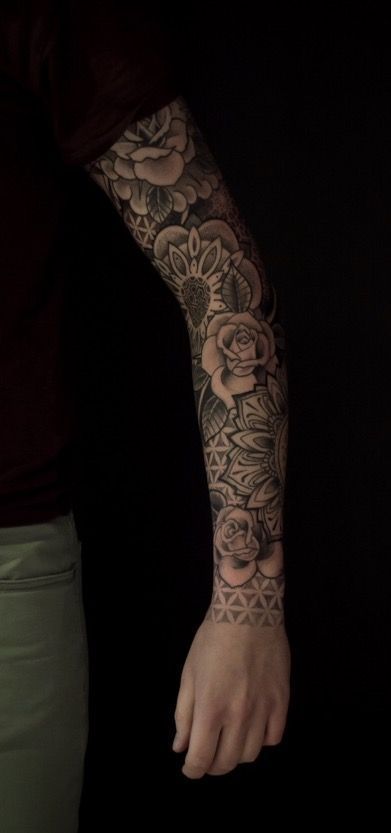
Full Sleeve Tattoo Cost Australia 2026: Complete Investment Guide
Full sleeve tattoo cost in Australia 2026: $1,500-$6,000 over 4-8 sessions. Style, city, and artist tier breakdowns plus payment plans.
Read More