Calf Tattoo Ideas Australia 2026: Design, Placement and Pricing Guide
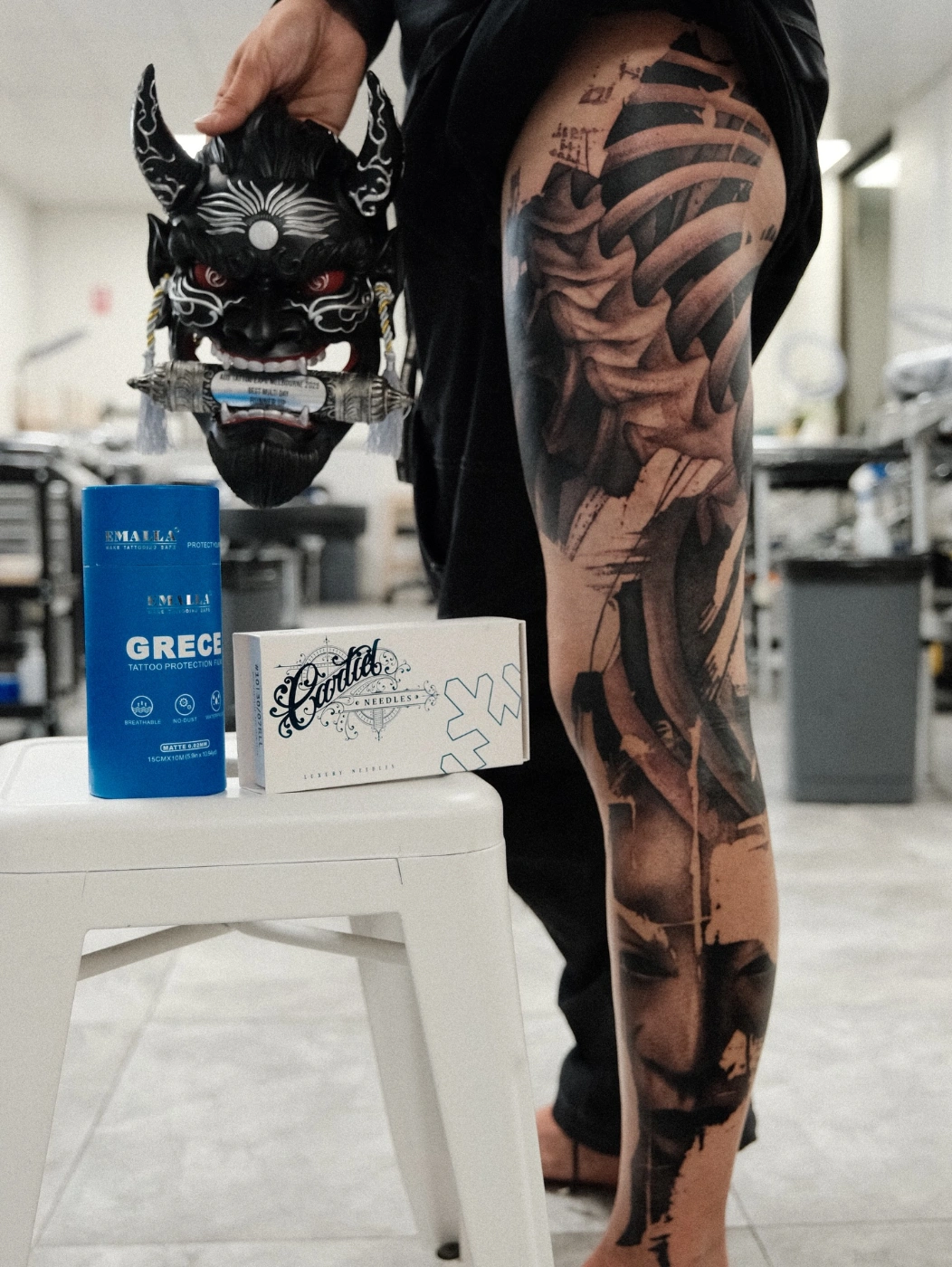
The calf is the workhorse placement of Australian tattoo culture. It is the second-most-tattooed part of the body after the forearm, and for good reason. The calf offers a generous flat-to-curved canvas, tolerates the needle better than most zones, wraps naturally with anatomy, and can be hidden by long shorts or revealed at the beach on the same day. In 2026, calf tattoos remain one of the most requested placements across every Australian city, from full-colour Japanese pieces to stark blackwork skeletons to soft botanical wraps. This guide covers front calf versus back calf, wrapping designs, honest pain expectations, how muscle definition affects the tattoo, and Australian pricing across every scale.
Key Takeaways
- Pain rating (honest): 4 to 7 out of 10. Outer calf is one of the most forgiving zones on the body; inner calf and shin sit at the higher end.
- Placement variations: Front calf (shin), back calf (muscle), outer calf, inner calf, full wrap, upper calf transition to knee.
- Best styles: Japanese scenes, black and grey realism, blackwork, ornamental, illustrative, botanical florals, portrait work.
- Australian pricing: $300 to $650 for small designs, $800 to $1,600 for medium detailed, $1,800 to $3,500 for large wraps, $3,000 to $6,000 for full leg sleeve extension.
- Muscle definition: Well-defined calves show design flex during walking; softer calves offer a stiller canvas. Both work; the design should suit the anatomy.
- Wrapping designs: Full 360-degree wraps are technically demanding and need 2 to 3 sessions minimum for clean linework.
- Healing considerations: Standing all day, exercise, tight jeans and socks all interact with a healing calf tattoo.
- Session tolerance: Most calf placements support 3 to 5 hour sessions without difficulty.
Why the Calf Is Australia's Favourite Leg Placement
Ask any experienced Australian tattoo artist which leg placement they book most and the calf will come up first. There are technical, aesthetic and lifestyle reasons behind that.
Technically, the calf muscle provides a soft cushion of tissue between skin and bone. This absorbs needle vibration far better than the shin, which sits over bone directly. The result is a placement that hurts less, heals faster and holds ink more evenly than most other lower-body options.
Aesthetically, the calf is naturally cylindrical, which suits wrapping compositions beautifully. Portraits sit comfortably on the flat outer calf; scenes flow around the muscle; botanical stems climb naturally along the vertical axis.
Lifestyle-wise, the calf is easy to cover for work and easy to show at the beach. In Australia, where summer runs eight months of the year and half the country lives close to the coast, a placement that can be a private piece under trousers and a public statement in shorts fits how most people actually live.
In a nutshell: the calf hurts less, heals faster and adapts better to design variety than almost any other leg placement. It is the safest bet for a first larger tattoo and one of the most versatile long-term canvases.
Calf Placement Zones and Their Personalities
Front Calf (Shin)
The front of the lower leg, over the tibia bone. Pain rating 6 to 7 out of 10 because there is very little tissue between skin and bone here. Best for bold outlines that need to punch: single-panel portraits, script, geometric compositions. Not ideal for delicate fine-line work that needs to sit softly on the skin.
Back Calf (Muscle)
The rear muscular calf. Pain rating 4 to 5 out of 10, one of the most forgiving zones on the body. Best for detailed work that needs long sessions: realism portraits, Japanese scenes, dense botanicals, ornamental mandalas. This is where marathon sessions are most sustainable.
Outer Calf
The lateral side of the calf. Slightly firmer than the back muscle. Pain rating 4 to 6 out of 10. Excellent for portraits and scenes that will be seen when the leg is at rest; visible when standing or walking.
Inner Calf
The medial side of the calf. Pain rating 5 to 7 out of 10, higher than outer because of nerve density. Best for smaller pieces or the completion of a wrapping composition rather than a standalone design.
Full Wrap (360 Degrees)
Design continues all the way around the calf. Requires 2 to 3 sessions minimum (front and back cannot be tattooed in the same sitting due to positioning). Pain varies zone by zone. The most impressive commitment; not a starter piece.
Upper Calf Transition to Knee
The area where the calf meets the back of the knee. Pain rating 6 to 8 out of 10; the crease at the back of the knee is one of the sharpest zones on the body. Popular as the transition point for full leg sleeves.
Best Design Styles for Calf Tattoos
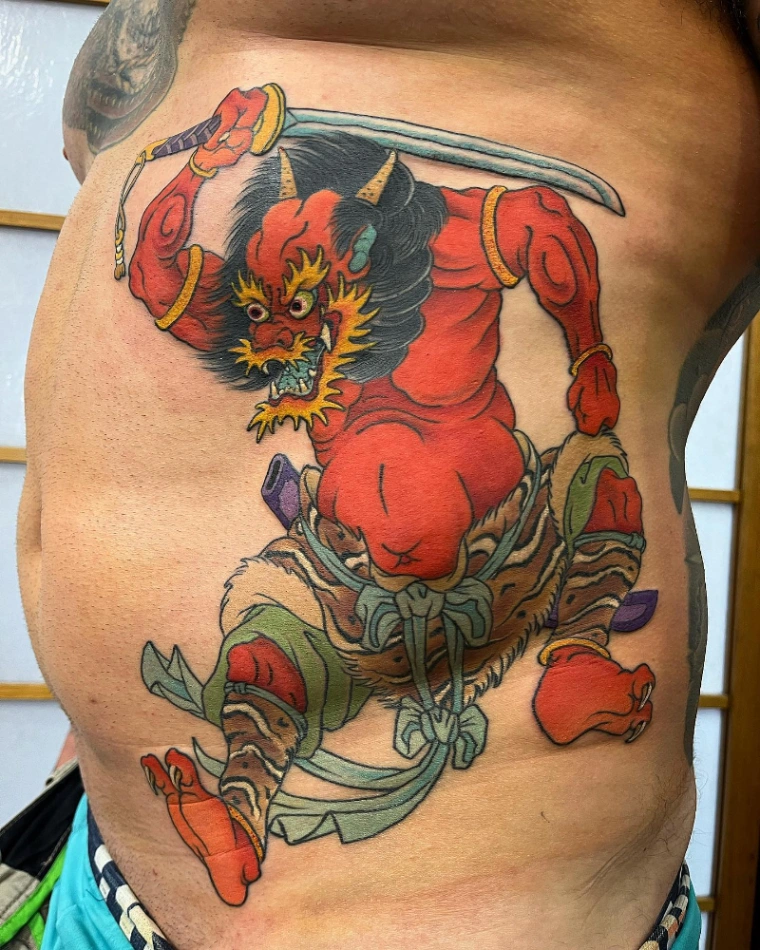
Japanese
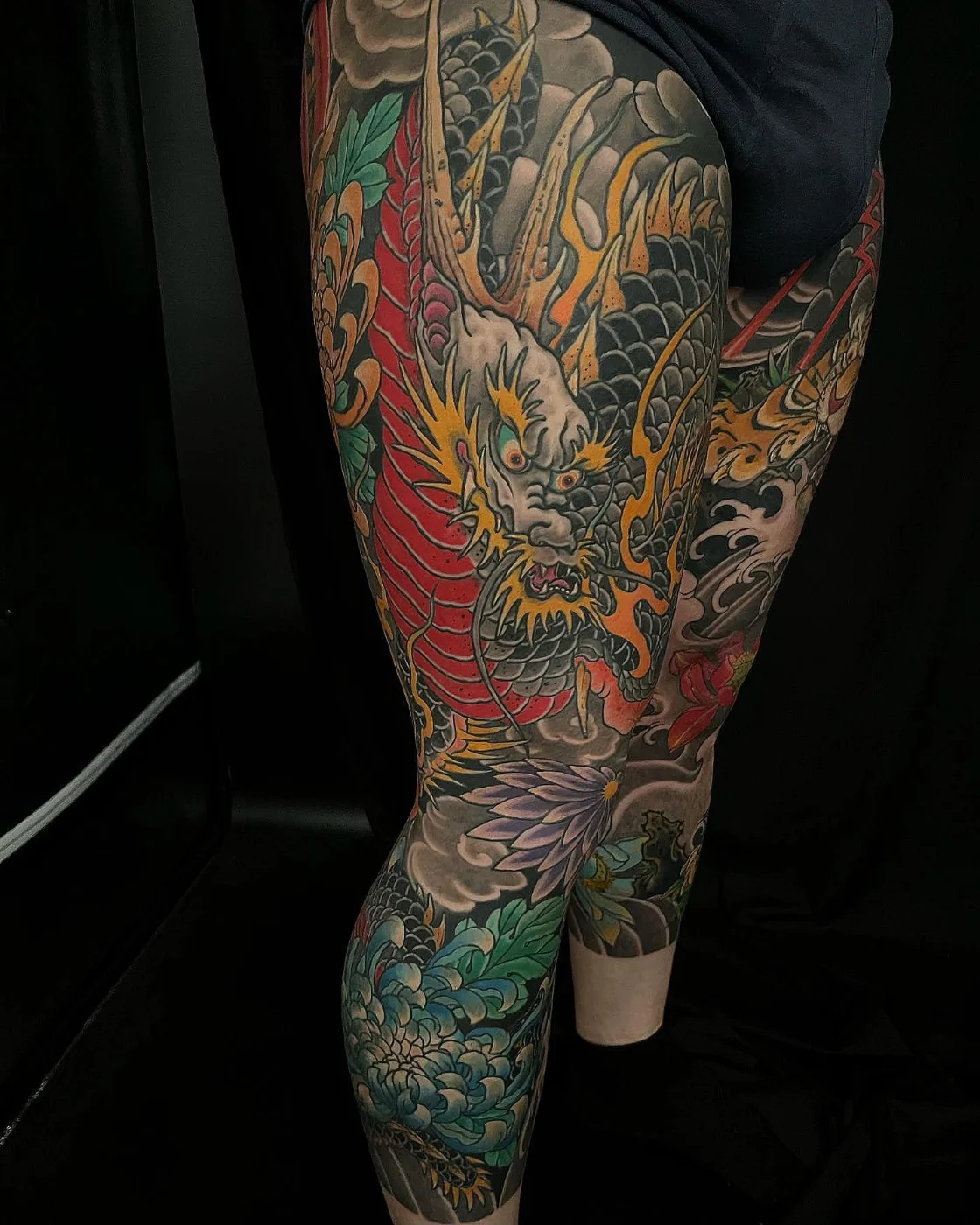
The calf is the classical Japanese tattoo placement outside of the full body suit tradition. Dragons wrapping the muscle, koi swimming upward, cherry blossoms trailing, tigers curled around the shape of the leg. Rich colour, thick outlines, dynamic curves. Japanese calf work suits scale; a 25 to 40 cm design is where the style breathes. Explore examples in the Japanese tattoo ideas gallery.
Black and Grey Realism
Portrait work, animals, dramatic scenes rendered in tonal shading without colour. Ages more gracefully than colour realism and reads powerfully at any distance. The back and outer calf are ideal because they provide a stable canvas for the fine tonal transitions realism requires. Browse the realism tattoo ideas gallery.
Blackwork
Solid black shapes with negative space, geometric patterns, silhouettes. The most durable style long term. Blackwork calf tattoos read from across a room and hold shape for decades. See the blackwork tattoo ideas gallery.
Traditional and Neo-Traditional
Bold outlines, saturated colour, classic imagery. Roses, panthers, ships, eagles, daggers. Traditional style was practically invented for the calf; the placement holds thick lines and solid colour beautifully. Ageing behaviour is excellent.
Ornamental and Mandala
Symmetric geometric patterns wrapping the calf like a decorative sleeve. Requires an artist who understands geometric alignment on curved surfaces. Impressive when done well; awkward when not.
Illustrative
Sketch-like linework, expressive shading, personality in every mark. One of the fastest-growing styles for calf tattoos in Australia in 2026 because it delivers the impact of realism with more artistic voice.
Botanical and Floral
Trailing stems, blooming compositions, wildflower panels. Works beautifully on the outer calf as a soft feminine or masculine piece depending on interpretation. Fine-line or bold line both suit calf botanicals.
Portrait
Realism portraits of people, pets, mythological figures. The back and outer calf provide the flat canvas portrait work needs. Book with a portrait specialist; general realism artists sometimes struggle with facial proportions.
Muscle Definition and Calf Tattoos
Well-defined calves flex noticeably during walking, running, and standing. The tattoo shifts with the muscle. This can be a feature or a challenge depending on the design.
Well-Defined Calves
- Advantage: Tattoos can be designed to flex with muscle movement, adding dynamism.
- Challenge: Detailed portraits should be placed where flex is minimal (outer calf sitting) or the composition should account for the movement.
- Best styles: Japanese scenes and blackwork tolerate movement well; ultra-fine detail may distort.
Softer Calves
- Advantage: Stable canvas for detailed realism and fine-line work.
- Challenge: If you plan to build significant calf muscle in the future (running, cycling, weight training), the design may stretch as muscle mass increases.
- Best styles: Any; the softer canvas is the most forgiving for high-detail work.
Weight Change and the Calf
Significant weight change affects the calf less than most placements because the leg carries proportionally less fat. Still, changes of more than 15 kg either direction can shift the tattoo noticeably. If you are actively losing or gaining weight, wait 6 months of stability before booking a large piece.
Australian Pricing for Calf Tattoos in 2026
Photographs on this page are example portfolio pieces from real Australian artists. The cost figures are illustrative averages based on typical Australian market rates in 2026 and do not represent the actual fee charged for the specific tattoo shown.
The calf is one of the most price-friendly placements because artists can work efficiently there. Marathon sessions are sustainable, meaning bigger pieces get done in fewer sittings, which drops the total cost of studio time.
| Design | Size | Sessions | Price Range (AUD) |
|---|---|---|---|
| Small blackwork or script | 5-10 cm | 1 | $250-$500 |
| Medium illustrative | 12-20 cm | 1 | $500-$900 |
| Detailed realism portrait | 15-25 cm | 1-2 | $800-$1,600 |
| Traditional or neo-traditional panel | 20-30 cm | 2 | $900-$1,800 |
| Ornamental wrap | Full calf | 2-3 | $1,600-$3,000 |
| Japanese scene | Full calf, colour | 3-4 | $2,200-$4,000 |
| Full leg sleeve extension | Knee to ankle wrap | 4-6 | $3,000-$6,000+ |
City rates for equivalent skill level:
- Sydney and Melbourne: $180 to $280 per hour for mid-tier work, $300 or more for named artists. Explore studios in the Sydney and Melbourne directories.
- Brisbane, Perth, Adelaide: $150 to $250 per hour typical. See Brisbane, Perth and Adelaide.
For a specific estimate before you book, our tattoo cost calculator factors size, style and city into a single figure. For a broader benchmark, our Australian tattoo price guide covers pricing across every style and region.
The Pain Reality (and Why the Calf Is Kind)
Compared to ribs, sternum, spine and inner elbow, the calf is a genuinely forgiving placement. Most collectors report the sensation as more of a persistent scratch than a sharp burn. Preparation still helps.
Before Your Session
- Sleep well. Not optional. Sleep debt collapses pain tolerance regardless of placement.
- Eat properly. Protein and complex carbs 90 minutes before; bring a snack for mid-session.
- Hydrate for 48 hours. Skin holds ink better and heals faster.
- No alcohol for 48 hours. Blood-thinning effect pushes ink out during the session.
- Wear the right clothes. Loose shorts, loose trousers with legs that roll up cleanly. Slip-on shoes so you do not bend over the fresh tattoo tying laces.
During Your Session
- Breathe steadily. Long slow exhales through the mouth during heavier sections.
- Take breaks every 60 to 90 minutes. Stand up, walk around, keep circulation moving in your leg.
- Bring a distraction. Wireless earbuds and a good playlist or podcast.
Immediately After
- Avoid tight socks or jeans for 3 to 5 days. Anything that presses on the fresh tattoo delays healing.
- Skip the gym for 5 to 7 days. Sweat and friction slow the healing process.
- Sleep with your leg uncovered if possible. Sheet friction is not a major issue but skin contact helps healing air flow.
- Follow standard aftercare. Our first 24 hours guide covers the immediate protocol; the long-term tattoo care guide covers everything after the first month.
Design Ideas for Calf Tattoos in 2026
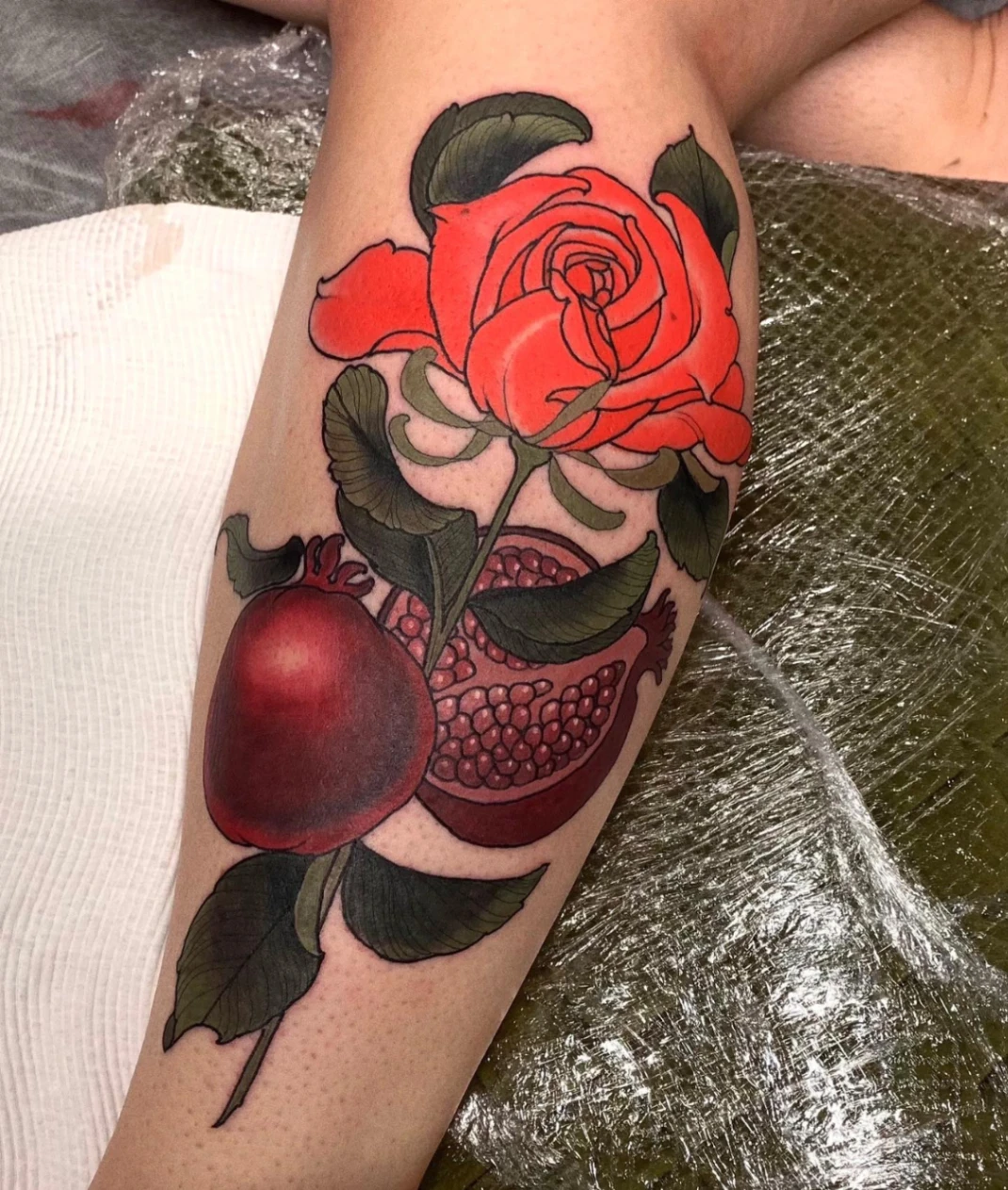

For Men
- Wrapping Japanese dragon
- Black and grey realism portrait (family, mythological figure, iconic character)
- Blackwork geometric composition
- Traditional panther, eagle, ship, dagger
- Skeleton or anatomical study in realism
- Norse imagery: wolves, ravens, runes
- Native Australian wildlife (kookaburra, cockatoo, dingo)
- Full leg sleeve extension from knee to ankle
For Women
- Botanical stem wrapping the outer calf
- Trailing florals from knee to ankle
- Realism portrait of a pet or family member
- Ornamental mandala on the outer calf
- Fine-line snake curled around a rose (see our snake tattoo meanings)
- Watercolour splash behind a fine-line silhouette
- Moon phases stacked vertically
- Twin swallows or hummingbirds
Neutral and Unisex
- Wolf portrait in black and grey (see our wolf tattoo meaning guide)
- Compass with a meaningful bearing
- Anchor with rope and text
- Geometric animal (deer, fox, wolf)
- Sacred geometry with organic element
- Script quote with botanical accent
- Abstract watercolour composition
Healing Timeline for Calf Tattoos
| Day | What Is Happening | What To Do |
|---|---|---|
| Day 1-3 | Fresh wound, plasma and ink drainage | Keep wrap on as directed. Loose shorts. No standing all day. |
| Day 4-7 | Scab formation begins; itch may start | Gentle wash 2-3 times daily. Fragrance-free moisturiser. No tight socks. |
| Day 8-14 | Peak scabbing and itching | Do not scratch or pick. Loose clothing. No pools, saunas, spas, sea. |
| Day 15-21 | Scabs falling off; skin looks dull | Continue moisturising. Colour will appear muted until settled. |
| Day 22-30 | Outer skin healed | Return to normal exercise. Sun protection when leg is exposed. |
| Week 5-8 | Deeper layers settle | Full colour saturation appears. Book any touch-up if needed. |
The most common healing complaint from calf tattoo collectors is not pain, it is impatience about returning to exercise. Running, cycling and heavy lifting all move the calf muscle significantly and rub against fresh tattoo. Give yourself the full 3 weeks before resuming intense training.
Heads up: standing on your feet all day for work (retail, hospitality, healthcare) is harder on a healing calf tattoo than most people expect. If your job requires long standing shifts, try to book the tattoo before a scheduled rest period so you have 5 to 7 days of lighter movement while the wound closes.
Choosing the Right Artist for Calf Work
Portfolio Signals
- Multiple pieces in your target style. Realism portraits, Japanese scenes, ornamental wraps: each is a distinct skill set.
- Clean lines on curved anatomy. The calf curves; look for evidence the artist has mastered wrapping compositions.
- Age-of-work variety. Fresh and healed shots at 6 months, 2 years, 5 years. This reveals how the artist's work ages.
- Consistency across body types. Look for calf work on both muscular and softer legs; consistency tells you the artist adapts to anatomy.
Consultation Questions
- "How many calf pieces have you done in the past year?"
- "How long a session do you recommend?"
- "Are you comfortable with the wrapping element I have in mind?"
- "What is your revision policy at the 6-week mark?"
- "What aftercare do you recommend specifically for calf placements?"
For a broader framework on selecting a specialist, our how to choose a tattoo artist guide covers every step from portfolio scan to booking.
Common Mistakes to Avoid
- Booking a wrap in a single session. Wrapping designs need at least 2 sittings so both the front and back can be worked on separately.
- Ignoring muscle flex. Ultra-fine detail on well-defined calves can distort during movement. Discuss with your artist.
- Skipping the consultation. Stencil placement on the calf takes 15 minutes and prevents years of regret.
- Returning to the gym too fast. Sweat and friction during the first week set healing back significantly.
- Sunburning the fresh tattoo. Especially relevant in Australian summer. The calf is often the most sun-exposed part of the leg.
- Choosing the artist by price. Large calf pieces are lifetime commitments; save longer and go to the specialist.
Long-Term Care for Calf Tattoos
Australian summers are unforgiving. UV exposure is the single biggest ageing factor for any tattoo, and calves see the sun almost year-round if you wear shorts or dresses. Daily broad-spectrum SPF 30 or higher on exposed calf tattoos is not optional if you want the piece to look sharp for decades.
Moisturise regularly. Calves get drier than most placements because the shin lacks oil glands. A fragrance-free moisturiser once a day keeps the tattooed skin supple and helps the ink stay saturated.
Book a touch-up around year 5 if you want the piece to look showroom-fresh; some collectors do minor refreshes at year 10 to 12 and again around year 20. Our tattoo touch-up guide covers what to expect and how much it costs.
Frequently Asked Questions
How painful is a calf tattoo?
4 to 7 out of 10 for most collectors. The back calf muscle is one of the most forgiving zones on the body; the shin (front calf) sits at the higher end because there is very little tissue between skin and bone. Compared to ribs, sternum, spine and inner elbow, the calf is genuinely kind.
Can I get a full calf sleeve in one session?
No. A full calf wrap requires 2 to 3 sessions minimum because you cannot lie in the position needed to tattoo both the front and back in a single sitting. Realistically most artists split calf sleeves across 3 to 6 sittings depending on detail level.
How long before I can run again after a calf tattoo?
Light walking is fine from day 2. Return to running, cycling and gym training after 2 to 3 weeks when scabs have fallen off and the skin has closed. Some artists recommend 4 weeks for high-detail realism work.
Will building calf muscle stretch a tattoo?
Significant muscle mass increase (visible over months of dedicated training) can stretch a tattoo slightly. Small pieces are generally unaffected; large detailed compositions may soften at the outline. If you are actively building leg muscle, wait until your training plateau before booking a large piece.
Can a calf tattoo be covered for professional settings?
Yes. Long trousers, pantsuits, and jeans cover the entire calf. Even a large calf tattoo is completely hidden for the office. This is one of the reasons the calf is so popular with collectors in conservative workplaces.
Are calf tattoos more expensive than forearm tattoos?
Slightly, on a like-for-like basis. Calf pieces tend to be larger than forearm pieces of similar visual weight because the muscle offers more canvas. Hourly rates are the same; total cost is a function of total time.
How do calf tattoos age compared to other placements?
Very well. The calf is protected from the constant sun exposure that hits the forearm, hand and back of the neck. Combined with daily sunscreen use, a well-executed calf tattoo can look sharp for 20 to 30 years.
What is the best time of year to get a calf tattoo in Australia?
Autumn and winter. The tattoo heals with less sweat, less sun exposure, and less swimming temptation. By the following summer, the piece is fully settled and ready for beach visibility.
Bottom Line
The calf is the placement that says yes to almost every design ambition without punishing you for the ask. Lower pain, faster healing, generous canvas, easy to hide or show. Choose the artist first, decide the design brief second, and let the calf carry the piece it was made to hold.
Explore More
Find Tattoo Shops
Browse by Style
Stay Updated with the Latest Insights!
Get the latest news and updates delivered to your inbox.
Related Articles
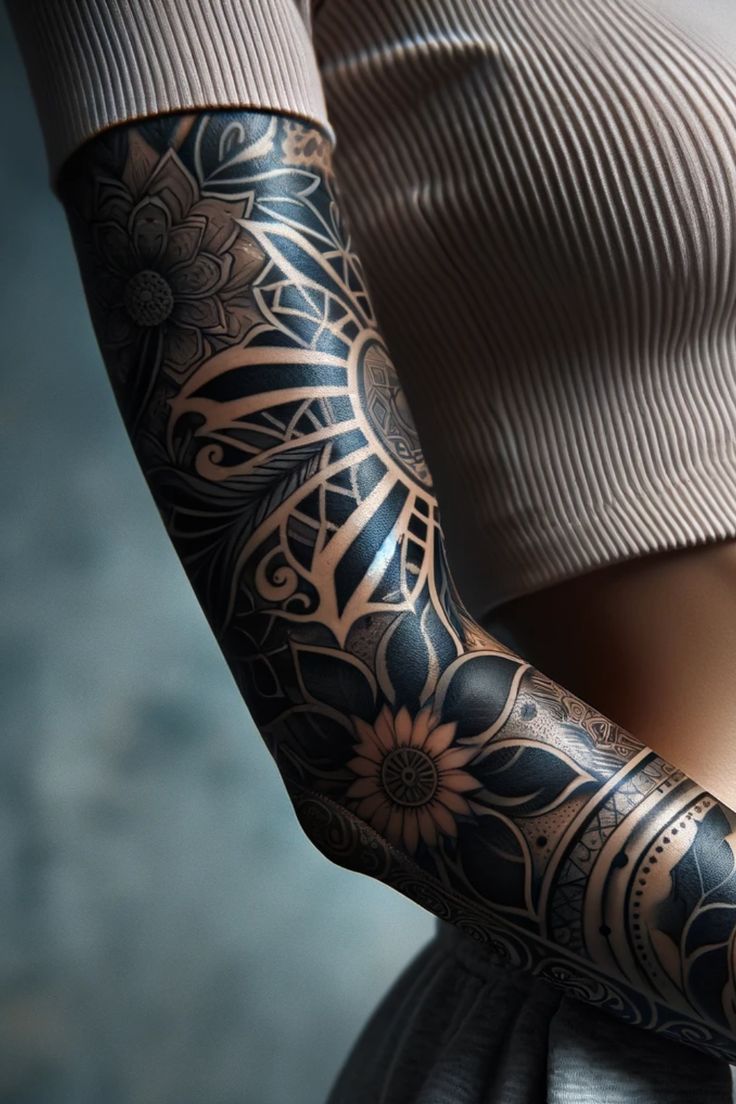
Leg Sleeve Tattoo Ideas 2026: Thigh-to-Ankle Design Guide
Leg sleeve tattoo ideas Australia 2026: theme options, knee integration, panel vs full coverage, pain map, and pricing $2,000 to $12,500 AUD.
Read More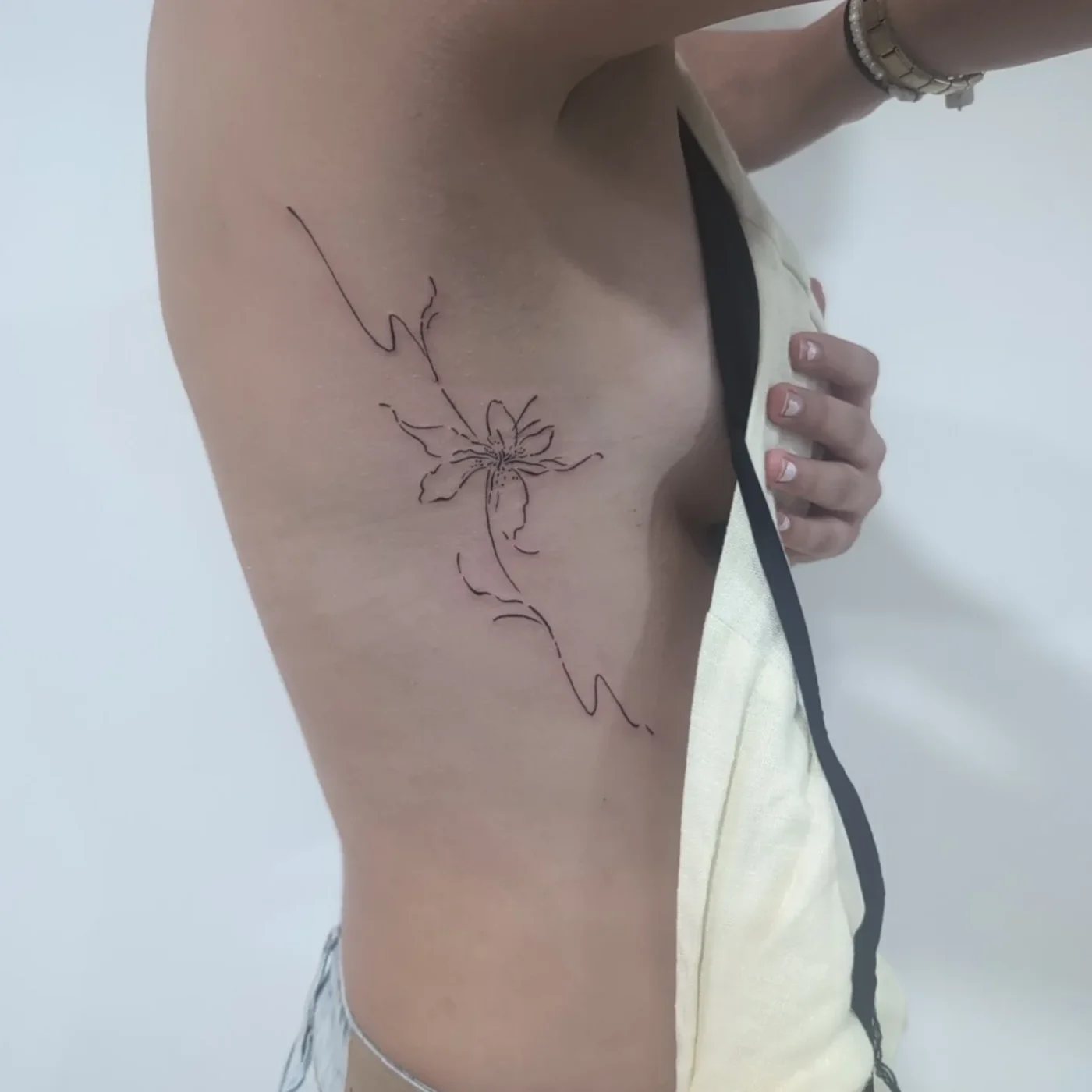
Side Tattoo Ideas for Women Australia 2026: Rib Designs, Pain and Pricing
Side and rib tattoo ideas for women in Australia 2026. Fine-line florals, script, blackwork. Pain 7-9/10, healing tips, pricing $250-$3,000 AUD.
Read More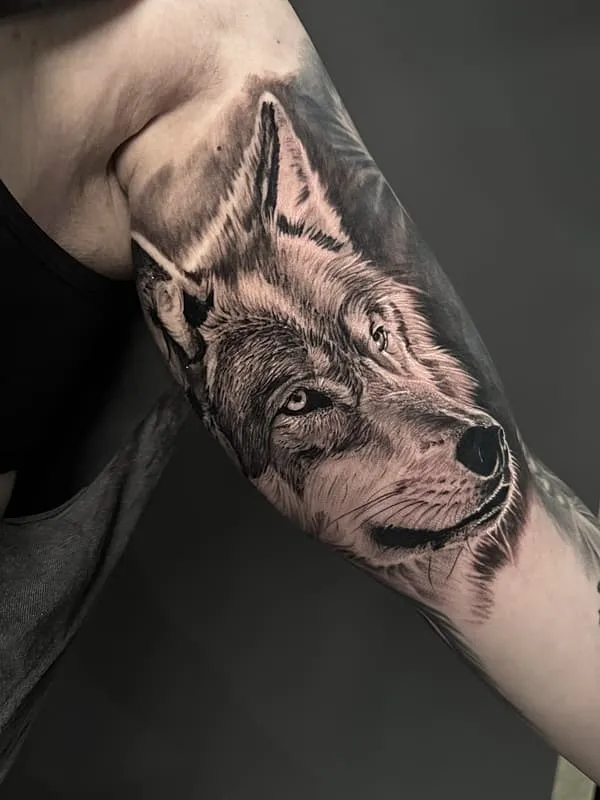
Wolf Tattoo Meaning Australia 2026: Lone Wolf vs Pack Design Guide
Wolf tattoo meanings in Australia 2026. Lone wolf vs pack, Norse and Native symbolism, styles, placement, pricing $250-$6,000 AUD across cities.
Read More