Ornamental Tattoo Style Guide 2026: Geometry, Gold and Sacred Motifs
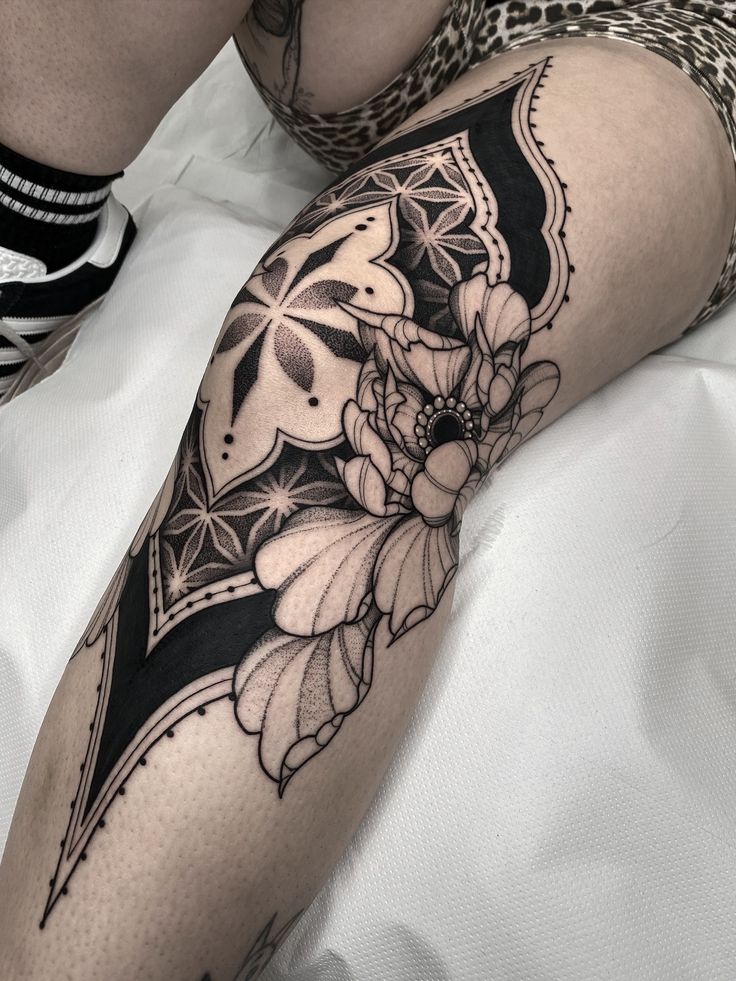
Ornamental tattoos treat the body as an architectural surface. Where many styles prioritise narrative or realism, ornamental work concerns itself primarily with pattern, proportion, and placement. Derived from jewellery design, sacred geometry, architectural ornamentation, and the mandala traditions of South and South-East Asian art, ornamental tattooing has developed into one of the most technically disciplined and visually luxurious styles currently practised in Australia.
The defining characteristic of ornamental work is that it is built to adorn. Every element, whether a dot cluster, a radiating line, a geometric chevron, or a floral petal in the botanical ornamental sub-style, is positioned to enhance the body part it occupies rather than simply to fill it. The best ornamental artists understand anatomy as well as geometry. They know that a pattern centred on the sternum needs to account for the way the chest widens at the shoulders. They understand that a forearm design read in isolation looks different once the arm is relaxed at the body's side. This spatial intelligence is what separates genuinely excellent ornamental work from competent pattern reproduction.
In Australia in 2026, ornamental tattooing has developed strong regional voices. Adelaide, somewhat surprisingly given its population size relative to Sydney and Melbourne, has become a quiet hub for ornamental and geometric work. A cluster of artists there have developed rigorous personal approaches to symmetry, dot work, and patterned composition. Sydney and Melbourne naturally have larger numbers of practitioners but the quality variation is also greater. This guide will help you identify what excellent ornamental work looks like, understand what it costs, and find the right artist for the design you have in mind.
Understanding Ornamental Tattoo Sub-Styles
Ornamental is a broad category. Under that umbrella, several distinct approaches have crystallised, each with its own visual language and technical requirements.
Mandala and Sacred Geometry
Mandala-based ornamental work is the most widely practised sub-style in Australia. Drawing on the circular geometric forms used in Buddhist and Hindu religious art, contemporary tattoo mandalas adapt these templates into highly personalised compositions. The key technical demand is radial symmetry: every element must repeat precisely around the central axis, a requirement that separates skilled practitioners from those who are approximating rather than calculating their compositions.
Sacred geometry as a standalone sub-style uses forms derived from geometric construction principles. The Flower of Life, the Metatron's Cube, the Fibonacci spiral, and the Platonic solids all appear regularly as both standalone compositions and as structural frameworks for larger ornamental pieces. These designs carry spiritual associations for many people who wear them, but they are also chosen purely for their visual qualities by clients who appreciate mathematical precision in their body art.
Dot Work Ornamental
Dot work uses arrays of individual dots to build tone, texture, and form rather than continuous lines or shading. In ornamental contexts, dot work produces a characteristic stippled texture that reads as simultaneously delicate and dense. The technique requires exceptional control over dot spacing and pressure consistency. When executed well, dot work ornamental pieces have a quality that is hard to describe precisely: they look simultaneously fine and substantial, the dots individually light but collectively forming areas of considerable visual weight.
Pure dot work pieces avoid solid filled areas entirely. They use the accumulation and spacing of dots to create gradients and forms. When combined with fine-line geometric elements, the result is particularly striking: crisp sharp lines framing areas of delicate stippled texture.
Botanical Ornamental
Botanical ornamental work combines floral and plant elements with geometric frameworks. A mandala might incorporate lotus petals. A symmetrical ornamental composition might use leaves and stems as its structural units. The botanical elements bring organic softness to what might otherwise be a purely mathematical composition, while the geometric structure gives botanical motifs a formality and deliberateness that distinguishes ornamental botanical work from fine-line botanical tattooing.
Jewellery-Style Ornamental
Some ornamental artists explicitly reference the forms of precious jewellery: pendant settings, chain links, gem facets, chandelier earring forms, and necklace compositions worn as permanent skin adornment. These designs often incorporate suggested gemstone settings rendered in fine line, dot work, or negative space, creating the impression of jewellery worn rather than drawn. Sternum pieces, collarbone designs, and wrist cuffs are particularly popular in this sub-style.
Geometric Blackwork
At the more austere end of the ornamental spectrum, geometric blackwork uses solid black fills, bold lines, and stark negative space to create high-contrast compositions with strong graphic presence. Where mandala and dot work ornamental tends towards intricacy, geometric blackwork favours simplicity and visual impact. Triangles, hexagons, and layered concentric forms are typical elements. This sub-style heals extremely well and ages gracefully, maintaining legibility even as fine-line details in other styles may fade.
Featured Australian Ornamental Artists
Australia has a strong community of ornamental tattoo artists. The examples below represent established practitioners with verified portfolios in this style.
Heidi Vixen
Studio Shinra Tattoo, Adelaide SA
Heidi Vixen produces ornamental work characterised by exceptional dot work density and precisely calculated radial symmetry. Their approach to mandala-based compositions treats symmetry as a mathematical constraint rather than an approximation, resulting in pieces where the geometry holds up to close scrutiny. Bookings at Studio Shinra Tattoo in Adelaide.
Adelaide has developed a particularly strong cluster of ornamental tattoo artists, in part because the city's tattoo scene has historically favoured technical precision over bold commercial styles. Artists who might have been drawn to more visible markets have instead established long-term practices in a city that genuinely appreciates fine technical work.
Nik Maximovich
Faith Hope Charity Tattoo, Melbourne VIC
Nik Maximovich brings a graphic design sensibility to geometric and ornamental tattooing at Faith Hope Charity Tattoo in Melbourne. His compositions favour strong structural lines with fine internal detail, producing pieces that read clearly at a distance but reward close examination. Particular strength in large-format geometric work for back and chest placements.
Key Takeaways
- Ornamental tattoos treat the body as an architectural surface, designed to adorn specific anatomy
- Sub-styles include mandala, dot work, botanical ornamental, jewellery-style, and geometric blackwork
- True symmetry and mathematical precision separate excellent ornamental artists from adequate ones
- Typical costs run $300-$600 for medium pieces; large back or chest mandalas cost $1,000-$3,000+
- Dot work ages beautifully; geometric blackwork ages the best of all ornamental sub-styles
- Placement is as important as the design itself: body curvature must be accounted for in the composition
- Adelaide, Sydney, and Melbourne all have established ornamental artists worth researching
Placement: Where Ornamental Tattoos Work Best
More than most styles, ornamental tattooing is placement-dependent. The designs are built around the body part they will occupy, and a composition that works perfectly on one location may be entirely wrong for another. Understanding the placement logic helps both in choosing where to put a tattoo and in briefing an artist effectively.
Sternum and Chest
The sternum is one of the most popular placements for ornamental work in Australia. The vertical axis of the breastbone provides a natural centreline for symmetrical compositions. Designs that radiate outward from this centreline, incorporating the upper chest and sometimes the collarbone, are a signature ornamental format. The sternum placement is particularly suited to jewellery-style ornamental work: pendant chains, chandelier forms, and elaborate necklace-style compositions worn permanently on the skin.
The practical considerations for sternum placements are significant. Skin on the sternum has relatively low fat content and sits close to bone, making the tattooing process uncomfortable. Healing requires keeping the area clean and unrestricted, which can be complicated by clothing and bra straps for some clients. The long-term hold of sternum tattoos is generally excellent because the skin is not subject to the same sun exposure and friction that affects other placements.
Upper Back and Spine
The upper back provides a large, relatively flat canvas well suited to large-format ornamental compositions. Spine tattoos, which run vertically down the back, are a specific and popular format: a vertical column of linked ornamental elements, mandalas, or geometric forms creates a striking piece that has visual impact both in motion and at rest. The spine placement is technically demanding to execute due to the curvature and the difficulty of producing a visually straight vertical line on a body that is never entirely still during tattooing.
Full upper back mandalas, centred between the shoulder blades, are among the most ambitious ornamental compositions. A single large mandala covering 20-25cm in diameter in this location can take 8-12 hours of work across multiple sessions. When executed by an artist with genuine technical capability, the result is one of the most architecturally impressive things you can wear.
Forearm and Sleeve Integration
The forearm is the most accessible placement for ornamental work. The inner forearm in particular is consistently flat, easy to keep still during tattooing, and heals predictably. Forearm ornamental pieces can be standalone compositions or part of a larger sleeve. When integrating ornamental elements into a sleeve, they function as connective tissue between figurative or portrait elements, filling and linking without competing for visual attention.
Hands and Wrists
Wrist cuffs and hand ornamental designs are popular but require careful consideration. The skin on hands and wrists is subject to significant sun exposure, repeated washing, and constant mechanical wear from everyday activity. These placements fade faster than most and typically require touch-ups within 3-5 years. Many ornamental artists will discuss this reality during the consultation and may recommend larger or bolder designs in these areas to account for long-term fading.
Collarbone
The collarbone placement follows the natural horizontal line of the clavicle, creating a frame for the face and neckline. Symmetrical ornamental compositions that follow the arc of both collarbones simultaneously are particularly striking. As with the sternum, the skin in this area is relatively thin and the tattooing process can be uncomfortable. Healing requires awareness of clothing that might rub the area.
Leg Placements: Thigh and Calf
The outer thigh provides generous canvas and heals exceptionally well, making it an excellent choice for large ornamental compositions that might otherwise be placed on the back or chest. The calf is similarly practical. Both locations offer the artist significant working room and heal predictably. Ornamental thigh and calf pieces are often more elaborate than their size-equivalent counterparts on the upper body precisely because the healing conditions allow for finer detail to survive long-term.
Ornamental Tattoo Costs in Australia (2026)
Ornamental tattooing is generally priced by session length rather than by design complexity alone. The custom design work involved in creating symmetrical compositions for specific placements means that most ornamental artists will quote based on an estimated session time after seeing your brief.
| Design Type | Typical Size | Estimated Cost | Session Length |
|---|---|---|---|
| Wrist cuff or small forearm ornamental | 5-10cm | $200-$350 | 1-2 hours |
| Medium mandala (forearm or shoulder) | 12-18cm | $400-$700 | 3-4 hours |
| Sternum ornamental with collarbone extensions | 20-30cm | $700-$1,200 | 4-6 hours |
| Large back or chest mandala | 25-35cm | $1,200-$2,500 | Multiple sessions |
| Full back ornamental composition | Full back | $3,000-$6,000+ | Many sessions |
Dot work and fine-line ornamental typically cost slightly more than geometric blackwork because the technical execution is more time-consuming. Artists with high demand for their ornamental work may apply a premium above standard hourly rates, particularly for complex mandala compositions that require significant custom design preparation.
Deposits of $100-$200 are standard at booking. Many ornamental artists also charge a design fee for complex custom compositions, particularly large-scale pieces that require significant geometry planning before the first session. Confirm the deposit and design fee structure during your initial enquiry.
Use the tattoo cost calculator for a personalised price estimate based on your design and placement.
Investment Perspective
Large ornamental pieces are among the most expensive single tattoos most people will ever get. A full back ornamental composition from a skilled practitioner is a multi-year project and a significant financial commitment. It is worth approaching this as a long-term investment rather than a single transaction. Prioritise quality over speed: a large ornamental piece that goes wrong is extremely difficult and expensive to correct because the precision of the patterning means that any remediation work must match the surrounding geometry exactly.
How Ornamental Tattoos Age
Longevity varies significantly between ornamental sub-styles. Understanding how different approaches age helps make better decisions about technique and placement.
Geometric Blackwork: The Best Ageing
Solid black fills and bold line work age the most gracefully of any tattoo approach. The bold outlines that define geometric blackwork maintain their legibility even as the years pass and skin quality changes. These pieces may require occasional touch-ups to solid black areas that have faded to a slightly grey-blue tone, but the overall composition remains readable and striking even decades after application.
Dot Work: Excellent Long-Term Performance
Dot work ages well when the dots are large enough and spaced appropriately for the placement. Very fine dot work in high-movement areas (inner wrist, behind the knee, elbow crease) can soften significantly over time as individual dots spread slightly in the skin. Dot work on the upper back, outer thigh, and upper arm ages very well. The key variable is initial dot size: dots applied at 0.3-0.5mm diameter are more durable than those applied at 0.1-0.2mm.
Fine-Line Ornamental: Requires Realistic Expectations
Very fine line work in ornamental compositions is the most susceptible to fading and blurring over time. Lines below approximately 0.35mm in width can soften and may require refreshing after 5-10 years. This is not a reason to avoid fine-line ornamental work, which is visually beautiful and perfectly appropriate as body art, but it does require realistic expectations about longevity and possible maintenance. Discuss the longevity expectations for your specific design with the artist before committing to a piece with extremely fine line work.
Placement Matters as Much as Technique
The same ornamental piece placed in two different locations will age at different rates. Placements that receive significant UV exposure (forearms, wrists, hands) without consistent sunscreen protection will fade faster than those kept largely covered (upper back, ribs, upper thigh). Placements subject to constant friction (waistband area, inner arm where arm meets body) will show wear faster than more protected locations. These factors should inform both placement decisions and long-term care habits.
Choosing an Ornamental Artist: What to Look For
Evaluating ornamental tattoo portfolios requires specific criteria. The visual demands of the style make certain qualities easy to assess even for people who are not tattooing professionals.
True Symmetry
Mandala and geometric ornamental work must be genuinely symmetrical. This sounds obvious but is surprisingly easy to fake in portfolio photographs and surprisingly easy to miss on close inspection of the actual piece. When evaluating a portfolio, look at pieces photographed straight-on from a consistent angle. Use a straight edge or fold the screen image mentally to check whether the two halves of a mandala are genuinely mirrored. Artists who produce true symmetry at a fine-line scale have mastered a skill that takes years to develop. Artists who approximate symmetry do not produce convincing work at scale.
Line Consistency
In ornamental work, line weight should be deliberate and consistent. Lines that are meant to be the same weight should be visually the same throughout a piece, not varying with artist fatigue or needle pressure inconsistencies. This is particularly important in large pieces where long continuous lines expose any variation in technique. Look for crisp, clean line work without wobbles, shaking, or inconsistency in width along the length of individual lines.
Dot Spacing and Size Consistency
For dot work sub-styles, examine whether dots are consistently spaced and consistently sized within areas of similar tonal value. Dot work that reads as random rather than calculated is a sign of insufficient technical control. Excellent dot work has a meditative regularity: you can see that each dot was placed with precision, and the accumulated effect of all those deliberate placements is the depth and texture that defines the style at its best.
Composition Intelligence
Beyond technical execution, look for evidence that the artist understands how to compose ornamental work for specific body locations. A piece that is technically perfect but does not account for where it sits on the body is a lesser achievement than one that is both technically excellent and anatomically intelligent. Sternum pieces that extend naturally towards the collarbone, forearm designs that account for how the arm bends, mandala compositions that are centred on the correct axis for the body part they occupy: these are signs of an artist who thinks about tattooing in three dimensions rather than two.
Where to Find Ornamental Artists
Browse ornamental and geometric tattoo ideas in the geometric tattoo ideas gallery to find artists whose work aligns with your vision. Then explore studio listings: Adelaide tattoo shops, Sydney tattoo shops, Melbourne tattoo shops, and Brisbane tattoo shops all have established ornamental practitioners.
Use the tattoo style quiz to confirm ornamental is the right direction for you, or browse the geometric ideas gallery to explore specific design directions.
Care and Maintenance for Ornamental Tattoos
Ornamental tattoos, particularly those with fine line work and dot work elements, benefit from attentive aftercare and long-term maintenance habits. The investment in a quality piece is protected by treating it well.
Initial Healing (Weeks 1-4)
Follow your artist's specific aftercare instructions above all else. The general principles for ornamental work are: keep the piece clean with unscented soap and water, apply a thin layer of unscented moisturiser (a fragrance-free lotion or a specialised tattoo balm), and avoid sun exposure completely during the initial healing period. Submerging the piece in water, including baths, swimming pools, and the ocean, is contraindicated during healing because prolonged water exposure can draw ink from healing skin.
The peeling phase, typically days 7-14, is the most critical. Do not pick at peeling skin. The surface layer is regenerating and pulling prematurely at peeling sections can remove pigment with it. Fine-line ornamental work is particularly susceptible to patchiness if the peeling phase is not managed carefully.
Long-Term Sun Protection
Sun protection is the single most important long-term maintenance habit for tattoo longevity. UV exposure breaks down pigment faster than any other environmental factor. For ornamental pieces on regularly exposed placements (forearms, wrists, collarbone), applying sunscreen (SPF 50+) before any sustained outdoor time will meaningfully extend the life of the fine-line and dot work elements. This is not a cosmetic recommendation but a practical one: the difference in how a well-protected ornamental piece looks at ten years versus a poorly protected one is significant.
Touch-Up Timing
Most artists offer a complimentary touch-up within the first 6-8 weeks after healing if any areas of patchiness have developed. Take advantage of this if needed. For long-term touch-ups of fine-line elements that have softened over years, return to the original artist if possible: they know the design and will be best placed to refresh it accurately. If that is not possible, bring excellent reference photographs of the piece when it was fresh to give the touch-up artist as much information as possible.
Cultural Origins and Contemporary Meanings
Ornamental tattooing draws from a rich cross-cultural tradition of body adornment and decorative art. Understanding these origins helps appreciate what ornamental tattoos carry as cultural objects, not just as personal aesthetic choices.
South and South-East Asian Traditions
The mandala form has its deepest roots in Buddhist and Hindu practice, where it functions as a meditative and ritual object. Traditional mandala diagrams represent the cosmos, the relationship between the self and the divine, and the path towards enlightenment. When mandala forms appear in contemporary tattooing, they carry these associations for some wearers and none for others. For clients to whom the spiritual associations are meaningful, working with an artist who understands the symbolic content is worth seeking. For clients attracted purely to the visual form, the design is no less valid as personal expression.
Polynesian Geometric Traditions
Geometric and pattern-based tattooing has deep roots in Polynesian cultures across the Pacific, including in the traditions of Indigenous Australians and Torres Strait Islanders, as well as Maori, Samoan, Hawaiian, and Filipino cultures. Contemporary ornamental tattooing in Australia exists in this broader Pacific context. Clients should be aware of the cultural origins of specific patterns before incorporating them into designs. Where a design element derives from a specific living cultural tradition, understanding and acknowledging that context is appropriate.
Western Jewellery and Architectural Ornamentation
Western ornamental tattooing also draws directly from European decorative art traditions: Gothic architectural ornamentation, Art Nouveau botanical forms, Art Deco geometric patterning, and the traditions of fine jewellery design. These influences are visible in the filigree-style fine-line work that appears in many contemporary ornamental designs, in the symmetrical floral forms that decorate sternum pieces, and in the geometric frameworks that structure large back compositions.
Booking Your First Ornamental Tattoo
If you are ready to explore ornamental work, a few practical steps will help the process go smoothly from first enquiry to completed piece.
Collect Reference Material
Before approaching an artist, spend time collecting reference images. These do not need to be tattoos; examples of the design tradition you are drawn to, whether Persian tile work, mandala drawings, geometric prints, or jewellery photographs, give an artist useful visual information about your aesthetic preferences even if the tattooed result will look quite different from any individual reference image.
Know Your Placement
Come to the consultation with a placement in mind. Ornamental artists will often have strong opinions about what works where, and their input is valuable, but starting with a preferred location helps frame the conversation. If you are uncertain between two or three options, bring all of them and ask the artist which they would recommend given the design you have in mind.
Be Prepared for a Design Wait
Many ornamental artists have significant wait times for custom design work. Large mandala and geometric compositions require hours of preparation before the stencil is ready. It is not uncommon to book a consultation several weeks in advance, wait for a custom design to be prepared, and then book the tattoo session for a date several more weeks out. Plan your timeline accordingly.
Ask About the Artist's Design Process
Understanding how an artist approaches symmetry and composition for your specific body location is valuable before committing to a booking. Ask whether they design digitally and use a custom stencil or whether they design freehand. Both approaches are valid, but knowing which applies to your artist helps you understand what you will be approving before the needle is picked up.
When you are ready to find an artist, the tattoo style quiz can help confirm ornamental is the right direction, and the geometric tattoo ideas gallery provides a curated view of the range of ornamental work available across Australia.
Explore More
Find Tattoo Shops
Browse by Style
Stay Updated with the Latest Insights!
Get the latest news and updates delivered to your inbox.
Related Articles
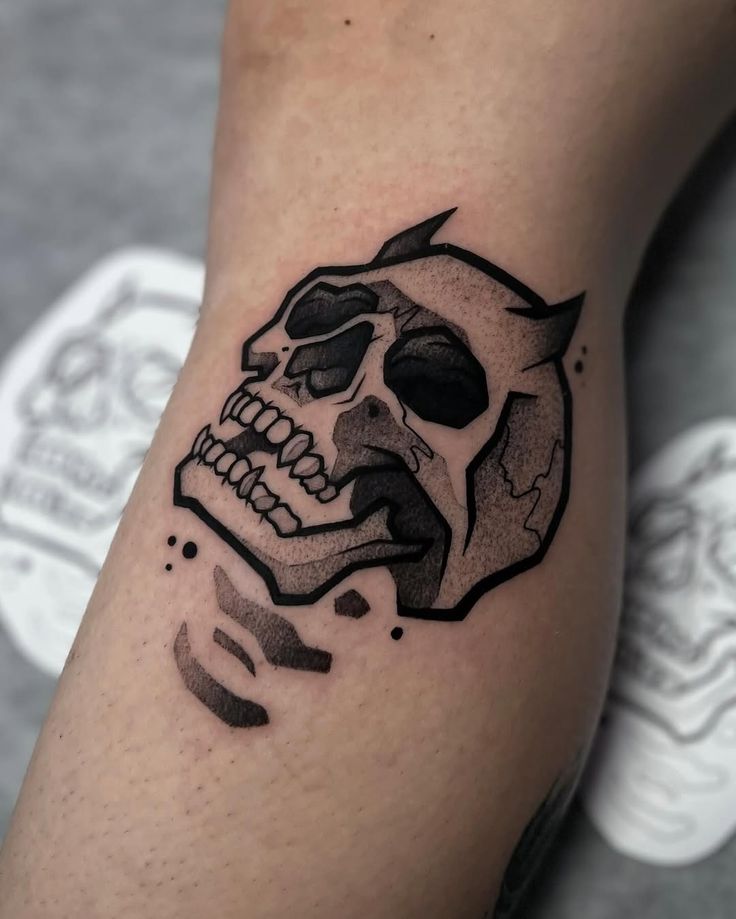
Blackwork Tattoo Guide Australia: Bold Dark Art & Pricing 2025
Complete guide to blackwork tattoos in Australia: bold black ink designs, sacred geometry, dotwork, pricing ($250-$600+), and stunning dark art inspiration.
Read More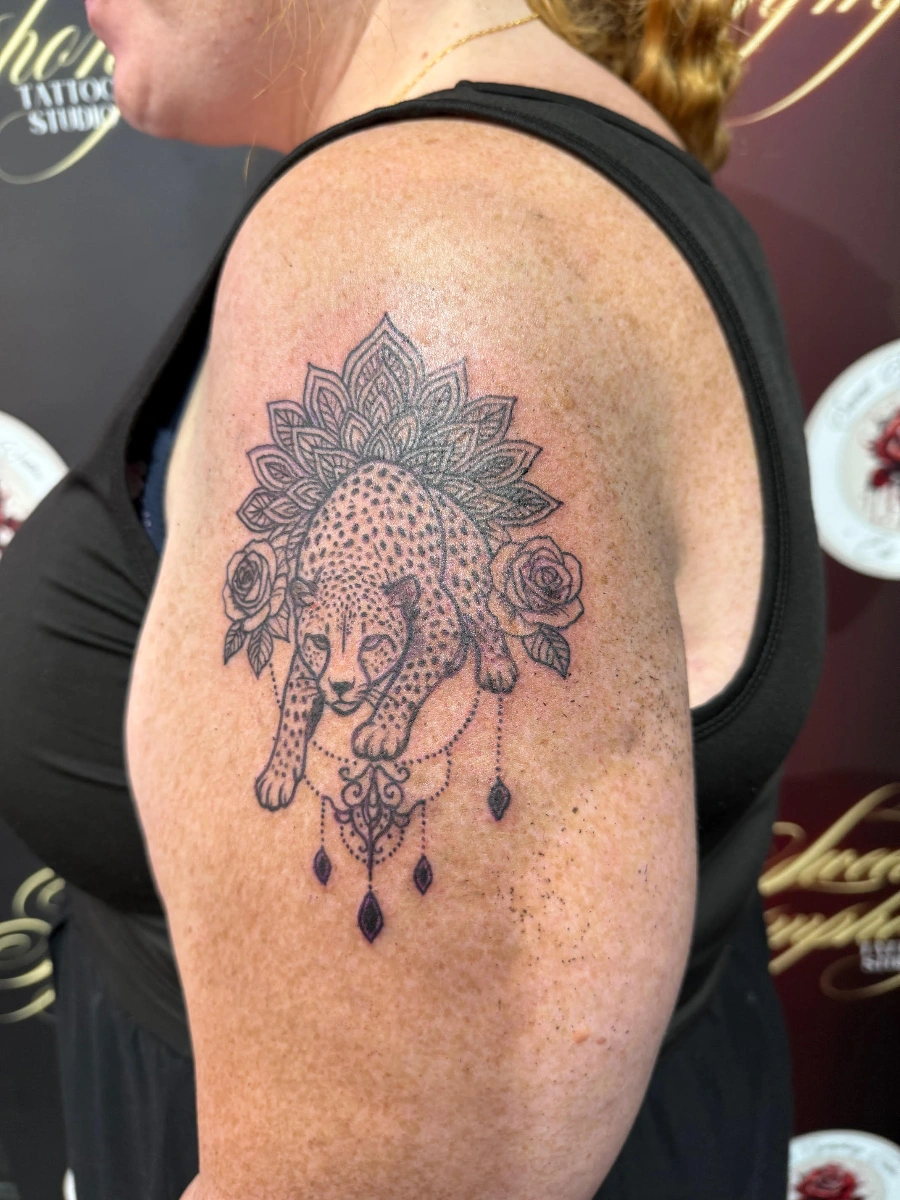
Ornamental Tattoo Guide Australia 2026: Mandalas and Sacred Geometry
Australian 2026 ornamental tattoo guide: mandalas, sacred geometry, henna-style, dotwork, placement, pricing $180-$5,000, and finding a specialist artist.
Read More
Glitch Art Tattoo Guide Australia 2026: Digital Distortion on Skin
Glitch art tattoos blend digital distortion with body art. Explore the style, find Australian artists and budget $200-$600 for this futuristic look.
Read More