
Glitch Art Tattoo Guide Australia 2026: Digital Distortion on Skin
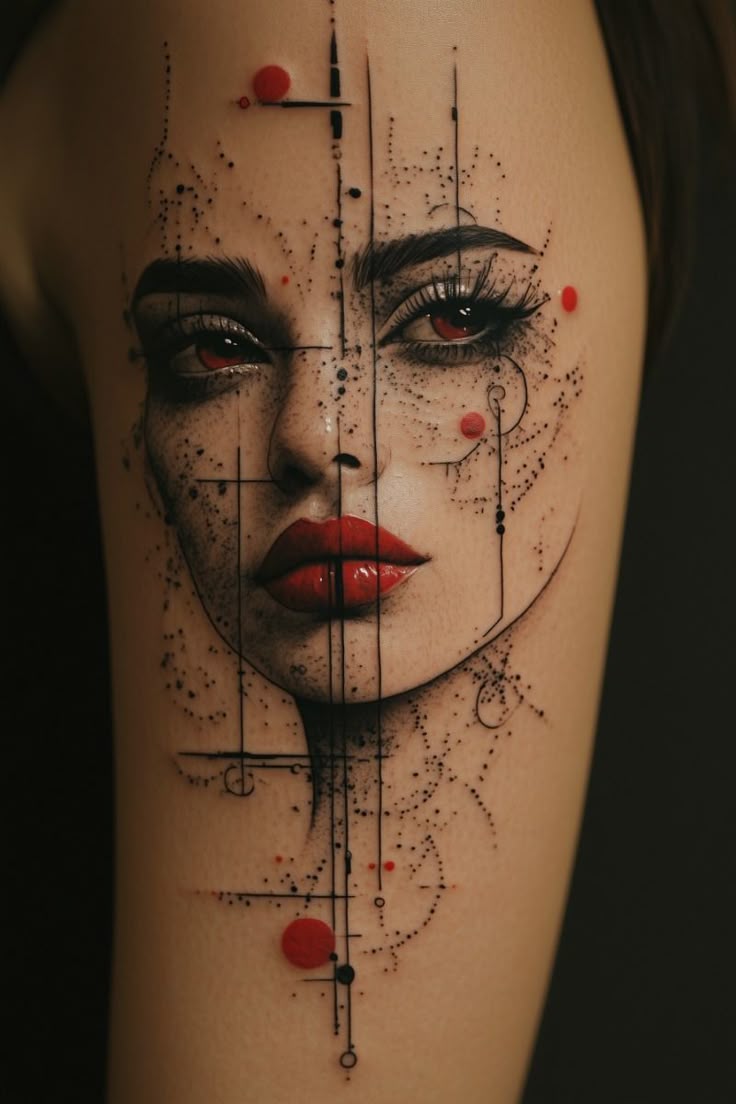
Glitch art tattoos take the visual language of corrupted digital files and translate it directly onto skin. Fragmented pixels, colour channel separation, scan line interference and offset image blocks combine to create designs that look as though a computer has partially broken mid-render. In 2026, the style has moved well beyond novelty status to become one of the most technically demanding and visually arresting forms of contemporary tattoo art available in Australia.
These pieces sit at the intersection of graphic design, photography, and fine-line tattooing. To pull one off convincingly, an artist needs an unusually broad skill set: the precision of a technical illustrator, an understanding of colour theory drawn from screen-based media, and the ability to render digital artefacts in a medium that has no delete key and no undo. The best glitch tattoos do not merely copy a corrupted image. They are composed from scratch, each apparent error placed deliberately, every offset calculated to guide the eye exactly where the artist intends.
This guide covers everything you need to know before booking a glitch art tattoo in Australia. You will find a breakdown of the style families within glitch, guidance on placement and sizing, what to expect from the process, how to find an artist with genuine technical credentials, and what you can realistically expect to pay. Wherever possible, examples reference real Australian artists currently producing this work.
What Is Glitch Art, and Why Does It Work as a Tattoo?
Glitch art as a discipline emerged in the 1990s alongside consumer computing. Artists began deliberately corrupting digital files by opening image data in text editors, removing bytes, and saving the result. The corrupted files, when reopened as images, produced strange and beautiful visual artefacts: bands of false colour, fragmented grids, smeared pixel trails, and distorted repetitions of the original image content. What had been an accidental by-product of file corruption became an intentional aesthetic.
By the 2010s, glitch aesthetics had migrated into mainstream graphic design, music video production, and digital illustration. The visual shorthand for broken digital systems became familiar to anyone who had grown up watching video games freeze, VHS tapes degrade, or broadcast signals break up. It carried associations of technology, cyberpunk science fiction, and a certain irreverent attitude toward the supposed perfection of the digital world.
What makes glitch translate well into tattooing is precisely this visual complexity. The style provides a framework for pieces that are busy, bold, and eye-catching without reading as chaotic. The underlying image is still recognisable. A portrait of a person, a landscape, an animal, or a geometric form provides the structural core. The glitch elements layer on top: offset colour channels (typically red, green, and blue separated horizontally or vertically), horizontal scan lines crossing through the image, blocks of pixels displaced from their correct positions, and zones of apparent pixelation where the image dissolves into its component squares.
On skin, these elements have additional visual impact because the viewer knows they are looking at a permanent mark made by a human hand. The contrast between the machine-made aesthetic and the hand-crafted reality creates a productive tension that makes the pieces genuinely interesting to study.
Style Families Within Glitch Tattooing
Glitch art is not a single unified style. Within the broader category, several distinct approaches have developed, each with different technical demands and visual outcomes.
RGB Channel Separation
The most immediately recognisable glitch effect, RGB separation involves rendering the same image three times, each in a single colour channel (red, green, or blue), with each version offset slightly from the others. Where the three channels overlap, they produce the correct colour. Where they separate, the isolated channel colour bleeds beyond the image boundary. In a tattoo, this technique requires working in colour with exceptional precision. The offset typically runs horizontally, producing a characteristic chromatic fringing effect that reads unmistakeably as a digital artefact. Artists working in this approach need to plan the offset distances carefully. Too little separation and the effect disappears; too much and the three colour layers read as unrelated elements rather than a unified composition.
Scan Line and Interference Patterns
Horizontal banding across an image, sometimes with irregular spacing and varying opacity, recalls old cathode ray tube monitors and early television broadcast interference. In tattooing, scan line effects are often executed in black and grey, layered over a portrait or figurative element. The lines may be uniform or irregular; they may cross the entire composition or appear only in certain zones. When executed cleanly, this technique adds a sense of movement and temporal disruption to an otherwise static image. The viewer's eye reads the scan lines as evidence of something in transition, a signal being received imperfectly.
Pixel Block Displacement
Sections of an image appear to have been cut out and moved horizontally or vertically from their original position. The displaced blocks may or may not align with the surrounding image content. This technique works particularly well in portrait tattoos, where a familiar face becomes unsettling when portions of it are shifted out of register. Technically, it requires careful planning of which blocks to move and by how much. The blocks need to be large enough to read as distinct displaced elements rather than simply as errors in the rendering, but not so large that they overwhelm the underlying composition.
Data Moshing and Compression Artefacts
Inspired by video compression artefacts, this approach uses smeared, stretched, or repeated image content to suggest that a video has been improperly encoded. Still images rendered in this way appear to be freeze frames from a corrupted video stream. The technique is particularly complex to execute in tattoo form because the smearing effect requires extremely controlled gradients and a sophisticated understanding of how to suggest motion in a static medium. Artists who pull this off convincingly are drawing on skills from both fine-line portraiture and abstract mark-making simultaneously.
Text and Code Overlay
Binary strings, hexadecimal code, and corrupted text characters overlaid on figurative content add a layer of conceptual meaning to glitch pieces. These are often combined with other glitch techniques to create compositions that feel like they are showing the viewer the underlying data structure of reality. The text elements may be fully legible, partially obscured, or deliberately scrambled. When combined with a portrait or figurative element, the effect suggests that the subject of the tattoo is being processed, analysed, or is perhaps themselves a digital construct.
Featured Australian Artist: Glitch and Digital Styles
Finding artists with genuine technical credentials in glitch work requires research. The style is demanding enough that not every artist who claims it produces convincing results. Look for portfolios that demonstrate multiple pieces in the style, not just one or two experiments.
FCSTT
Niceink Tattoo Studio, Gold Coast QLD
Specialising in digital-native aesthetics including glitch, cyberpunk, and data corruption imagery. FCSTT builds glitch compositions from the ground up rather than applying filters over existing designs, resulting in pieces where every element of apparent corruption is a deliberate creative choice.
The Queensland coast has developed a small but technically sophisticated community of artists working in digital-adjacent styles. The combination of a younger clientele drawn from gaming and technology industries and a strong tradition of colour tattooing has made it fertile ground for glitch work. FCSTT at Niceink represents the more technically rigorous end of this scene, producing pieces that reward close inspection.
Jarrad Chivers
Lighthouse Tattoo, Sydney NSW
Jarrad brings a fine-art background to technically complex contemporary styles. His work in abstract and digitally-influenced tattooing demonstrates an understanding of negative space and line weight that translates well into glitch and displacement compositions. Based at Lighthouse Tattoo in Sydney's inner west.
Key Takeaways
- Glitch art tattoos simulate digital corruption: RGB separation, scan lines, pixel displacement, and compression artefacts
- The style requires artists with both fine-line precision and graphic design literacy
- Expect to pay $200-$400 for a smaller glitch piece (10-15cm) and $400-$800 for larger complex compositions
- Dark backgrounds and high-contrast skin tones produce the most visually striking results
- Upper arm, forearm, and calf are the most popular placements due to flat surface area
- Colour glitch work (RGB separation) heals more unpredictably than black-and-grey scan line designs
- Always request to see healed photos of an artist's glitch work before booking
Placement and Sizing Considerations
Glitch art tattoos have specific placement requirements that differ from many other styles. The effects that define the genre, particularly pixel block displacement and RGB channel separation, depend on having enough surface area to render properly. They also benefit from relatively flat placement that allows the viewer to see the composition from a consistent angle.
Recommended Placements
The upper arm and forearm are the most popular placements for glitch tattoos in Australia. The inner forearm in particular offers a consistently flat surface that allows the viewer to see the design as the artist intended, without the curvature distortion that affects designs on the bicep or shoulder. The calf, the thigh, and the upper back are similarly well-suited. All of these placements offer enough real estate for complex compositions and heal relatively predictably.
The chest, ribcage, and torso can accommodate large glitch pieces but present challenges. The skin in these areas moves more with the body, and the contours require careful compositional adjustment. Artists with experience in large-scale work can navigate these challenges, but they are not the best starting point for a first glitch tattoo.
Minimum Size Requirements
Unlike some fine-line styles that translate well to very small formats, glitch art requires a minimum footprint to read as intended. The smallest convincing glitch pieces tend to be around 8-10cm in their longest dimension. Below this size, the detail that defines the style becomes difficult to render and even harder to heal. The offset elements that create the sense of digital displacement need to be separated by enough distance to read as intentional rather than as errors in execution.
Most Australian glitch tattoo artists recommend starting at 12-15cm for a first piece. This provides enough canvas to include multiple glitch techniques without crowding them together. For sleeve work incorporating glitch elements, the style integrates well with cyberpunk, biomechanical, and abstract blackwork designs.
Colour Versus Black and Grey
Both colour and black-and-grey interpretations of glitch art are viable, but they carry different implications. Colour work, particularly the RGB channel separation technique, is visually spectacular but more technically demanding and more unpredictable in healing. The colour channels, especially isolated red and blue, can shift over time as different pigments fade at different rates. A piece that looks perfectly calibrated immediately after healing may appear slightly off over the following years as individual channels fade unevenly.
Black-and-grey glitch work trades some of the visual impact of colour for greater long-term stability. Scan line effects, pixel displacement rendered in greyscale, and black-and-grey data corruption imagery all hold well over time. Many experienced glitch tattoo enthusiasts start with black-and-grey work to establish their aesthetic before committing to colour.
How the Tattooing Process Works for Glitch Designs
Glitch art tattoos require a different preparation process from most styles. Because the design is built around the deliberate simulation of technical errors, the reference material and the final stencil are almost always custom-generated rather than adapted from an existing image.
Design Preparation
Most artists working in this space will ask you to provide source material: a photograph, a subject description, or a reference image from which they will build the glitch composition. The artist then processes this material digitally, applying the glitch effects and compositing the result into a stencil that can be transferred to skin. This digital preparation phase is part of the creative process and will typically be included in the consultation rather than billed separately.
For portrait-based glitch tattoos, source photograph quality matters significantly. A high-resolution, well-lit photograph of the subject makes the digital processing step considerably easier and produces better results. If the tattoo is a portrait of a person or an animal, bring the best photographs you have. The artist can work with lower-quality source material but the results will be less precise.
The Tattooing Session
The actual tattooing of a glitch piece generally proceeds in a specific order. The underlying image is rendered first, establishing the structural elements that will anchor the glitch effects. The displacement elements and channel separation are then layered on top. For colour work, the artist may need to return for multiple sessions if the piece is large enough that completing it in one sitting would compromise quality through skin fatigue.
Expect sessions to run 2-4 hours for medium-sized pieces (12-18cm). Larger compositions covering significant forearm or upper arm real estate may require 5-8 hours split across two sessions. The waiting time for detail work to settle before adding adjacent elements is a real consideration; rushing a glitch piece to complete it in a single session can result in muddied edges between the layered elements.
Healing and Long-Term Care
Glitch tattoos heal similarly to other fine-line and detailed work. The first two weeks are critical: keep the piece out of direct sunlight, do not submerge it in water, and apply a thin layer of unscented moisturiser twice daily. Avoid picking at peeling skin, which can be tempting when the detailed areas appear uneven during healing.
After full healing (typically 4-6 weeks), colour glitch pieces particularly benefit from consistent sunscreen application. UV exposure affects different pigments at different rates, and maintaining colour calibration over time requires protecting the piece from direct sun. For black-and-grey work, the same general care applies but long-term stability is somewhat better.
Glitch Art Tattoo Costs in Australia (2026)
Glitch art tattoos command a premium over standard tattooing because of the design preparation involved and the technical complexity of execution. Understanding what drives costs helps set realistic expectations before consultations.
| Design Type | Size Range | Estimated Cost | Session Length |
|---|---|---|---|
| Simple glitch element (scan lines, minor displacement) | 8-12cm | $200-$350 | 1.5-2 hours |
| Black-and-grey portrait with glitch overlay | 12-18cm | $350-$600 | 3-4 hours |
| Full colour RGB separation piece | 12-18cm | $450-$700 | 3-5 hours |
| Large complex composition with multiple techniques | 20-30cm | $700-$1,200 | 2 sessions |
| Half-sleeve with glitch elements incorporated | Full arm section | $1,500-$3,000 | Multiple sessions |
These figures represent mid-range pricing from experienced Australian glitch tattoo artists. Artists with established reputations in the style may charge 20-40% above these ranges. The design fee is sometimes included and sometimes itemised separately; confirm this when requesting a quote.
A deposit of $100-$200 is standard when booking. This is typically non-refundable but is applied to the final cost of the tattoo. Artists who require significant custom design preparation may request a higher design deposit before beginning work on the stencil.
Why Glitch Pieces Cost More
Several factors contribute to the premium cost of glitch tattoos compared to simpler styles. First, the design preparation is substantial. Creating a convincing glitch composition from source material takes considerably more time than adapting an existing flash design or working from a simple brief. Second, the technical execution requires sustained precision over a long session. There is little room for freehand improvisation; the artist is working to render a specific digital image, and deviations from that image undermine the effect. Third, the style has a relatively small pool of practitioners in Australia with verified technical credentials, which supports higher pricing for those who can genuinely deliver.
Use the tattoo cost calculator for a personalised estimate based on your design, size, and location preferences.
Choosing the Right Artist for Glitch Work
The gap between artists who claim to work in glitch styles and those who produce genuinely convincing results is wider in this genre than in most. Evaluating a portfolio for glitch work requires knowing what to look for.
Portfolio Evaluation
Look for multiple completed pieces, not just a single standout image. Any artist can have one successful glitch tattoo in their portfolio; what distinguishes a genuine specialist is consistent quality across multiple designs in the style. Check whether the pieces shown are healed work or fresh-off-the-needle images. Glitch tattoos look their most dramatic in fresh photographs, but it is the healed result that tells you whether the technique holds up over time. Ask specifically for healed photos if they are not visible in the portfolio.
Examine the offset elements closely. In a competent RGB separation piece, the offset channels should be deliberately placed, not simply duplicated with a filter applied. In a displacement piece, the moved blocks should feel compositionally intentional rather than random. If the glitch elements read as something a design app produced in thirty seconds rather than something an artist crafted deliberately, that is worth noting before booking.
Consultation Questions
Before committing to a booking, ask the artist how they create their glitch designs. Do they build compositions in a digital editing environment using technical tools, or do they apply preset filters? The distinction matters for the quality of the result. Ask whether they have experience with the specific technique you want (RGB separation, displacement, scan lines) or whether glitch is a newer direction for them. Ask to see their reference material and their design process if possible.
It is also worth asking about their experience with the placement you have in mind. A forearm glitch tattoo behaves differently from a chest glitch tattoo, and an artist who has only done forearm work may not have accounted for how curvature affects the design in other locations.
Finding Glitch Artists in Australia
Glitch and digital-style tattoo artists are most concentrated in Australia's major cities, with Queensland (Gold Coast and Brisbane) and Sydney having the densest clusters. Browse the blackwork tattoo ideas gallery to find artists whose digital-influenced work aligns with what you have in mind, then check their full portfolios and booking processes.
Artists working in adjacent styles like cyberpunk, biomechanical, and technical blackwork are often worth consulting even if their portfolio does not explicitly include glitch work. The technical foundations overlap significantly, and a skilled artist in any of these styles may be well-placed to execute a glitch composition.
Browse studios near you: Sydney tattoo shops, Brisbane tattoo shops, Gold Coast tattoo shops, Melbourne tattoo shops.
Design Ideas and Combinations
Glitch art tattoos work in a wide range of subject matter. The corruption effects are format-agnostic; they can be applied to portraits, landscapes, animals, geometric forms, and abstract compositions. Some pairings work particularly well.
Portrait Subjects
Portraits are the most popular subject matter for glitch tattoos because the human recognition system makes the corruption effects more viscerally striking. The brain works hard to reconstruct the face from the fragmented information, and watching it do so is part of the experience of looking at a glitch portrait. Real people, fictional characters, animals, and conceptual entities (a robot, an alien, a deity) are all valid portrait subjects. The corruption effects gain additional meaning when applied to subjects that have a relationship to technology, identity, or transformation.
Geometric Foundations
Geometric forms, particularly those with strong lines and clear internal structure, provide excellent foundations for glitch overlay effects. A mandala, a sacred geometry pattern, or a simple grid can be made dramatically more interesting by layering displacement and corruption effects over it. The contrast between the mathematical precision of the underlying geometry and the apparent chaos of the glitch effects creates visual tension that gives these pieces energy.
Landscape and Architecture
Urban landscapes and architecture subject matter pairs well with glitch aesthetics. A cityscape that appears to be breaking up, a building dissolving into pixels at one corner, or a horizon line interrupted by scan lines all carry implicit commentary about the increasingly mediated nature of how we experience physical environments through screens. These are among the more conceptually resonant glitch tattoo subjects.
Combining with Other Styles
Glitch elements integrate naturally with several other contemporary tattoo styles. Cyberpunk compositions often use glitch effects to suggest technological instability. Blackwork pieces can incorporate scan line textures without committing to full glitch treatment. Abstract tattoos can use displacement and colour separation as compositional tools without the context of a recognisable corrupted image. The style is modular enough to appear as a standalone statement or as one element within a larger mixed-style composition.
Explore more design directions in the blackwork tattoo ideas and tattoo style quiz to find what resonates with your aesthetic.
Glitch Tattoos and Cultural Context
Glitch art has a cultural lineage that extends well beyond its origins in accidental file corruption. Understanding that lineage helps situate what a glitch tattoo means as a piece of body art in 2026.
The Aesthetics of Technological Failure
Glitch art emerged at a moment when the promise of digital technology as a realm of frictionless perfection was beginning to be questioned. The early internet was unreliable, operating systems crashed regularly, and digital media was subject to a range of degradation modes that analogue media did not share in quite the same way. Artists who worked with these failures were making a point: the digital world was not the seamless utopia it was sometimes presented as. Corruption and error were not aberrations but inherent features of a system built on fragile physical infrastructure and imperfect software.
By the time glitch aesthetics migrated into mainstream design and tattooing, this critical edge had somewhat softened. The visual language of glitch became primarily an aesthetic choice rather than a pointed statement. But for those who understand the history, a glitch tattoo still carries associations with a particular form of technological scepticism: an acknowledgement that systems fail, that the surface is not the substance, and that what appears to be corruption might be the most honest representation available.
Identity and Self-Representation
For many people who get glitch tattoos, the choice is also about identity and self-representation in a world where digital and physical selves are increasingly intertwined. A glitch self-portrait, or a portrait of someone significant rendered in glitch style, makes explicit the mediation between the physical person and their digital representations. In a culture where photographs, social media profiles, and digital records shape how people are perceived almost as much as their physical presence does, a tattoo that simulates digital corruption is a form of commentary on that reality.
Before You Book: Practical Checklist
Glitch tattoos require more preparation than simpler styles. Running through this checklist before booking will help ensure the process goes smoothly.
Design Clarity
Establish what your subject matter is before approaching an artist. Know whether you want a portrait-based composition, a geometric foundation, or an abstract glitch piece. Decide whether you want colour work (particularly RGB separation) or black and grey. Have reference images ready, even if they are not the exact style you are after. Reference images for both the subject and the glitch treatment style help artists understand your intention quickly.
Artist Verification
Confirm that the artist you approach has healed glitch work in their portfolio. Confirm they have experience with the specific technique you want. Ask directly how they prepare glitch designs and what their process is for custom compositions. If they cannot explain their process clearly, that is a signal worth attending to.
Budget Reality Check
Glitch tattoos have a floor below which the quality will be compromised. If you cannot currently afford to work with an artist who produces verified quality glitch work, it may be worth saving until you can rather than booking a cheaper artist who has not demonstrated the technical capability. A poorly executed glitch tattoo is very difficult to correct because the elements are intentionally complex.
Placement Planning
Confirm that your preferred placement is well-suited to the size and composition you have in mind. Discuss with the artist whether any adjustments are needed to account for curvature, joint proximity, or other placement-specific factors before the stencil is finalised.
When you are ready to explore, use the tattoo style quiz to confirm glitch is the right direction for you, or browse blackwork tattoo ideas to see more of what is possible in this design space.
Explore More
Find Tattoo Shops
Browse by Style
Stay Updated with the Latest Insights!
Get the latest news and updates delivered to your inbox.
Related Articles
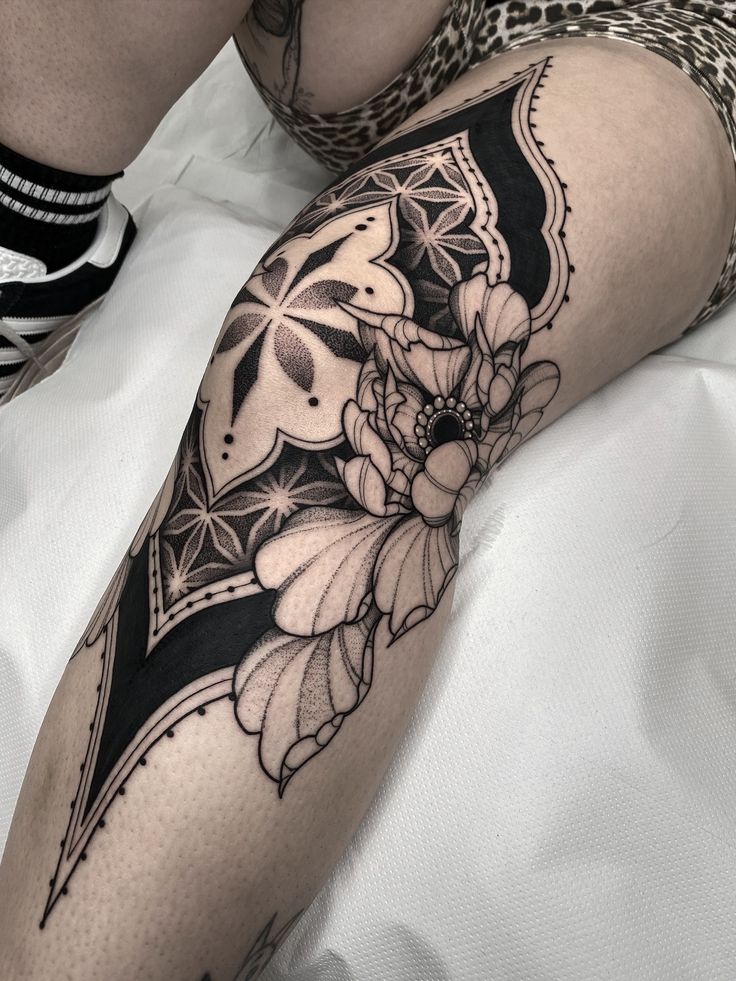
Ornamental Tattoo Style Guide 2026: Geometry, Gold and Sacred Motifs
Ornamental tattoos use geometric patterns and mandala-inspired designs. Full 2026 guide to styles, Australian artists, placement and pricing.
Read More
Finger Tattoos Australia 2026: Complete Guide to Designs, Fading and Cost
Finger tattoo guide for Australia in 2026. Designs, pain, fading truths, healing tips, ring tattoos and price bands. What to book and what to skip.
Read More
Tattoo Insurance Australia 2026: Coverage, Costs and What Clients Should Ask
Public liability, product liability and blood-borne cover for Australian tattoo studios in 2026. Costs, exclusions and what clients should ask before booking.
Read More