Building a Tattoo Portfolio: The Complete Guide for Australian Artists
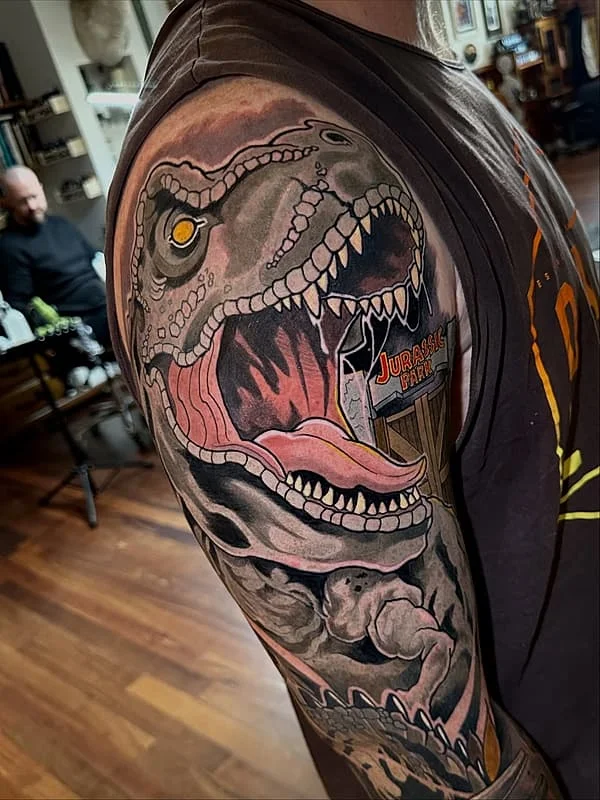
It was a Tuesday afternoon when a young artist named Kieran walked into a respected studio in Newtown, Sydney, carrying a folder of printed photographs. He had tattooed for eighteen months under informal guidance and arrived hoping to land a guest spot. The studio owner flipped through his work in under three minutes, handed the folder back, and said: "Come back when your portfolio tells me who you are." Kieran was devastated. He had hundreds of tattoos under his belt and assumed volume was the point. What he did not understand yet was that a portfolio is not a record of everything you have done. It is a carefully edited argument for why someone should trust you with their skin.
That distinction matters more in 2026 than ever before. The Australian tattoo industry has more than 4,000 licensed studios and thousands of independent artists competing for attention on platforms that reward visual quality above almost everything else. Clients scroll Instagram at midnight, compare artists on directory sites before booking, and make decisions in seconds. Your portfolio is the first impression, the sales pitch, and the client filter all at once. Getting it right is the foundation of every booking and every career step you will take.
Key Takeaways
- A portfolio is a curated argument for your skill, not an archive of every tattoo you have ever done. Quality always outweighs quantity.
- Healed photographs are non-negotiable. Fresh tattoos photograph sharper and darker than the settled result your clients will actually wear.
- Photography quality shapes how clients perceive your technical skill. Poor lighting can make excellent work look mediocre.
- Instagram, a personal website, and a TattooNearMe listing form the minimum viable platform stack for any serious Australian artist.
- Apprentices should photograph every tattoo from day one. That habit pays dividends across an entire career.
- The most common mistake is retaining weak pieces out of sentimental attachment. If a piece does not represent your current best work, remove it.
Why Your Portfolio Is Your Most Important Business Tool
A tattoo portfolio is the primary channel through which clients discover you, assess your skill, and decide whether your aesthetic matches their vision. That decision is almost always made before they have spoken a word to you. In Sydney, Melbourne, Brisbane, and Perth, two artists with equivalent skill and identical pricing will consistently attract different clients based entirely on how their portfolios are curated.
Your portfolio is not for everyone. It is a filter. The right curation attracts exactly the clients you want to work with and quietly discourages the ones who are not a fit. That is not a loss. That is the system working correctly.
Digital vs Physical Portfolios: Choosing the Right Format
Digital has won as the primary discovery and booking tool in 2026. Physical portfolios still serve a specific purpose in the in-person consultation, where a high-quality printed book communicates craftsmanship in a way a phone screen cannot.
| Feature | Digital Portfolio | Physical Portfolio |
|---|---|---|
| Format | Website, Instagram, directory listing, PDF | Printed book, binder, or quality album |
| Cost | Low to moderate (hosting and domain) | Moderate to high (printing and materials) |
| Reach | Global, available 24/7, searchable online | In-person consultations and conventions only |
| Ease of update | Instant: add or remove pieces in minutes | Requires reprinting and rebinding |
| SEO benefit | High (especially a personal website) | None |
| Ideal for | Discovery, booking enquiries, social proof | In-studio consultations, convention walks |
For most Australian artists, the minimum is a well-maintained digital portfolio across at least two platforms. A physical book becomes worthwhile at the mid-career level when you are running regular in-studio consultations.
What to Include in Your Portfolio
Every piece in your portfolio is a vote for a certain type of client and a certain type of request. Style consistency builds trust far more than demonstrating breadth across every technique you have ever tried.
Healed Work Is Non-Negotiable
Fresh tattoo photographs are almost always misleading. The ink is saturated, the lines slightly raised, and the contrast artificially heightened by fresh skin inflammation. Including healed photographs at the six-week and one-year mark demonstrates technical confidence and honesty. It shows the work holds. Many artists follow up with clients at six weeks, offering a small booking incentive in exchange for a healed photograph. Build this habit from day one.
Variety, Before-and-After Work, and Portfolio Size
Even within a single style, variety of subject matter matters: a black and grey realism artist should show portraits, animals, landscapes, and objects. What variety should not mean is including work from every style you have ever attempted. A portfolio mixing realism, watercolour, and neo-traditional reads as an artist without a voice. If you do cover-up work or reworks, before and after pairs demonstrate problem-solving skill. Only include pairs where the transformation is genuinely impressive. For size, ten to fifteen strong pieces outperform fifty mediocre ones for new artists, while mid-career artists should aim for twenty to thirty curated examples.
Photography: Making Your Work Look Professional
Photography is the single most underestimated skill in tattoo portfolio building. When clients are comparing your work against artists with professional setups, a poorly photographed portfolio is a commercial liability regardless of how good the underlying tattooing is.
Lighting and Colour Temperature
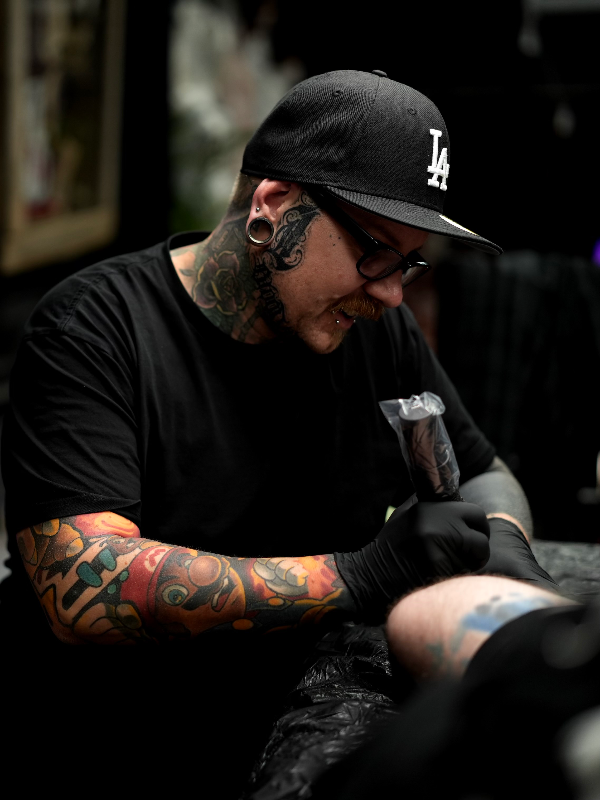
Natural light near a large window on an overcast day is your best starting point. For studio shooting, a portable LED ring light in the $80 to $200 range is a significant upgrade over overhead fluorescent tubes. Aim for 5000 to 6500K colour temperature. Warm yellow lighting below 4000K shifts black ink toward brown and muddles colour tattoos.
Background, Composition, and Editing
The background should not compete with the tattoo. A plain white or light grey backdrop is the safest choice. Fill the frame so the tattoo occupies at least 70 to 80 percent of the image. When editing, adjust white balance to neutralise colour casts, set exposure to a natural level, and lift shadows slightly. Resist heavy presets. Lightroom Mobile is free and sufficient for these basic corrections.
Camera vs Phone
A modern flagship phone produces portfolio-quality photographs in good light. For intricate geometric or portrait realism work, a dedicated mirrorless camera with a 50mm or 85mm lens produces sharper fine detail. For most artists, mastering phone photography in a controlled setup is the more practical starting point.
Curation: What to Cut and Why It Is So Hard
Curation requires emotional detachment from work that carries personal meaning. The question is never "is this a good tattoo?" The question is: "does this piece represent where I am right now, and does it attract the clients I want?"
Removing Weak and Sentimental Pieces
Almost every artist has pieces in their portfolio because of the story behind them rather than the quality of the work. Clients see only the result, not the context. Your portfolio is also a menu: every piece you include is an implicit invitation for clients to ask for something similar. If you have included a style you no longer enjoy, remove it.
Setting a Quality Threshold
Review your portfolio every six months. Rank pieces from strongest to weakest and consider removing the bottom ten percent. As your skill grows, new work will consistently outperform older pieces and the threshold for what stays should rise.
If you would hesitate to show a particular piece to a senior artist whose opinion you respect, it should not be in your public portfolio. Apply that test to every piece you are unsure about.
Platform Strategy: Where to Show Your Work in Australia
Choosing the right platforms is not about being everywhere. Australian tattoo clients use social media, directory sites, and search engines to find artists. Your strategy needs to address all three discovery channels.
| Platform | Audience Reach | SEO Value | Booking Integration | Time to Set Up |
|---|---|---|---|---|
| Very high | Low (not indexed by Google) | Bio link only | 1 to 2 hours | |
| Personal website | Moderate (SEO-dependent) | High | Full integration possible | 1 to 3 days |
| TattooNearMe | High (Australia-focused) | High (domain authority) | Enquiry form included | Under 1 hour |
| Behance | Moderate (design community) | Moderate | None | 2 to 4 hours |
| PDF portfolio | Low (shared manually) | None | None | 2 to 6 hours |
Instagram: High Reach, Weak SEO
Instagram remains the dominant discovery platform for Australian tattoo clients. Its core weakness is that its content is invisible to Google. Someone searching "geometric tattoo artist Brisbane" will not find your posts in search results. For social browsing, Instagram is essential. For search-driven discovery, it cannot do the job alone.
Personal Website: The Long-Term Asset
A personal website is owned entirely by you and cannot be affected by an algorithm change. A well-structured website will rank in Google for queries like "black and grey tattoo artist Sydney," connecting you with clients actively searching right now. A homepage, gallery, about page, and contact form is entirely sufficient.
TattooNearMe: Australian-Specific Directory Reach
TattooNearMe is Australia's dedicated tattoo studio and artist directory. Its pages frequently rank on the first page of Google results for city and style searches because of the domain's established authority. An artist profile places your work in front of clients with real booking intent. See how artists are listed by browsing the Sydney tattoo shops or Melbourne tattoo shops pages.
Behance and PDF Portfolios
Behance attracts a design community audience and is a secondary platform useful for artists seeking creative industry collaborations. PDF portfolios serve convention applications and studio job applications. Keep a curated PDF of your best fifteen pieces ready for these opportunities.
Portfolio Development Timeline: By Experience Level
Where you are in your career determines both what you have available to show and how to approach portfolio building. Expectations, platform focus, and priorities differ significantly at each stage.
| Career Stage | Portfolio Size | Quality Bar | Platform Focus | Key Milestones |
|---|---|---|---|---|
| Apprentice (0-12 months) | 8-15 pieces | Technical consistency, clean lines | Instagram, studio profile | First custom piece, first healed photo, first referral |
| Junior (1-3 years) | 15-25 pieces | Style developing, healed work included | Instagram, TattooNearMe, personal website | Style specialism emerging, healed library building, first guest spot |
| Mid-career (3-7 years) | 20-35 pieces | Consistent excellence across niche | All platforms, physical book | Waiting list established, physical portfolio printed, conventions |
| Senior (7+ years) | 25-40 pieces | Only best-of-career work | Website priority, selective social | Published features, international guest spots, teaching workshops |
Apprentice Stage: Document Everything, Show Your Best
Resist the temptation to show everything. Curate carefully and show only your eight to twelve best pieces, rotating older work out as newer pieces exceed them. Photograph every tattoo immediately after completion from your very first day tattooing. See our tattoo apprenticeship complete guide for a full breakdown of the career path ahead.
Junior to Mid-Career: Finding Your Voice and Raising the Bar
Between one and three years, most artists find their aesthetic direction. Prioritise pieces in your developing niche and set up a personal website and TattooNearMe profile in addition to Instagram. By the mid-career stage, the portfolio should include only pieces you are proud to show demanding clients and respected peers. Read our guide on how to choose a tattoo artist for a client-side perspective on what a strong portfolio communicates.
Senior Stage: Fewer Pieces, Uncompromising Standard
At the senior level, the portfolio functions as a record of exceptional work rather than a broad demonstration of capability. Clients booking senior artists have typically confirmed their decision through years of following the artist's output. The personal website becomes the most important platform at this stage.
Common Portfolio Mistakes and How to Avoid Them
- Including fresh tattoos with no healed equivalents. Fresh work photographs deceptively well. Build a healed photo library from the start of your career and prioritise it across every platform.
- Inconsistent photography quality across pieces. A portfolio where half the pieces are cleanly photographed and half are dark or blurry reads as inconsistent even where the tattooing itself is uniform.
- Too many pieces from one narrow subject. Variety within your niche demonstrates depth of skill and reassures clients that you can handle their specific idea.
- No clear path to contact or booking. Every version of your portfolio needs an obvious path to contact. If a motivated client cannot easily reach you, they will book someone more accessible.
- Neglecting the mobile experience. The majority of portfolio views happen on a phone. Your website must work fully on mobile and images must load quickly.
- Updating too infrequently. A portfolio not updated in twelve months signals that your work may have stalled.
- Letting sentimental pieces override quality judgement. Pieces with personal history are the hardest to remove and the most likely to drag down the overall impression.
- No dedicated photographing spot in the studio. Set up a clean area with good light and a plain backdrop, and use it for every piece.
Frequently Asked Questions
How many pieces should a tattoo portfolio contain?
The answer depends on your career stage: eight to fifteen for apprentices, fifteen to thirty for junior to mid-career artists, and twenty-five to forty for senior artists where quality consistency matters more than total number. If you are retaining pieces to pad the count, remove them instead.
Should I include work in progress shots or only finished tattoos?
Finished tattoos should form the core of any portfolio. Work in progress shots work well as Instagram content but are less suited to a curated portfolio context. The one exception is large-scale work such as full sleeves or back pieces, where a progress series helps clients understand the scope of what is possible. The final healed shot should always be the lead image.
Do I need a professional photographer for my portfolio?
Not necessarily. Modern smartphones produce excellent portfolio photographs in good lighting, and a ring light combined with basic white balance correction in a free editing app will take most artists much further than a professional session. A colour realism artist with highly detailed large-scale work may benefit from professional photography, but for most artists mastering phone photography in a controlled setup is the more practical starting point.
How often should I update my portfolio?
Add new pieces as you complete work that meets your current quality threshold, and review the full portfolio every six months. At each review, consider removing the weakest ten percent and check whether older strong work has been superseded by newer output.
Is a personal website worth the cost, or is Instagram enough?
Instagram alone is insufficient for a long-term strategy because its content does not rank in Google. A client searching "watercolour tattoo artist Perth" will not find your Instagram profile. A personal website builds search visibility that Instagram cannot provide, costs roughly $20 to $30 per month, and the return from organic search traffic justifies this investment for any artist building a sustainable practice.
What is the best way to collect healed photographs from clients?
Use a structured follow-up system. Send a message at the two-week mark to check on healing, then a second message at the six-week mark requesting a healed photograph in exchange for a small incentive such as priority booking or a discount. Start the system immediately: it compounds into a significant asset within twelve months. For more on the booking process, read our tattoo consultation guide or use the tattoo style quiz to understand how clients articulate their preferences before booking.
Explore More
Find Tattoo Shops
Browse by Style
Stay Updated with the Latest Insights!
Get the latest news and updates delivered to your inbox.
Related Articles
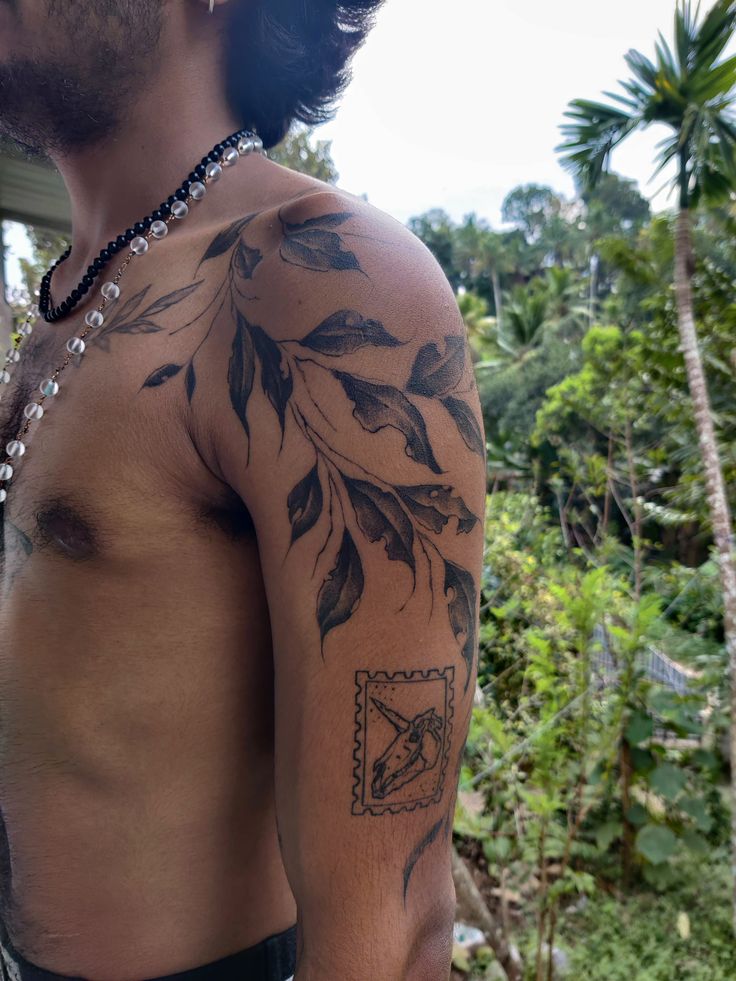
Tattoo Apprenticeship Australia 2026: Complete Career Guide
How to become a tattoo artist in Australia. Apprenticeship path, portfolio, legal steps, real costs ($20k to $45k), and honest income expectations.
Read More
How to Choose the Right Tattoo Artist in Australia 2026
How to pick the right tattoo artist in Australia. Portfolio, hygiene, hourly rates ($80 to $350), red flags, and consultation questions.
Read More
Social Media for Tattoo Artists: The Complete Australian Guide 2026
A complete guide for Australian tattoo artists on Instagram, TikTok, Pinterest, content planning, and converting followers to bookings.
Read More