Tattoo Size Guide 2026: Choose the Right Scale in Australia
The first question every Australian tattoo artist hears at consultation is usually the same one. "How small can we make it?" The next question, three years later, is almost always the opposite. "Should we have gone bigger?" Sizing is the single most predictable regret in tattooing, and it is entirely preventable if you understand what happens to ink at every scale as the years roll on.
This guide walks through the sizing rules Australian artists use with clients in 2026: the minimum sizes for each style, the body-proportion tests, how price scales (spoiler: not linearly), and how to leave room for expansion so a small first tattoo does not lock you out of a sleeve later.
Key Takeaways
- Most common mistake: going too small. Roughly 80% of Australian clients initially request smaller than their artist recommends
- Golden rule: details under 2 to 3 mm wide will blur together within 5 to 10 years
- Sweet spot: 4 to 7 inches for a first medium piece, priced $400 to $1,200 AUD
- Price is not linear: a piece twice as big usually costs 2 to 3 times as much because of detail and session length
- Proportion: tattoo size should match body-part size. A tiny tattoo on a large canvas looks like a sticker
- Plan expansion: ask the artist to leave breathing room so future pieces flow, not clash
- Artist advice: when in doubt, size up. Nobody wishes they had gone smaller in year 10
Standard Size Categories
Australian studios roughly agree on six size brackets. Prices below are based on typical 2026 hourly rates ($150 to $250 per hour for mid-tier artists).
| Category | Dimensions | Session Time | Typical Cost (AUD) | Best For |
|---|---|---|---|---|
| Tiny | Under 5 cm (2 inches) | 30 to 45 min | $80 to $150 | Simple symbols, initials, single-line dates |
| Small | 5 to 10 cm | 1 to 2 hrs | $150 to $400 | Minimalist designs, small florals, script |
| Medium | 10 to 18 cm | 2 to 4 hrs | $400 to $1,200 | Detailed illustrations, moderate realism, animals |
| Large | 18 to 30 cm | 4 to 8 hrs | $1,200 to $3,000 | Complex scenes, chest or thigh pieces |
| Extra Large | 30 to 50 cm | 8 to 15 hrs | $3,000 to $7,000 | Sleeves, back panels, ribs to hip |
| Full body part | 50 cm+ | 15 to 60+ hrs | $7,000 to $20,000+ | Full sleeves, full backs, body suits |
Browse the small tattoo gallery or the full sleeve gallery for real-world scale references.
Minimum Size for Detail Retention
Skin is not paper. It stretches, sheds, and heals slightly differently every time the needle passes. Fine details that look crisp on day one migrate over years, and once two lines are less than about 2 mm apart, they will eventually merge into a blob. That is the physics behind the sizing conversation.
Minimum sizing by design type
- Single-word script: 2.5 cm tall for legibility past 10 years
- Portrait faces: 10 to 12 cm minimum to capture recognisable features
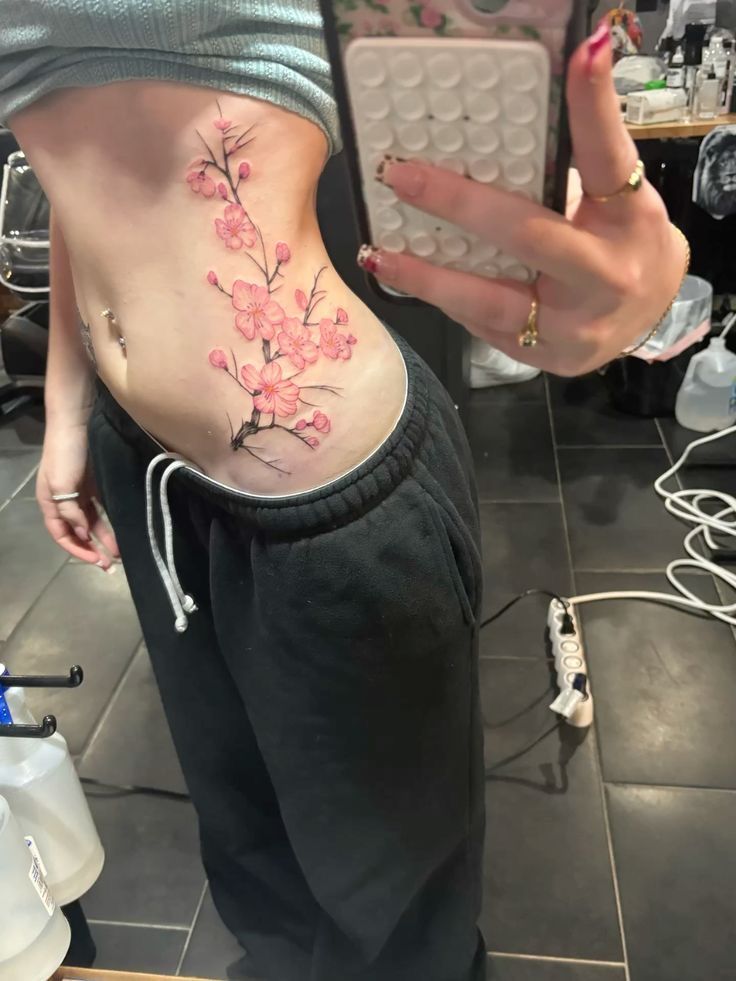
- Single flowers with petal detail: 8 to 10 cm
- Detailed animals (fur, feather): 12 to 18 cm
- Geometric line work: 10 to 15 cm for line precision
- Mandalas: 12 to 18 cm for the concentric detail to breathe
- Realistic imagery with shading depth: 15 to 20 cm minimum
- Fine-line florals: 6 to 10 cm even for delicate work
The most honest thing an artist can say at consultation is: "I can tattoo that tiny, but I would not tattoo it tiny." Ask them to show you healed examples of the same design at both sizes before you decide.
What Happens When You Go Too Small
Here is the aging timeline for two identical designs, one done at 5 cm and one at 12 cm.
Tiny piece (under 5 cm)
- Year 1 to 2: looks crisp and exactly as planned
- Year 3 to 5: fine lines start softening; adjacent lines begin to touch
- Year 5 to 10: details visibly merge; the piece reads as a blob from arm's length
- Year 10+: almost always needs a complete redo or an enlargement to survive
Properly sized piece (10 cm+)
- Year 1 to 10: details remain crisp and readable
- Year 10 to 20: mild softening but structure and legibility intact
- Year 20+: a light touch-up refreshes it, but the composition survives
Body Proportion Guidelines
The right size depends as much on the canvas as the design. Two identical 8 cm pieces look completely different on a small wrist versus a broad shoulder.
Forearm
- Smaller frame: 8 to 13 cm
- Medium frame: 10 to 18 cm
- Larger frame: 13 to 23 cm
- Under 5 cm reads as a sticker on most forearms
Shoulder
- Shoulder cap follows the natural curve: 10 to 18 cm
- Shoulder blade panel: 13 to 23 cm
- Plan flow toward the arm or chest if you may expand later
Thigh
- Small to medium frame: 13 to 23 cm
- Larger frame: 18 to 30 cm
- Huge canvas: going smaller than 10 cm wastes the space
Ribs
- Minimum 15 cm; anything smaller gets lost across the torso
- Full side panel (hip to armpit): 25 to 45 cm
Back
- Upper back panel: 15 to 25 cm
- Full back: 38 to 60 cm (shoulder to lower back)
- Australian back-piece specialists recommend planning across the whole surface even if only part is tattooed initially
The palm test
- Palm-sized (8 to 10 cm): good for simple designs on wrist, ankle, or behind the ear
- Two palms (15 to 20 cm): the sweet spot for most first medium pieces
- Three palms and up (23 cm+): complex designs with real detail
Place your open hand on the placement zone before booking. If the tattoo feels smaller than your palm on a large canvas, reconsider.
How Size Affects Pricing
The costs below are illustrative averages based on typical 2026 Australian studio hourly rates. Actual quotes vary by artist, complexity, and location.
Doubling the size does not double the price. It usually triples it, because the piece takes more sessions, more detail work, and more ink.
| Size | Session Time | At $150/hr | At $250/hr |
|---|---|---|---|
| 5 cm (small) | 1 hr | $150 | $250 |
| 10 cm (medium) | 2 to 3 hrs | $300 to $450 | $500 to $750 |
| 20 cm (large) | 5 to 7 hrs | $750 to $1,050 | $1,250 to $1,750 |
| 40 cm (extra large) | 12 to 20 hrs | $1,800 to $3,000 | $3,000 to $5,000 |
Ways to spread the cost without cutting quality
- Split sessions: break a large piece into 3 or 4 bookings across 3 to 6 months
- Outline first, colour later: lock the composition, add saturation in a follow-up
- Reduce complexity, not size: a simpler design at the right size ages better than a busy one at the wrong size
- Black and grey over full colour: usually 10 to 20% cheaper and often more timeless
Plug your size and city into our tattoo cost calculator for a real-world Australian quote.
Expansion Planning
Random small tattoos are the number-one reason people cannot commit to a sleeve later. Every piece you place today limits or opens the pieces you can add tomorrow. Good artists design with expansion in mind even when you only book one panel.
Small piece to full sleeve
- Phase 1: upper arm or shoulder anchor (10 to 15 cm), $400 to $800
- Phase 2: extend down to the forearm (15 to 20 cm added), $800 to $1,500
- Phase 3: fill gaps and background, $600 to $1,200
- Total: full sleeve across 1 to 3 years for $1,800 to $3,500
Back expansion
- Phase 1: shoulder blade panel, $500 to $1,000
- Phase 2: extend down spine or across shoulders, $800 to $1,500
- Phase 3: full back fill, $2,000 to $5,000+
Pro tip: ask your artist to draft the initial piece with expansion in mind. They will leave the right kind of negative space and the right flow direction so future pieces slot in cleanly.
Common Sizing Mistakes
- "Make it tiny" syndrome: the classic first-tattoo instinct that produces the most touch-up work later
- Cramming detail into a small area: demanding a full portrait in 5 cm is asking for a blob
- Ignoring body proportions: a tiny piece on a large canvas reads as accidental
- Going too big for the placement: 30 cm on a 20 cm space forces bad composition
- No expansion plan: random small pieces limit future cohesive work
- Mixing scales without a plan: a huge piece beside a tiny one looks chaotic
The Final Decision Checklist
- Does this size preserve every important detail without merging?
- Will this size still read clearly in 20 years?
- Does the size match my body-part proportions?
- Can I afford this size at my chosen artist's rate?
- Am I open to future expansion from this piece?
- Has my artist recommended a larger size for technical reasons?
- Have I seen healed examples of the artist's work at this size?
- Am I choosing the size I want, not just the size I can afford?
If your artist says "go bigger"
- Ask why. It is almost always about detail retention, aging, or proportion
- Ask to see two healed examples: one at your requested size, one at their recommended size
- Read our consultation guide to know what other questions to raise
- Nine times out of ten, they are right. They have seen thousands of healed pieces you have not
Nobody ever says "I wish I had gone smaller." Thousands say "I wish I had gone bigger." When in doubt, size up.
Frequently Asked Questions
How small can I really go?
For a simple symbol without fine internal detail, 2.5 cm is workable. Add any interior detail (petals, script, texture) and 5 cm is a safer floor. If you want more than one internal element, plan for 8 cm and up.
Does bigger always mean more painful?
Bigger usually means longer, which feels more painful because of session fatigue rather than sharper pain. A 6-hour session on a low-pain zone (outer arm) is often more manageable than a 2-hour session on a high-pain zone (ribs).
Can I resize a tattoo after it heals?
You can add on. You cannot shrink. Extension and cover-up work can turn a small piece into a larger, more detailed composition, but the original ink cannot be reduced.
Should I get a small first tattoo to test the waters?
Only if it stands on its own. The classic mistake is placing a tiny "starter" on the forearm and finding out later it blocks the sleeve you actually want. Test the waters on the outer thigh or upper back where a small first piece cannot interfere with future plans. Read our first tattoo guide for the full first-timer walkthrough.
What size is best for aging skin?
Larger pieces age noticeably better on any skin type, but especially on skin over 45. The extra size gives collagen change something to soften into. Fine detail in 3 cm pieces is where mature skin shows aging fastest.
Bottom Line
Sizing is the invisible variable that decides whether your tattoo still looks good at your 60th birthday. Trust the artist when they suggest bigger. Match the size to your body part, not just to your budget. Leave breathing room for future work. And run the palm test before you sign off on any stencil. Do those four things and you will never join the "I wish I had gone bigger" chorus.
Browse the design inspiration gallery for scale references, or plan the budget with our tattoo cost calculator.
Explore More
Find Tattoo Shops
Browse by Style
Stay Updated with the Latest Insights!
Get the latest news and updates delivered to your inbox.
Related Articles
Tattoo Consultation Complete Guide Australia 2026
Tattoo consultation guide for Australia 2026: prep checklist, questions to ask, red flags, deposit etiquette, and city-by-city fees.
Read More
The Tattoo Consultation in Australia 2026: What to Expect
What to expect at your tattoo consultation in Australia. Prep checklist, essential questions, deposits ($100 to $500), timelines, red flags.
Read More
Finger Tattoos Australia 2026: Complete Guide to Designs, Fading and Cost
Finger tattoo guide for Australia in 2026. Designs, pain, fading truths, healing tips, ring tattoos and price bands. What to book and what to skip.
Read More