Blood Thinners and Tattoos: Medication Safety Guide for Australia 2026
You have been on aspirin since your last cardiology check-up, or on warfarin since the DVT scare, or on a daily DOAC after the AF diagnosis. Then the consultation question lands at the studio. "Are you on any medications?" The honest answer changes the conversation in ways most first-time clients do not expect.
The 2026 reality across Australian tattoo studios is straightforward: getting tattooed while on blood thinners carries real risks (excessive bleeding, ink dispersal, blowouts, prolonged bruising) and always requires a conversation with your GP or specialist first. The good news is that with a tailored plan, many people on long-term anticoagulant therapy can still get tattooed safely. This guide explains the medications, the bleeding science, what a doctor-cleared plan actually looks like, and the placements and sizes worth choosing if you decide to go ahead.
Important: never stop a blood thinner without explicit medical advice. Anticoagulants prevent stroke, pulmonary embolism, and life-threatening clots. The tattoo decision sits underneath that, not above it. This article is educational only; the call rests with your GP, cardiologist, or haematologist.
Key Takeaways
- Doctor first, artist second: Always get formal medical sign-off before booking
- Aspirin (low dose): Often paused 7 to 10 days before, with GP approval
- Warfarin: Needs INR window planning, sometimes a bridging plan
- DOACs (Eliquis, Xarelto, Pradaxa): Shorter half life, timing around the next dose
- Clopidogrel (Plavix): Often cannot be paused; usually a no for elective tattoos
- Bleeding is 2 to 5 times normal: Affects line quality, healing, and bruising
- Smarter choice: Smaller tattoos, low-bleed placements, experienced artist, longer session breaks
Why Blood Thinners and Tattoos Are a Real Problem
Tattooing is, mechanically, thousands of tiny punctures per minute into the dermis. Healthy skin clots almost immediately around each one, the artist wipes, and the ink stays where it was deposited. Anticoagulants slow that clotting cascade in different ways.
- More bleeding during the session: the artist has to wipe constantly, reducing visibility
- Ink dispersal: ink mixes with blood and spreads beyond the intended line, producing fuzzy or patchy outcomes
- Blowouts: ink pushed too deep or spread laterally appears as soft blurry shadows
- Prolonged oozing: hours of seepage post-session rather than minutes, raising infection risk
- Heavy bruising: often covering significantly more area than the tattoo itself
- Slower healing: the scab phase stretches out, making aftercare more demanding
The short version: bleeding is the enemy of clean linework. Anticoagulants make every line a little harder to lay down crisply, and the result shows on the skin for life.
Common Blood Thinners and the Tattoo Picture
Australian patients are most commonly on the following. Trade names vary; ask your prescriber if you are unsure which category your medication falls into.
| Medication | Class | Can You Tattoo? | Key Considerations |
|---|---|---|---|
| Aspirin (low-dose 75-100 mg) | Antiplatelet | Often yes, with GP approval | Usually paused 7 to 10 days before. Discuss cardiovascular risk first |
| Warfarin (Coumadin, Marevan) | Vitamin K antagonist | Sometimes, complex | INR target window matters. May need a bridging plan |
| Apixaban (Eliquis) | DOAC | Sometimes, with planning | 12-hour half life. Timing around next dose |
| Rivaroxaban (Xarelto) | DOAC | Sometimes, with planning | Similar to apixaban; once-daily dosing |
| Dabigatran (Pradaxa) | DOAC | Sometimes, with planning | Renal function matters; specialist input usually needed |
| Clopidogrel (Plavix) | Antiplatelet | Usually no for elective work | High bleeding risk; pausing often not safe |
| Ticagrelor (Brilinta) | Antiplatelet | Usually no for elective work | Dual antiplatelet therapy is a hard no |
| Enoxaparin (Clexane) | Heparin | Short-term only | Tattoo deferred until off therapy |
| Fish oil / vitamin E (high dose) | Mild antiplatelet | Yes | Pause 1 week before for minimum bleeding |
The table is a starting point, not a prescription. Pause decisions belong to the prescriber who knows your full history.
What Doctor Clearance Actually Looks Like
A typical Australian workflow if you are on long-term anticoagulation and want a tattoo:
- Book a GP review for 4 to 6 weeks before the intended tattoo date
- Bring the proposed design. Size, placement, and total session time matter
- Discuss the clotting risk of pausing against the bleeding risk of continuing
- If pause is approved, the GP gives a written instruction for how many days, which dose to skip, when to resume
- Bring the written plan to the studio. Reputable artists will not start without it
- Confirm a healing review at 7 to 14 days, especially if you are restarting the medication early
For DOAC patients, the pause is often a single dose window rather than days. For warfarin, an INR check on the morning of the session is sometimes part of the plan.
Hard rule: never decide the pause window on your own. Stroke and pulmonary embolism do not wait for healing tattoos.
What Your Tattoo Artist Will Want to Know
Australian tattoo studios are required to take a medical history at consent. If you are on blood thinners, expect questions covering:
- Which medication and what dose
- How long you have been on it
- Why you are on it (the answer affects safety planning)
- Whether your prescriber has cleared you and what their instructions are
- Your last INR or coagulation panel if applicable
- Whether you bruise easily in normal life
- Past bleeding incidents after dental work, surgery, or other procedures
A studio that does not ask any of this is a red flag, just like one that skips hygiene checks. For the broader hygiene picture, see our tattoo shop hygiene standards guide.
High-Bleed Placements to Avoid (or Plan Around)
Some body sites bleed more than others by anatomy. On blood thinners, those differences matter more.
| Higher-bleed sites | Lower-bleed sites |
|---|---|
| Ribs and sternum | Outer shoulder |
| Inner upper arm | Outer thigh |
| Feet and ankles | Outer calf |
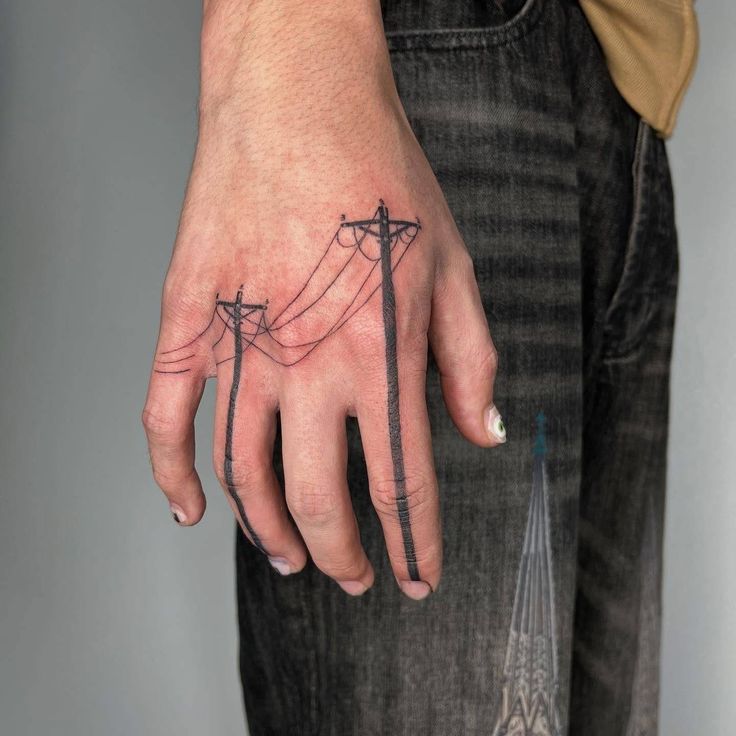
| Fingers and hands | Outer forearm |
| Scalp and behind the ear | Upper back |
| Genital and inner thigh | Outer bicep |
If you can move the tattoo from a rib placement to the outer arm, you cut bleeding dramatically and improve the line quality your artist can deliver. Discuss this honestly with the artist; most will suggest alternatives.
Smart Design Decisions on Blood Thinners
If you are cleared to proceed, design choices that play well with reduced clotting include:
- Smaller pieces (under 10 cm). Less total bleeding surface
- Single-session designs. Each session is a fresh bleeding event; one is better than five
- Bold linework over fine detail. Heavier lines cover any minor ink dispersal cleanly
- Black or single-pigment work. Colour packing means more passes over the same skin
- Open-space designs. Tight micro detail is more affected by bleed than negative-space designs
- Avoid solid blackwork blocks. Saturating large areas extends bleeding and bruising
Browse design ideas that fit those constraints in our minimalist gallery or fine line gallery.
Day-of-Session Protocol
If you have a doctor-approved plan and a willing artist, here is a sensible session-day routine.
- Eat a full meal beforehand. Steady blood sugar reduces bleeding and faintness
- Hydrate, but skip alcohol for 48 hours. Alcohol thins blood further
- Take prescribed non-blood-thinner medications as normal. Diabetes meds, blood pressure meds, asthma inhalers
- Arrive 15 minutes early. The artist will want to confirm the medical plan
- Wear loose, dark clothing. Bleed-through staining is more visible on light fabric
- Tell the artist immediately if you feel unusually faint or notice excessive bleeding mid-session
- Plan for longer wipe-and-rest breaks than a normal session
Aftercare for a Bleeding-Prone Tattoo
Standard aftercare still applies, but with extra attention to oozing, bruising, and slower scabbing. See our first 24 hours after a tattoo guide and best tattoo moisturiser guide for the baseline.
Additions specific to blood-thinner clients:
- Keep the second-skin film on slightly longer if oozing continues past 24 hours (per the artist's direction)
- Watch for bruising spreading beyond the tattoo area for the first 72 hours. Photograph it and report to the GP if it doubles in size
- Avoid hot showers for the first week. Heat dilates vessels and prolongs oozing
- No NSAIDs (ibuprofen, naproxen) for pain. They further reduce clotting. Paracetamol is the safer choice
- Re-start your blood thinner exactly when your GP instructed. Not earlier, not later
- Book a 7-day check-in with the studio or your GP to confirm healing is on track
When Blood Thinners Are an Outright No for Tattoos
Some clinical situations remove the question entirely. If any of these apply, defer the tattoo until your medical situation stabilises.
- Dual antiplatelet therapy (aspirin + clopidogrel after recent cardiac stent)
- Active treatment for DVT or PE with full-dose anticoagulation
- Pregnancy on therapeutic enoxaparin for clotting disorder
- Mechanical heart valve on warfarin (pausing risk is generally too high)
- Bleeding disorders like haemophilia, von Willebrand disease, or platelet disorders
- Active malignancy on anticoagulation for cancer-related clotting
- Recent surgery or trauma in the last 8 weeks
- Severe liver disease affecting clotting factor production
None of these is permanent. Many patients revisit the tattoo plan once therapy ends or stabilises.
Red Flags From Studios
If a studio reacts to your blood-thinner disclosure with any of the following, walk away and try elsewhere.
- "Just don't mention it, we will get it done." (Hides liability and risk)
- "You can stop your warfarin for a few days, it's fine." (Not the studio's call to make)
- "We don't need a doctor's note." (Most insurers require one for anticoagulant patients)
- "We tattoo people on blood thinners all the time, no big deal." (Dismissive of real risk)
- No medical history form, no consent paperwork addressing medications
A good studio will treat the disclosure professionally, take notes, and either confirm they are comfortable with the plan or refer you elsewhere. That is the standard you want.
Three Real-World Australian Scenarios
Scenario 1. Low-dose aspirin for cardiovascular protection
Patient: 58-year-old Brisbane builder, daily aspirin 100 mg for 6 years post heart-attack scare. Tattoo plan: small outer-bicep memorial piece, single 90-minute session.
- GP approved a 10-day aspirin pause
- Cardiologist cross-checked there was no recent acute event
- Studio held the booking until the written sign-off arrived
- Session ran with normal bleeding and clean linework
- Aspirin resumed the morning after the session per the plan
Scenario 2. Warfarin for atrial fibrillation
Patient: 64-year-old Melbourne retiree, warfarin for AF, INR target 2.0 to 3.0. Tattoo plan: 6 cm outer-calf piece in honour of a late partner.
- Haematologist would not approve a warfarin pause due to stroke risk
- Plan instead: book the session for an INR check morning showing 2.0 to 2.2 (lower end of range)
- Session went ahead with extra wipe breaks and a smaller design than originally planned
- Mild bruising for 8 days; healing completed normally at 3 weeks
- Warfarin dosing unchanged throughout
Scenario 3. Recent stent on dual antiplatelet therapy
Patient: 51-year-old Sydney teacher, aspirin + clopidogrel post coronary stent 4 months ago. Tattoo plan: wrist date-of-birth design.
- Cardiologist declined any pause; dual antiplatelet therapy for 12 months minimum
- Tattoo deferred until month 12 review
- Patient revisited the booking at month 13 once clopidogrel ended and only aspirin continued
- Standard low-dose aspirin pause protocol applied
The pattern across all three: the medical plan decides the timeline, not the other way around. Patience produces the better tattoo and the safer outcome.
Bringing It Together: A Pre-Booking Checklist
Print this and bring it to your GP appointment.
- [ ] Confirmed I am on an anticoagulant or antiplatelet
- [ ] Identified the medication and current dose
- [ ] Booked GP review 4 to 6 weeks before intended tattoo date
- [ ] Brought the design (size, placement, expected session length)
- [ ] Discussed pause options versus continuing the medication
- [ ] Received written instructions (pause days, dose to skip, resume timing)
- [ ] Confirmed studio accepts the plan and will not start without it
- [ ] Adjusted design to a low-bleed placement if recommended
- [ ] Booked a 7-day healing review
- [ ] Arranged paracetamol-only pain relief (no NSAIDs)
Frequently Asked Questions
Can I just take a Panadol if I am in pain after the session?
Yes. Paracetamol (Panadol, Panamax) is fine because it does not affect clotting. Avoid ibuprofen, naproxen, aspirin, and other NSAIDs unless your GP has specifically said they are safe.
How long before the session should I pause aspirin?
Most GPs recommend 7 to 10 days for low-dose aspirin if pausing is approved. Aspirin disables platelets for their entire lifespan, so the pause is longer than for other agents. Always confirm the timing with your prescriber.
I am on a DOAC. Can I time the tattoo around a dose?
Sometimes. DOACs have shorter half lives, so booking the session for the morning before your evening dose (or a similar window) may be enough. Your specialist will give you the exact timing based on your medication and renal function.
What about a single glass of wine the night before?
Skip it. Alcohol thins the blood and dehydrates skin, both of which work against you. Save the celebration drink for the night after the session.
I bruise easily even without medication. Should I be concerned?
Mention it to both your GP and the tattoo artist. Easy bruising can suggest underlying clotting issues that are worth investigating before adding tattoo trauma into the mix.
Does the tattoo location near a blood test or IV site matter?
Yes. If you have weekly blood tests on the inner forearm for INR monitoring, choose a different location so the puncture sites do not overlap the healing tattoo. Talk to your phlebotomist about alternative draw sites if needed.
What if I forgot to mention my medication and the session is already booked?
Call the studio immediately. Postponing by 2 to 4 weeks while you sort medical sign-off is the right move. A skipped consent step is not worth a permanent ink decision.
Bottom Line
Tattoos on blood thinners are possible, not impossible, but the path is doctor-cleared, artist-informed, smaller in scope, and placed carefully. Never pause anticoagulants on your own, always treat the medical plan as the master document, and accept that some medications (clopidogrel, dual antiplatelet therapy) will mean waiting. Patience here protects both your skin and your cardiovascular system, and the tattoo you eventually get will be cleaner and healthier for it.
For broader medical-safety context across other conditions, our autoimmune disease tattoos safety guide covers the wider picture. If you want to start shaping the design while you arrange medical clearance, browse our blackwork gallery or take the tattoo style quiz.
Explore More
Find Tattoo Shops
Browse by Style
Stay Updated with the Latest Insights!
Get the latest news and updates delivered to your inbox.
Related Articles

Tattoo Sterilisation Standards Australia 2026: What to Expect
Tattoo sterilisation Australia 2026: autoclave, spore tests, single-use needles, barrier wrap, hand hygiene, and red flags that should send you elsewhere.
Read More
MRI and Tattoos: Are Tattoos Safe for MRI Scans? 2026 Australian Guide
MRI and tattoos: safe in 99% of cases. Modern inks rarely contain magnetic metals. Disclosure, risk factors, image distortion and what to expect.
Read More
Tattoos While Pregnant Australia 2026: Safety Risks and Alternatives
Is it safe to get a tattoo while pregnant in Australia? OBGYNs advise no. Risks, RANZCOG guidance, trimester timing, henna alternatives, postpartum wait.
Read More