Black Ink Cover-Up Guide Australia 2026
Tattoo ink only ever adds pigment. It cannot lighten what is already on the skin. That single fact is the entire challenge of covering solid black tribal, blackout work, or a heavily saturated piece of dark realism. The good news: with the right strategy, an experienced cover-up artist can transform almost any dark tattoo into something you love. The honest news: the path requires compromise, and managing expectations early saves a lot of money and disappointment.
This guide walks through what actually works on heavy black ink in Australia in 2026, what does not, the real costs across Sydney, Melbourne, Brisbane, Perth, and Adelaide, and how to find a specialist with the right skill set.
Key Takeaways
- Hard rule: Cover-up must use ink that is equal to or darker than the existing piece. Light colours will not work directly
- Size up: Direct cover usually needs to be 2 to 4 times the original area for full coverage
- Three viable paths: Blackwork expansion ($500 to $2,500), dark colour integration ($600 to $2,000), or laser lightening then cover ($1,100 to $4,000)
- Best route for dense black: 2 to 5 laser sessions to lighten first, then a cover with more design freedom
- Faded black is easier: Old, blown-out tattoos cover with bolder colour and less laser work
- Artist match matters: Insist on 10 plus healed-photo examples of dark cover-up work in the portfolio
- What does not work: White ink, pastels, fine line, skin-tone "erasure" tattoos all fail directly over solid black
Why Dark Tattoos Are the Hardest to Cover
Three physics-and-biology facts make heavy black the toughest cover-up scenario:
- Tattoo ink is translucent at best. Even the most saturated pigment lets a fraction of light through. Stack new ink over an old black tattoo and the old pigment still influences the final look
- The dermis only takes so much ink. Trying to "paint over" with thick new ink overworks the skin, causes scarring, and the result still leans dark
- Light colours read against the surrounding skin tone. A yellow flower needs untouched skin to look yellow. Over black ink, that same yellow reads as muddy olive
Brutal honesty: covering a fresh, dense, solid-black tribal with a delicate pastel watercolour design is not possible in a single session. Anyone who promises it is selling you a future regret. Plan for darker, larger, or laser-assisted, and the outcome will be one you actually want.
Option 1: Blackwork Expansion
The most under-rated option for heavy dark tattoos is leaning into the darkness. Instead of fighting the existing black, expand it into a larger blackwork piece that uses the original tattoo as a foundation element.
Where this shines
- Solid black tribal arm bands that can extend into a full sleeve
- Old blackwork pieces that can grow into geometric, ornamental, or illustrative designs
- Blackout sections that can become deliberate negative-space patterns
- Heavy traditional outlines that can absorb into a larger Japanese-inspired piece
Design directions
- Geometric blackwork: Patterns, dot work, and sacred-geometry shapes that use existing dark as one of many shapes
- Ornamental blackwork: Mandalas, scrollwork, and decorative borders that flow naturally from the original
- Illustrative blackwork: Animals, flowers, and figures built out of solid black with negative-space highlights
- Full blackout with pattern cut-outs: Turn a small dark area into a full sleeve of solid black with white-space symbols
Cost and timeline
$500 to $2,500 depending on size and complexity. 1 to 4 sessions, completed inside 1 to 3 months. No laser needed, which is why it is the fastest route from regret to result.
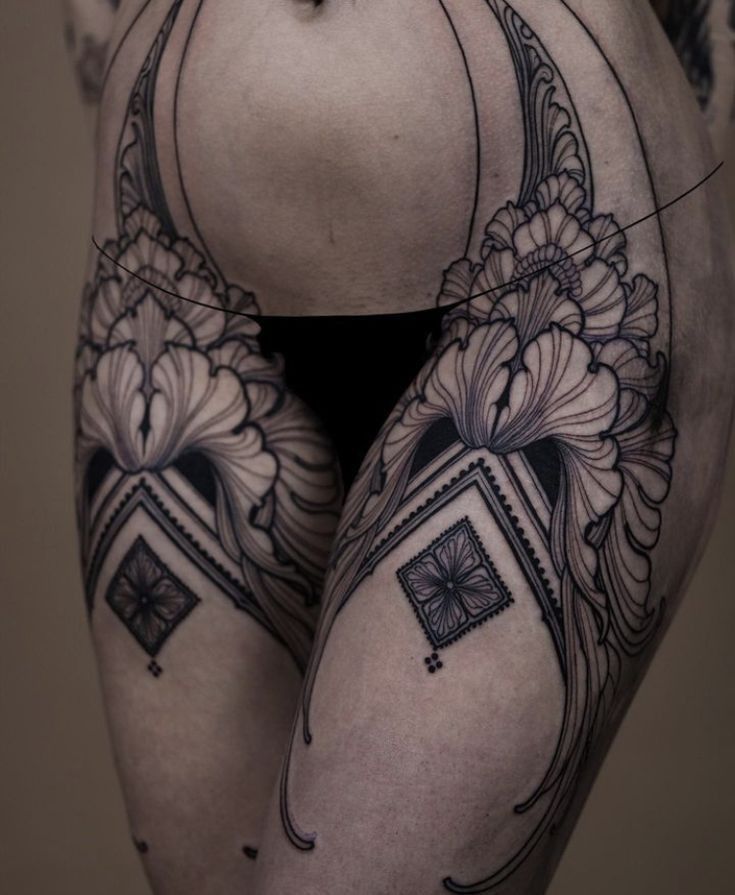
Photographs below are example portfolio pieces from real Australian artists on the platform. Costs quoted are illustrative averages for typical Australian cover-up projects and do not reflect the actual fee charged for the specific tattoo shown.
Option 2: Dark Colour Integration
If pure blackwork is not the look you want, certain dark colours can sit over black ink and add tonal variation, even if they will never read as bright colour.
Colours that survive over black
- Deep blues and indigo: Read as a dark, almost-black hue but add subtle shifts in light
- Burgundy and dark red: Work for shadows and transitions, especially in Japanese-inspired designs
- Dark greens: Useful for leaves, scales, and nature-themed cover work
- Dark purples and aubergine: Add richness without claiming to be bright
Honest limits
- None of these will look vibrant. The original black still controls the tone
- The colour difference often only shows in direct sunlight or at certain angles
- Saturated reds and blues on healed skin can take 2 to 3 sessions to lay down properly
Designs that lean into this look
- Dark realism portraits with heavy shadow
- Japanese imagery (storm clouds, dark water, midnight forests)
- Gothic florals with deep red roses and almost-black leaves
- Moody landscapes with dramatic contrast
Cost: $600 to $2,000 across 2 to 4 sessions. Slightly more than pure blackwork because colour work is slower.
Option 3: Laser Lightening Plus Cover (the most versatile)
This is the route that gives the cover-up artist the most freedom and the client the widest range of design options. The downside is time and money, since you are paying for two procedures.
How it sequences
- Joint consultation with a laser clinic and a cover-up artist to set the fade target
- 2 to 5 laser sessions spaced 8 to 10 weeks apart
- An 8 to 12 week wait for the ink to keep clearing after the final laser session
- Cover-up applied with the new freedom of a lighter canvas
What you unlock
- Medium tones (oranges, blues, greens) become viable
- Cover-up can be roughly 1.5 to 2 times the original size instead of 3 to 4 times
- Fine line, watercolour, and negative-space designs are back on the menu
- Detail work that would be lost over solid black is now possible
Cost breakdown
- Laser sessions: 2 to 5 at $300 to $500 each = $600 to $2,500
- Cover-up tattoo: $500 to $1,500 depending on size and detail
- Total: $1,100 to $4,000 across 6 to 15 months
Our partial removal guide goes deep on the laser side of this process if you want the full play-by-play.
What Does Not Work Over Heavy Black
| Unrealistic ask | Why it fails | Reality check |
|---|---|---|
| White ink cover-up | White ink is semi-transparent and disappears against any darker layer | White only works as highlights on already-lightened skin |
| Pastels, light blues, yellows | Bright colours read against fresh skin, not against black | Possible only after significant laser lightening |
| Same-size cover | Edges of the original poke out around any smaller new piece | Plan for 2 to 4 times the original area |
| Fine-line minimalism | Thin lines vanish under solid black background | Save fine-line styles for fresh skin or post-laser |
| Skin-tone "erasure" tattoo | No ink can match Australian skin tones over dark pigment | Laser removal is the only path to blank skin |
| "You will not see the old tattoo at all" | Without laser, faint ghosting almost always remains | Manage expectations or commit to lightening |
Strategy by Original Tattoo Type
Tribal arm bands and shoulder pieces
- Best path: Expand into a full sleeve in the same aesthetic, or laser lighten then cover with Japanese, ornamental, or nature imagery
- Direct cover cost: $500 to $1,500
- Laser plus cover cost: $1,500 to $3,500
- Bonus tip: Tribal lines often follow muscle, which makes them surprisingly easy to absorb into a bigger design
Solid black blocks (blackout sections, dense fill)
- Best path: Expand into a deliberate blackout sleeve with negative-space symbols, or laser lighten first
- Direct blackout cost: $600 to $2,000
- Laser plus colour realism cost: $2,000 to $5,000
- Watch out for: Any blackout larger than a palm almost always benefits from at least 2 laser sessions
Faded old black tattoos
- Good news: Faded black is much easier to cover than fresh black, and often takes deeper colour without laser
- Best path: Direct cover with a bold design, optionally 1 to 2 laser sessions to push the canvas lighter still
- Cost: $300 to $1,200
- Common direction: Dark florals, bold traditional, or Japanese imagery sits naturally over faded black
Heavy traditional outlines
- Best path: Absorb the outlines into a larger traditional or neo-traditional piece in the same colour family
- Direct cover cost: $400 to $1,200
- Cleanest approach: Pick an artist who specialises in the same broad style as the original so the new piece reads as intentional
Picking the Right Cover-Up Specialist
Not every excellent tattoo artist is a great cover-up artist. The skill set is different: you are working around existing ink, planning composition that hides rather than reveals, and choosing pigment that holds against the original. Look for the following in any artist you shortlist.
Portfolio signals to look for
- 10 plus dedicated cover-up pieces, preferably with before-and-after photos
- At least some healed shots, not just fresh-off-the-needle pictures (fresh tattoos hide flaws that show up months later)
- Examples that include the original tattoo so you can see the actual coverage
- Specific strength in your direction: blackwork specialists for blackwork cover, colour realism specialists for colour cover
Conversation signals to look for
- Will honestly say if laser lightening is required rather than push a direct cover for the booking
- Explains the size and design constraints clearly, in plain language
- Provides a written quote with sessions, deposit, and total cost
- Asks about your medical history and existing tattoos before quoting
Red flags to walk away from
- Claims they can use bright colours over solid black without any laser
- Says they can cover at the same size as the original
- No specific dark-cover work in portfolio
- Pressures you to book on the day of consultation
- Cannot articulate why they are choosing a particular design direction
Real Australian Transformations
Tribal arm band to Japanese sleeve, Perth
Original: Solid black tribal band, 8cm tall, full bicep circumference. Direction: Full-colour Japanese half sleeve.
- 3 laser sessions over 6 months: $1,350
- Final fade: 55% reduction, black settling to mid-grey
- Cover-up: koi, waves, and cherry blossoms across 8 hours of work: $1,800
- Total: $3,150 across 12 months
Solid black butterfly to blackwork mandala, Melbourne
Original: A dense solid-black butterfly on the shoulder blade, 10cm by 8cm. Direction: Stay in the blackwork family, embrace the darkness.
- Expanded into an ornamental blackwork mandala using the butterfly as the centre
- Strategic negative space for contrast
- Single 5-hour session, no laser required
- Total: $850
Heavy traditional rose to dark realism, Sydney
Original: A 1990s-era heavy black traditional rose with thick outlines. Direction: Modern dark realism without removing the original entirely.
- 1 laser session to soften the heaviest fill: $400
- Cover-up: a black-and-grey realism floral with the original rose absorbed as a background element, 6 hours: $1,400
- Total: $1,800 across 4 months
City Cost Reference (2026 averages)
| City | Direct cover (medium) | Laser plus cover |
|---|---|---|
| Sydney | $900 to $2,000 | $1,800 to $4,500 |
| Melbourne | $800 to $1,800 | $1,600 to $4,000 |
| Brisbane | $700 to $1,500 | $1,400 to $3,500 |
| Perth | $700 to $1,600 | $1,400 to $3,800 |
| Adelaide | $600 to $1,300 | $1,200 to $3,200 |
Browse cover-up specialists in Sydney, Melbourne, Brisbane, Perth, or Adelaide. Filter by blackwork, realism, or Japanese depending on the direction you are leaning.
Designing the Cover for Maximum Impact
Anchor the design to the original silhouette
The most natural-looking cover-ups absorb the existing outline rather than fight it. If the original is square, the cover often looks best with a square or rectangular base. If it follows the curve of the bicep, the new design should respect the same curve.
Use the darkest old areas as anchors
The densest sections of the original tattoo become natural focal points in the new design: the eye of a creature, the shadow of a leaf, the dark heart of a flower. A skilled artist plans the composition around these anchors.
Plan for visible ghosting
Even with laser, some faint ghosting of the original ink often remains, especially in raking light. Design directions with busy backgrounds or natural variation (flowers, leaves, waves) hide ghosting far better than designs with smooth empty spaces.
Pick a style that uses heavy black naturally
Traditional, Japanese, neo-traditional, blackwork, and dark realism all use black as a deliberate element. Watercolour, fine line, and pastel illustrative styles do not, which is why they are the hardest direction over dark ink.
Frequently Asked Questions
Can a cover-up ever be smaller than the original tattoo?
Almost never with heavy black ink. The edges of the original will show around any smaller new piece. The only way to a smaller cover is to laser lighten significantly first, then place a smaller design over the faded outline.
How long should I wait between sessions if the cover is large?
4 to 6 weeks of healing between sessions of a multi-session cover. Heavy black areas need the full 6 weeks because they take more ink and stress the skin more than fresh tattoos. See our first 24 hours guide and week 1 care for the post-session routine.
Will the cover-up fade faster than a fresh tattoo?
Slightly, yes. Areas with heavy old ink underneath sometimes hold colour less crisply than virgin skin. Stick to the daily SPF 50 plus and moisturising routine and the difference is small. The long-term care guide covers the daily habits.
What if I want to remove the tattoo eventually instead?
Full removal is always an option but it is the most expensive and slowest route. For most Australians, partial removal plus a cover that they love is more practical than full removal followed by blank skin. Our removal cost guide spells out the numbers.
Can I get the cover-up done in a single session if the design is small?
Possible for blackwork expansion that stays under about 4 hours. For colour cover, multi-session is almost always required to lay down the pigment cleanly. Ask the artist upfront how many sessions they recommend and budget accordingly.
Are payment plans available for cover-ups?
Yes. Afterpay, Zip, and per-session payment cover most cover-up projects at major Australian studios. See our payment plans breakdown for studios that accept BNPL.
Bottom Line
Heavy black ink can be covered. The honest path is: go bigger, go darker, or laser first. Pick a specialist with healed photos of similar work, build a design that uses the existing black as an anchor rather than fights it, and you will walk out with art that looks intentional rather than a compromise.
For the laser route in detail, the partial removal guide covers the sequencing. For the broader decision between covering and removing, see cover-up vs removal cost and laser vs cover-up.
Explore More
Find Tattoo Shops
Browse by Style
Stay Updated with the Latest Insights!
Get the latest news and updates delivered to your inbox.
Related Articles
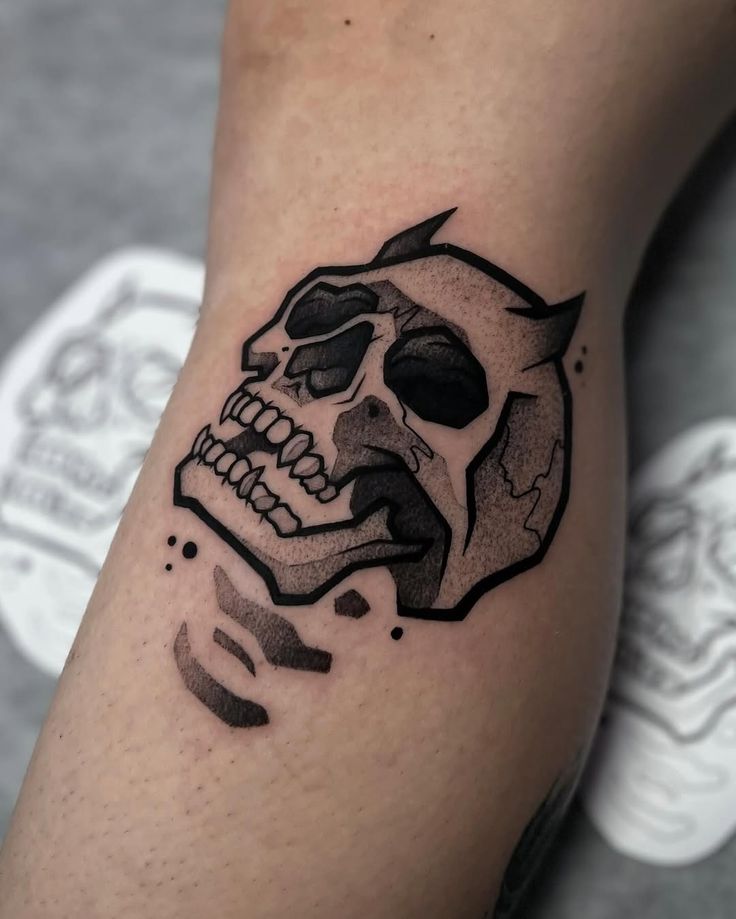
Blackwork Tattoo Guide Australia: Bold Dark Art & Pricing 2025
Complete guide to blackwork tattoos in Australia: bold black ink designs, sacred geometry, dotwork, pricing ($250-$600+), and stunning dark art inspiration.
Read More
Cover-Up vs Removal Cost Australia 2026: Real Pricing Compared
Cover-up vs laser removal in Australia 2026: cost by tattoo size, hybrid fade-and-cover strategy, AUD pricing, real client case studies.
Read More
Laser Removal vs Cover-Up Australia 2026: Decision Guide
Laser removal or cover-up tattoo in 2026: cost, pain, time, results, scarring, ink limits. Australian decision framework with clinic and artist guidance.
Read More